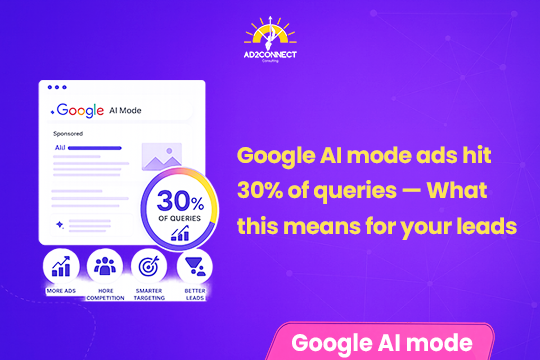
Google’s AI Mode now influences nearly 69% of buyer-intent searches, reshaping how businesses capture visibility and conversions online
What the Data Really Reveals About Google AI Mode
Key insights from the latest study:
- 69% of transactional searches resulted in at least one click to a website.
- Only ~27% of users felt confident making a decision from the AI summary alone — most still compared options.
- Users typically viewed 3–4 results per session, building a short list before deciding.
- AI Mode acts as a decision guide rather than a replacement for websites.
Why This Matters for Service & Local Businesses (Especially in Mumbai)
For local intent queries, AI Mode often surfaces a shortlist of options. Users still click to evaluate details, reviews, and offers.
That makes it a key advantage for Mumbai businesses that optimize for local signals.
Industries that benefit most
- Healthcare: clinics, dentists, dermatologists
- Beauty & wellness: salons, spas
- Professional services: agencies, consultants
- Local services: home repair, maintenance
Local SEO impact
AI Mode emphasizes proximity, ratings, and verified business details. Mention neighborhoods — for Mumbai: Bandra, Andheri, Powai, Colaba — in your pages to capture GEO intent.
How to Adapt Your SEO Strategy for the AI Mode Era
1. Strengthen reviews & social proof
Ask satisfied customers to leave reviews, respond promptly, and showcase testimonials on service pages.
2. Add structured data for AI readability
Implement schema for LocalBusiness, Service, Review, and FAQ to increase the chance of being featured in AI summaries.
3. Create clear, scan-friendly service pages
Short paragraphs, descriptive headings, and direct CTAs improve both UX and conversion rates.
4. Target the consideration set — not just #1
Optimize to appear in the top 3–5 results for transactional keywords using targeted metadata and strong value propositions.
5. Track conversions, not just traffic
Measure phone calls, bookings, contact forms, and WhatsApp messages. These show real business impact beyond pageviews.
Common Concerns & Quick Answers
Will AI Mode kill organic traffic for informational blogs?
Possibly for some purely informational queries — AI summaries can answer directly. But transactional and local queries still drive clicks.
Do images still matter?
Images help, but social proof and concise service details now have more influence on click behavior.
Does rank #1 guarantee success?
No. Users often evaluate multiple choices. Being part of the top consideration set (top 3–5) is more valuable.
Tips & Best Practices — Practical Checklist
- Request and manage Google Reviews regularly.
- Implement LocalBusiness, Service, Review, and FAQ schema.
- Include neighborhood GEO terms: Bandra, Andheri, Worli, Powai, Colaba.
- Improve Core Web Vitals for faster mobile UX.
- Use short, mobile-friendly paragraphs and clear CTAs.
- Ensure WCAG accessibility compliance for broader reach.
Conclusion — AI Mode Is an Opportunity
The 69% figure proves AI Mode is not a traffic killer. It’s a behavioral shift — users want to compare and verify. This is a huge opportunity for local, service?based businesses that optimize for trust, clarity, and conversions.
Ready to optimize your site for AI?powered search? Start here.