
Why Ad Approval Is Not Legal Protection (And What Advertisers Must Know)
It’s live.Everything feels safe.
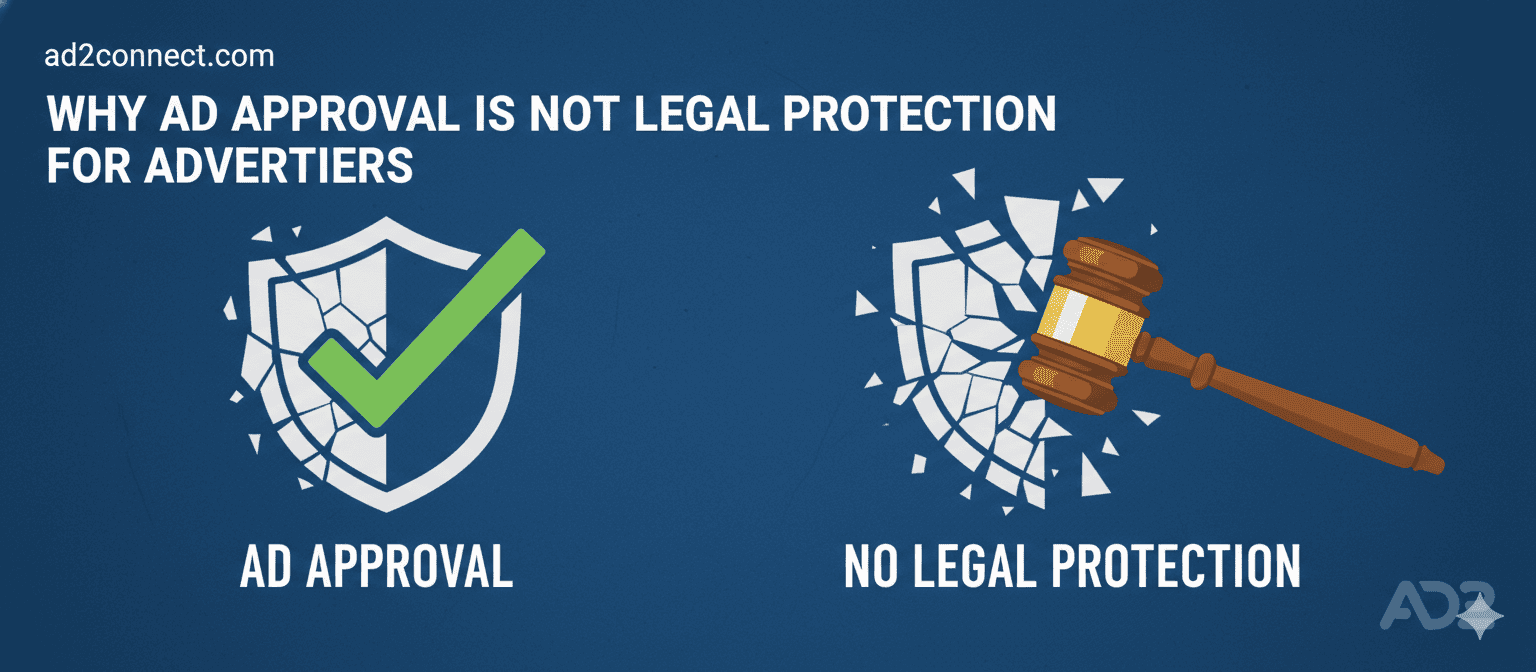
But here’s the truth: ad approval is not legal protection
Many advertisers assume that if Google, Meta, or another platform approves an ad, it must be legally compliant.
That assumption can be costly. From regulatory penalties to lawsuits, approval does not shield your brand from
legal responsibility.In this blog, we explain why ad approval is not legal protection, what ad platforms actually
check, and how advertisers—especially businesses operating in Mumbai and across India—can protect themselves
properly.
What Ad Approval Really Means (And What It Doesn’t)
Short answer: Ad approval only means your ad meets platform policies, not the law.
Advertising platforms review ads to ensure they comply with internal rules designed to protect users and the
platform—not advertisers.
What platforms check:
- Prohibited or restricted content
- Formatting and technical requirements
- Basic consumer safety rules
- Policy compliance (not legal compliance)
What platforms do not guarantee:
- Compliance with local or national laws
- Regulatory approval (ASCI, FTC, GDPR, IT Rules, etc.)
- Protection from lawsuits or penalties
In Mumbai and across India, laws such as the Consumer Protection Act, ASCI advertising codes, and sector-specific
regulations still apply—regardless of ad approval status.
Why Ad Approval Is Not Legal Protection for Advertisers
This is where most brands get it wrong.
Platforms are very clear in their terms: the advertiser is legally responsible.
Key reasons ad approval offers zero legal immunity:
-
- Platform policies ? Laws – Google Ads policies are not substitutes for Indian law.
- Automation limits – Automated reviews cannot interpret legal nuance.
- Jurisdiction gaps – Platforms operate globally, laws are local.
- Liability clauses – Responsibility is contractually assigned to advertisers.
Real-World Risks Advertisers Face After Approval
Approved ads can—and do—create legal trouble.
Common post-approval risks:
- Misleading claims complaints
- Competitor challenges
- Consumer lawsuits
- Regulatory notices
- Brand reputation damage
Common examples:
- Health claims flagged by ASCI
- Financial ads violating RBI or SEBI guidelines
- Real estate ads breaching RERA norms
- Influencer ads missing mandatory disclosures
Industry data shows that many advertising penalties come from ads that were already approved and live.
Approval is procedural. Enforcement is legal.
Common Myths About Ad Approval (Debunked)
“If Google approved it, it must be legal”
False. Google explicitly states approval is not legal validation.
“Platforms will protect advertisers”
False. Platforms protect themselves contractually.
“No one complained, so it’s safe”
False. Regulatory actions are often delayed.
Best Practices to Stay Legally Safe (Even After Approval)
- Get legal review for claims-heavy ads
- Follow industry-specific regulations
- Use clear disclaimers and disclosures
- Maintain claim substantiation records
- Align ad copy with landing page promises
- Track Mumbai- and India-specific legal requirements
Approval should be your starting point—not your safety net.
Conclusion — Protect Your Brand Beyond Ad Approval
Ad approval feels reassuring—but it’s not protection.
Why ad approval is not legal protection comes down to one fact:
the law always overrides platform policies.
Treat approval as technical clearance. Take legal compliance seriously.