
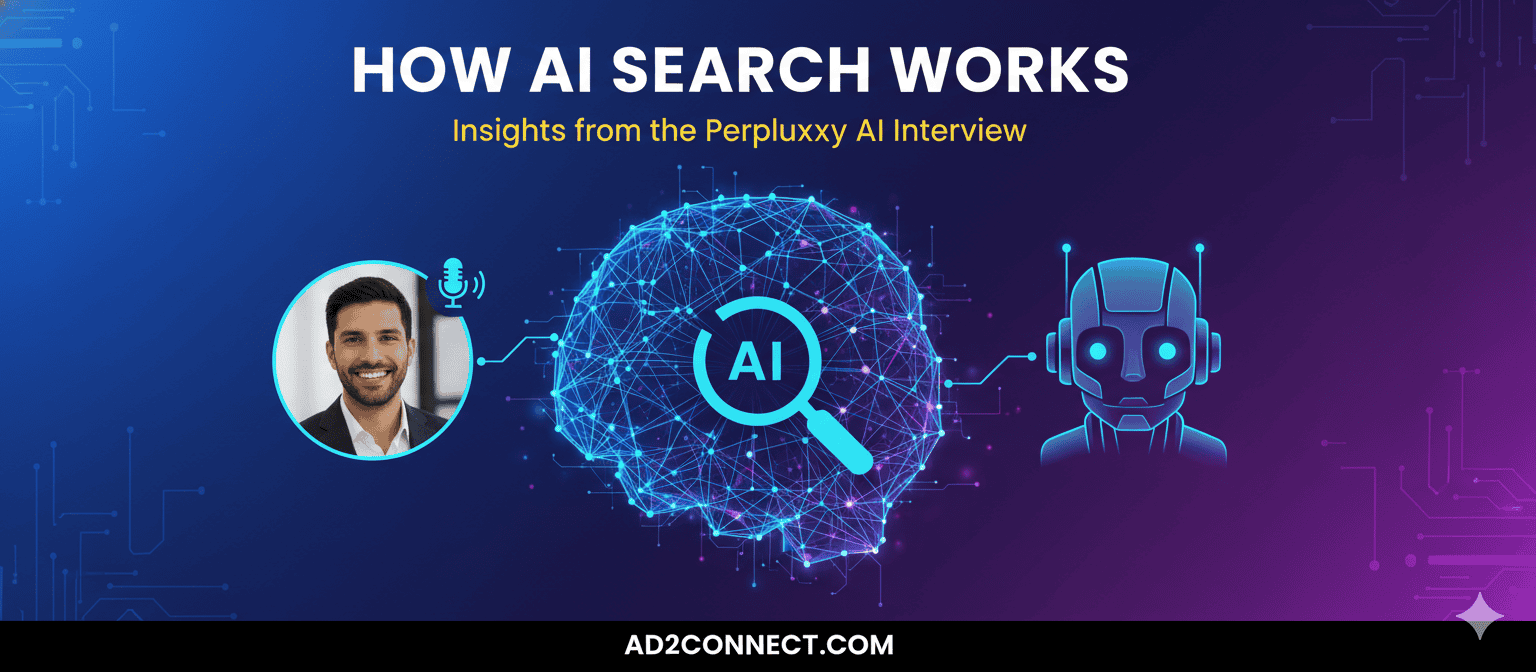
How AI Search Works: Insights from the Perplexity AI Interview
Why Understanding How AI Search Works Matters
Search behavior is evolving rapidly. Users no longer want a long list of links and the effort of comparing multiple pages.
They want accurate, trustworthy answers delivered instantly. This shift is exactly why understanding
how AI search works has become essential for marketers, publishers, and businesses.
AI-powered search platforms such as Perplexity AI represent a new generation of search engines.
Instead of ranking web pages and sending users elsewhere, AI search engines synthesize information,
cite reliable sources, and present direct answers. In a recent Perplexity AI interview, the company explained
how its search system operates and why this model is reshaping the future of search.
This article explains how AI search works, how Perplexity AI retrieves and generates answers,
and what this transformation means for SEO, content strategy, and long-term search visibility.
What Is AI Search? A Simple Explanation
To fully understand how AI search works, it helps to first define what AI search actually is.
AI search is a search experience powered by large language models combined with real-time information retrieval.
Instead of presenting a ranked list of pages, AI search engines aim to deliver clear answers first,
supported by trustworthy sources.
Key characteristics of AI search include:
- Understanding user intent rather than matching exact keywords
- Generating summarized answers instead of listing links
- Providing transparent citations for verification
- Supporting conversational and follow-up queries
This approach transforms traditional search engines into intelligent answer engines that reduce friction
and improve the overall search experience.
How AI Search Works Step by Step
Understanding User Intent, Not Just Keywords
One of the most important changes in how AI search works is its ability to interpret intent.
When a user submits a query, Perplexity AI analyzes the context, purpose, and potential follow-up needs behind the question.
This allows the system to determine whether the search is informational, exploratory, or research-driven.
By focusing on intent rather than keywords, AI search delivers more relevant and meaningful responses,
aligning closely with real user expectations.
Retrieving Real-Time and Relevant Information
Unlike traditional language models that rely solely on historical training data,
Perplexity AI retrieves live information from the web. This ensures that answers remain current, accurate,
and aligned with recent developments.
This real-time retrieval process plays a critical role in how AI search works, especially in industries where
freshness and accuracy are essential.
Synthesizing Answers Using Large Language Models
Once relevant information is retrieved, large language models synthesize insights from multiple sources.
Rather than copying content, the AI summarizes key points and presents them in a clear, neutral format.
This is why structured, well-written content has a higher chance of being cited by AI search engines.
Clarity and context help the AI understand and accurately represent your information.
Providing Citations for Transparency and Trust
A defining feature of how AI search works in Perplexity AI is its emphasis on citations.
Every response includes clear references to the sources used, allowing users to verify information easily.
This transparency builds trust and aligns with modern search quality standards such as
Experience, Expertise, Authoritativeness, and Trustworthiness.
Why Trust and Clarity Matter More Than Rankings in AI Search
Traditional SEO focused heavily on ranking positions. AI search shifts the focus toward trust and clarity.
In an AI-powered environment, being cited as a reliable source is more valuable than ranking at the top of a results page.
Content that is clear, factual, well-structured, and written with genuine expertise is far more likely to be selected
and referenced by AI search engines.
How AI Search Works Differently from Traditional Search Engines
Traditional search engines prioritize ranking web pages and rely heavily on signals such as backlinks and keyword relevance.
AI search engines, on the other hand, prioritize understanding and answering user questions directly.
While traditional SEO remains important, AI search expands optimization into a multi-engine approach
that includes Google Search, AI Overviews, and answer-based platforms like Perplexity AI.
Actionable Strategies to Optimize Content for AI Search
To align with how AI search works today, content creators should:
- Answer questions clearly and early within each section
- Use logical headings and concise paragraphs
- Demonstrate expertise through accurate and verifiable information
- Update content regularly to maintain freshness
- Include clear calls-to-action to support conversions
These strategies improve both AI search visibility and user experience.
Conclusion: How AI Search Works Is the New Foundation of SEO
Understanding how AI search works is no longer optional. Platforms like Perplexity AI demonstrate that
the future of search depends on intent, clarity, and trust.
For brands and content creators, success means becoming a reliable source that AI systems choose to reference.
By focusing on helpful, well-structured, and authoritative content, you can stay visible as search continues to evolve.