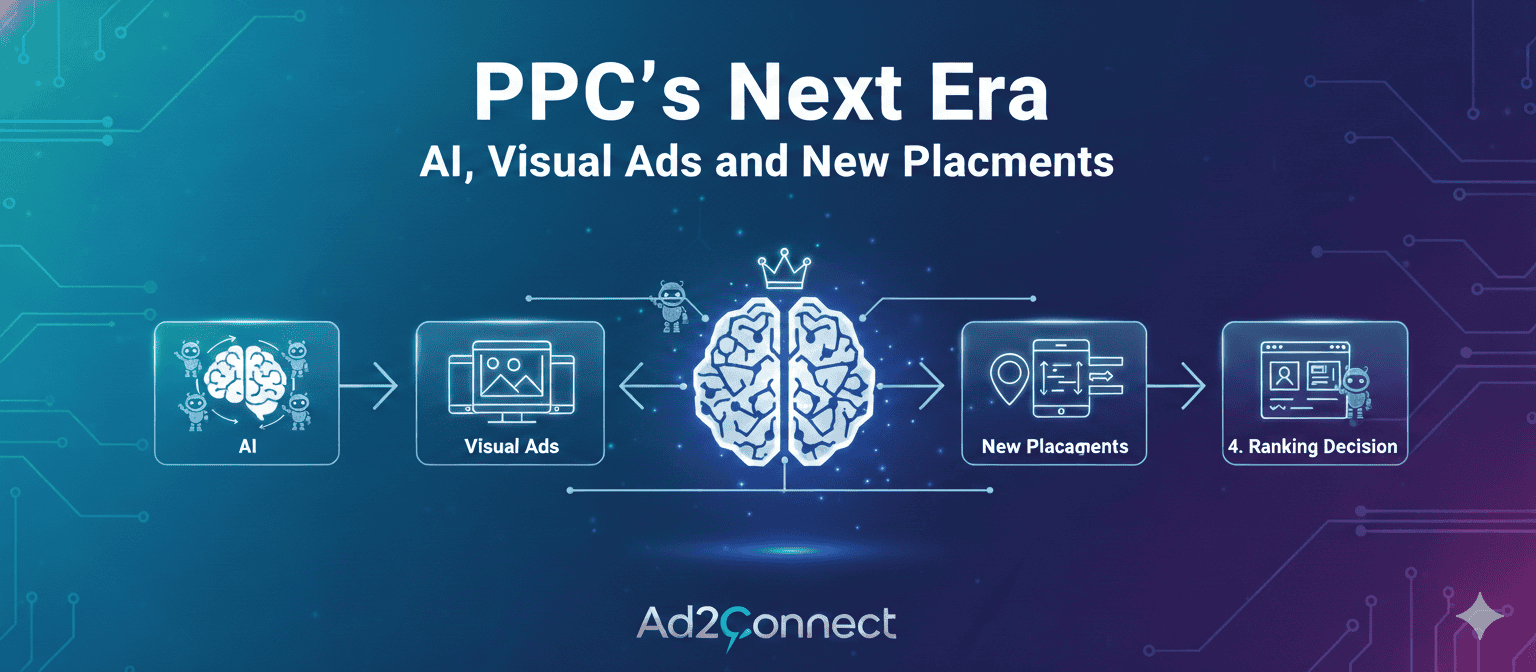
PPC Next Era: AI, Visual Ads and New Placements
PPC advertising is entering a new phase. What once depended heavily on keyword bids and manual optimization is now driven by artificial intelligence, creative formats, and ad placements that go far beyond the search results page. This shift is changing how brands compete for attention and how users discover products and services.
The importance of this evolution lies in user behavior. People now search with images, browse shopping feeds, and rely on AI-powered recommendations. Paid ads are appearing in these moments of discovery, not just in traditional keyword searches. For marketers, understanding the future of PPC advertising is essential to staying visible, competitive, and profitable in a landscape shaped by automation and experience.
How AI Is Transforming PPC Strategy
Smarter Bidding and Budget Control
AI-driven bidding systems evaluate thousands of signals in real time, including device type, time of day, location, and historical performance. This enables automated decisions that maximize outcomes such as conversions or revenue.
Actionable tip:
- Define clear conversion goals instead of micromanaging bids.
- Feed accurate conversion data into platforms like Google Ads and Microsoft Advertising so machine learning can optimize effectively.
Predictive Targeting and Audience Signals
AI no longer depends only on keywords. It identifies intent patterns across search history, browsing behavior, and shopping activity. Campaigns now reach users who are likely to convert even if they do not type an exact keyword.
This supports Visibility Engine Optimization (VEO) because exposure is based on predicted relevance rather than exact-match queries.
Visual Ads Are Becoming the New Standard
Image and Video in Paid Search
Visual formats such as image extensions, video ads, and product showcases communicate value faster than text, especially on mobile devices. They improve recall and emotional connection with a brand.
Practical strategy:
- Create product photos and lifestyle images.
- Use short-form explainer videos.
- Allow AI to test creative combinations.
AI-Assisted Creative Optimization
AI tools generate headlines, rotate layouts, and test visuals automatically. Over time, they learn which creative assets drive higher engagement and conversion rates.
This supports Content Intelligence Optimization (CIO) by guiding creative decisions with performance data rather than intuition alone.
New Ad Placements Are Expanding PPC Reach
Shopping and Discovery Surfaces
- Shopping feeds
- Image search results
- Discovery-style recommendation areas
These placements capture users earlier in the buying journey, especially during browsing rather than searching.
AI-Powered Results and Integrated Ads
Search platforms increasingly blend organic listings, paid placements, and AI-generated summaries. Ads now appear alongside informational answers and product suggestions, aligning with Topical Entity Optimization (TEO).
GEO and Local Signals in the Future of PPC
Location remains a powerful driver of intent. AI enhances this by adapting ads to regional trends and proximity.
- Restaurants target nearby searchers
- Retailers promote local inventory
- Service providers prioritize regional demand
This supports Local Entity Optimization (LEO) and makes PPC more context-aware across regions.
- Time on page
- Micro-conversions
Interactive Element: Future-Ready PPC Checklist
- Are conversion goals clearly defined?
- Do you use AI-driven bidding?
- Do you use visual creatives?
- Have you tested new placements?
- Are landing pages accessible and mobile-friendly?
- Do you track post-click behavior?
Practical Strategies You Can Apply Today
1. Shift from Keyword Control to Goal Control
Let automation handle bids while you define business outcomes.
2. Build a Visual Asset Library
Create images and short videos for multiple ad formats.
3. Experiment with New Surfaces
Test shopping ads and discovery placements.
Conclusion
The next era of PPC is defined by intelligence, creativity, and integration. AI handles complexity, visuals capture attention, and new placements align with discovery behavior. Accessibility and experience ensure ads lead to meaningful outcomes.