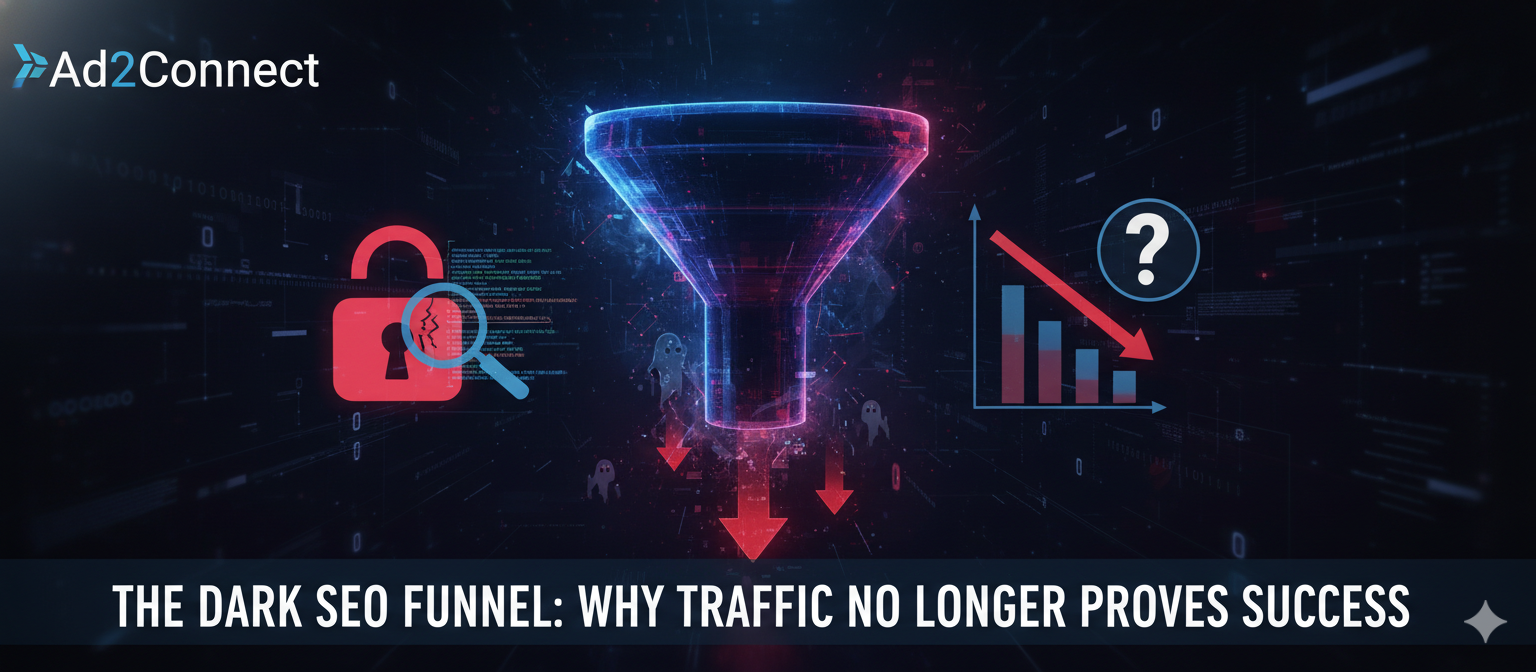
The Dark SEO Funnel: Why Traffic No Longer Proves Success
For years, SEO success was easy to explain: higher rankings meant more traffic, and more traffic meant better results. Today, that equation is broken. Many websites are gaining visits while losing leads, subscribers, and revenue. This growing gap between visibility and value is known as the dark SEO funnel—a stage where users arrive but never meaningfully engage or convert.
With AI-driven summaries, rich results, and faster content consumption, traffic alone no longer proves impact. To stay competitive, marketers must measure what happens after the click.
What Is the Dark SEO Funnel?
The dark SEO funnel describes the invisible drop-off between a search visit and a real business outcome. A page can rank well and still fail to generate value if users do not read, trust, or act on it.
- AI answers and featured snippets reduce exploration
- Informational queries attract curiosity instead of buyers
- Content matches keywords but not user intent
- Poor user experience discourages deeper interaction
In short, traffic can rise while trust and conversions quietly fall.
Why Traffic Alone Is No Longer a Reliable KPI
Search Behavior Has Shifted
Users now expect instant answers. They skim, scan, and move on quickly—especially on mobile devices. A visit that lasts five seconds still counts as a session, but it rarely builds authority or revenue.
- “What is” queries answered in seconds
- Comparison searches with no purchase intent
- AI summaries that remove the need to explore
These visits inflate reports but dilute performance.
Intent Mismatch Creates Hollow Growth
Ranking for broad keywords brings volume but not relevance. A page optimized for “SEO tools” might attract students and hobbyists while the business sells enterprise software. The result is traffic without qualified demand.
Action step: Classify content by intent:
- Informational (learn)
- Navigational (find)
- Transactional (buy)
Track each group separately instead of treating all sessions as equal.
Engagement Signals Carry More Weight
Modern algorithms increasingly consider how users behave:
- Time on page
- Scroll depth
- Internal link clicks
- Return visits
If visitors arrive and leave without interacting, visibility alone will not translate into long-term growth.
Metrics That Matter More Than Traffic
Measurement Experience Optimization reframes reporting around outcomes rather than volume. Instead of asking “How many users came?”, ask “What did they do?”
- Qualified sessions: visitors who match your target audience
- Engaged time: how long content is actually consumed
- Conversion paths: pages that lead to signups or inquiries
- Topic authority growth: performance across content clusters
This approach connects SEO to business goals and supports conversion rate optimization.
How AI and Zero-Click Search Deepen the Funnel
AI-powered summaries and rich results mean users often get answers without visiting a site. Even when your brand is referenced, influence does not always follow.
To adapt:
- Add depth beyond what summaries provide
- Include original insights and examples
- Use internal links to encourage exploration
This aligns with AI optimization and topical entity optimization, where being a trusted source matters more than owning a single keyword.
Practical Strategies to Escape the Dark SEO Funnel
Build Content for Outcomes, Not Just Keywords
Replace generic topics with intent-driven ones. Instead of “What is SEO?”, create “How small businesses can measure SEO ROI.” Outcome-focused content naturally attracts users closer to action.
Use Visuals to Reinforce Meaning
- Diagram illustrating the dark SEO funnel from clicks to conversions
- SEO performance metrics showing engagement and conversion data
Alt text examples: “Diagram illustrating the dark SEO funnel from clicks to conversions” and “SEO performance metrics showing engagement and conversion data.”
GEO and Local Experience Optimization
The dark SEO funnel appears differently by region and industry:
- In North America and Europe, AI summaries reduce informational clicks
- In emerging markets, mobile-first feeds amplify low-intent visits
- For local businesses, broad traffic hides weak local intent
For example, a local SEO agency may rank for “SEO tips” globally but gain more value from “SEO services in Chicago.” Aligning content with local experience improves relevance and lead quality.
Social Media Optimization Layer
- Turn this article into a LinkedIn carousel on traffic versus value
- Create short Google Business Profile posts highlighting engagement metrics
- Repurpose insights for newsletters and communities
Social amplification ensures visibility translates into trust and discussion.
Conclusion
The dark SEO funnel exposes a hard truth: visibility without value is not success. In a search environment shaped by AI answers and rapid consumption, traffic alone no longer proves performance. What matters is what users do after they arrive.
To stay competitive:
- Focus on intent-driven content
- Measure engagement and conversions
- Improve UX and accessibility
- Build authority through topic clusters