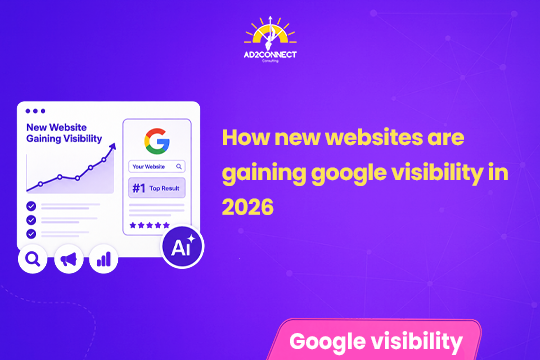
How New Websites Are Gaining Google Visibility in 2026
Getting a new website noticed on Google can feel difficult. With millions of pages being published every day, search results are becoming more competitive. Google is also changing the way it presents information through AI Overviews, Google News, Top Stories, and other search features.
However, a recent case study shows that a new publication can build meaningful Google visibility within a relatively short period when it follows a focused content and SEO strategy.
In this article, we will explain what this means for website owners and marketers in simple terms. More importantly, we will look at the strategies that can help a new website build visibility, attract visitors, and become more trustworthy in Google’s eyes.
Why Is Google Visibility Becoming More Difficult?
Search has changed significantly over the past few years. Google no longer shows only a list of blue links. Users may now see AI-generated answers, news stories, videos, featured snippets, images, local results, and other types of search results.
This creates both a challenge and an opportunity for new websites. Getting a traditional organic ranking is still important, but websites also need to create content that can appear in different areas of Google’s search experience.
For example, a website may receive visibility through standard search results, Google News, Top Stories, or other search features. This means that SEO today is about more than simply choosing a keyword and adding it to an article.
How Can a New Website Build Google Visibility?
1. Focus on a Specific Topic
One of the biggest mistakes new websites make is trying to write about everything. A website may publish articles about technology, finance, health, travel, marketing, and dozens of unrelated subjects at the same time.
This can make it difficult for both readers and search engines to understand what the website is actually known for.
A better approach is to start with a clear topic or niche. For example, a digital marketing website can focus on areas such as SEO, paid advertising, content marketing, Google Ads, social media marketing, and emerging search trends.
When a website consistently publishes useful information around related subjects, it can gradually demonstrate expertise in that area.
2. Build Topical Authority
Topical authority means creating enough useful content around a subject to show that your website understands the topic in depth. Instead of publishing one article about SEO and then moving to an unrelated subject, you can create a group of articles that cover different parts of SEO.
For example, a website could publish articles about keyword research, technical SEO, on-page SEO, link building, content optimization, local SEO, SEO tools, and search engine updates.
These articles can also be connected through internal links. This helps readers discover related information while making the website’s content structure easier to understand.
3. Publish Fresh and Relevant Content
Publishing content consistently can help a website stay active and cover topics that people are currently searching for. This is particularly important for websites that cover news, trends, product updates, technology, or rapidly changing industries.
However, publishing frequently does not mean publishing low-quality articles. Every article should have a clear purpose and provide useful information to the reader.
A simple content strategy is to combine evergreen content with timely content. Evergreen articles can continue attracting search traffic for months or years, while timely articles can help a website respond to current trends and discussions.
4. Understand Google News and Top Stories
For news publishers and websites covering current events, Google News can provide another opportunity to reach an audience.
Google News and Top Stories focus heavily on relevance, freshness, quality, and other signals. This means publishers need to create original, useful, and timely content rather than simply rewriting information that already exists elsewhere.
If your website covers an industry or niche, you can monitor important developments and create useful articles when something relevant happens. The goal should not be to publish news simply for the sake of publishing. The goal should be to provide information that helps the reader understand what happened and why it matters.
5. Make Your Content Easy to Understand
Good SEO content is not written only for search engines. It is written for people.
If an article uses complicated language, extremely long paragraphs, or unclear explanations, readers may leave the page quickly. A simple writing style can make your content easier to read and understand.
Use descriptive headings, short paragraphs, bullet points, examples, and straightforward language where appropriate. When explaining a technical concept, imagine that you are explaining it to someone who has never heard of it before.
This approach can make your content more useful for beginners while also making it easier to scan on mobile devices.
6. Create Content That Answers Real Questions
People usually search Google because they want an answer, solution, explanation, comparison, or recommendation.
Your content should therefore focus on the problems your target audience is trying to solve.
For example, instead of writing a generic article about SEO, you could create content around questions such as:
- How does SEO work?
- How long does SEO take to show results?
- How can a new website get traffic?
- What is topical authority?
- What is the difference between SEO and GEO?
Answering specific questions can make your content more useful and give search engines a clearer understanding of what each page is about.
7. Structure Your Content for Search and AI
Search is increasingly using artificial intelligence to understand queries and provide answers. This makes clear content structure more important than ever.
Instead of hiding the main answer deep inside an article, provide a clear explanation near the relevant heading. Use descriptive headings and organize information logically.
For example, if the heading asks, “What is topical authority?”, the paragraph immediately below it should clearly explain what topical authority means.
This structure makes the content easier for readers to understand and easier for search systems to process.
8. Build Website Credibility
Creating useful content is only one part of building an online presence. A website also needs to establish credibility.
Businesses can strengthen credibility by clearly explaining who they are, what services they provide, and who is responsible for their content. Author information, company information, contact details, and trustworthy references can also help users understand that they are dealing with a legitimate source.
External mentions and links from relevant and reputable websites can also contribute to a website’s overall authority. However, the focus should be on earning genuine mentions rather than trying to manipulate search rankings through low-quality links.
9. Do Not Ignore Older Content
Creating new content is important, but existing content should not be forgotten.
Some articles may lose traffic because the information becomes outdated, competitors publish better resources, or search intent changes. Regularly reviewing older articles can help identify opportunities to improve them.
You can update statistics, add new examples, improve explanations, fix broken links, add relevant internal links, and remove information that is no longer accurate.
This can help your website maintain the value of its existing content instead of constantly starting from scratch.
10. Think Beyond Traditional SEO
SEO is still important, but the search environment is expanding. Users may discover information through traditional search results, AI-powered answers, news platforms, social media, videos, and other channels.
This is why marketers are increasingly discussing Generative Engine Optimization, commonly known as GEO. GEO focuses on improving the chances of a brand or website being understood and referenced by AI-powered search and answer systems.
SEO and GEO should not be treated as completely separate strategies. Both depend heavily on useful information, clear content, strong topical relevance, credibility, and a good user experience.
What Can Businesses Learn From This?
The biggest lesson for businesses is that a new website does not necessarily have to wait years before gaining visibility. However, there is no shortcut that guarantees rankings or traffic.
A successful content strategy requires consistency, patience, research, and a clear understanding of the audience.
If you are starting a new website, begin by choosing a focused subject. Research the questions your audience is asking. Create genuinely useful content around those questions. Connect related articles through internal links and regularly improve your existing pages.
Over time, these efforts can help your website build a stronger presence across search.
A Simple Google Visibility Strategy for New Websites
If you are not sure where to start, you can follow this simple process:
- Choose a specific niche or topic.
- Research the questions your target audience is searching for.
- Create a list of related content topics.
- Publish helpful and original articles consistently.
- Use clear headings and simple language.
- Connect related articles using internal links.
- Update older content when information changes.
- Build genuine mentions and relationships within your industry.
- Track your search visibility and identify opportunities for improvement.
- Keep improving your content based on what your audience needs.
Final Thoughts
Building Google visibility for a new website is not about publishing hundreds of articles and hoping something ranks. It is about creating the right content for the right audience and consistently improving the quality of your website.
For businesses, the message is simple: do not focus only on ranking for keywords. Focus on becoming a useful source of information in your industry.
When your website consistently answers real questions and provides genuine value, you give both users and search engines a reason to trust your content.