Why AI Overviews Are Hurting Paid Search Performance
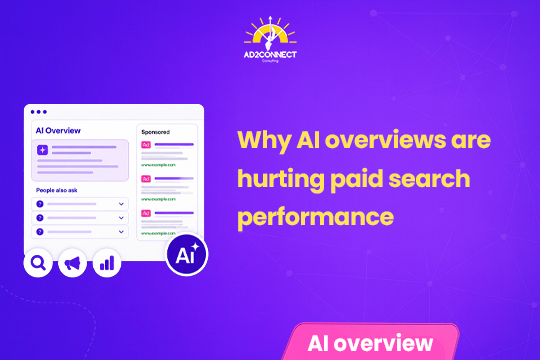
Search engines are no longer just showing links and ads. Today, they are giving direct answers using artificial intelligence. These answers, known as AI Overviews, are changing how people search and, more importantly, how they interact with paid ads.
AI-generated answers can give users the information they need without requiring them to visit another website. For businesses that depend on paid search traffic, this creates a new challenge.
Recent industry discussions have highlighted another concern: AI Overviews can sometimes provide information that does not match the message shown in paid search ads. When this happens, users may become confused or less likely to click the advertisement.
If your business relies on Google Ads or other paid search campaigns, understanding this change can help you adjust your strategy before it affects your results.
What Are AI Overviews?
AI Overviews are AI-generated summaries that appear in search results. Instead of making users visit several websites to find an answer, search engines can provide a quick summary directly on the results page.
For example, someone searching for a product may see:
- A quick explanation of the product
- Product recommendations
- Pros and cons
- Comparisons with other products
- Answers to related questions
All of this information can appear before or alongside traditional organic and paid search results.
For users, this can make searching faster. For advertisers, however, it can mean fewer reasons for people to click an ad.
How AI Overviews Affect Paid Ads
This is where the real problem begins.
AI Overviews do not always present the same message as a paid advertisement. In some cases, an AI-generated answer may challenge, qualify, or even contradict a claim made in an ad.
A Simple Example
Imagine a company runs an advertisement that says:
“The best budget smartphone under ?20,000.”
At the same time, an AI Overview might explain that the phone has limitations compared with other options in the same price range.
Now the user has two different messages. One comes from the advertisement, while the other comes from the AI-generated answer.
This can make the user question the advertising claim and reduce the likelihood of clicking the ad.
Why Paid Search Performance Is Dropping
AI Overviews are changing how people interact with search results. Several factors can affect paid search performance.
1. Fewer Clicks on Ads
When users can get an answer directly from an AI Overview, they may not need to click an advertisement or visit another website.
This can reduce the number of clicks available to paid search campaigns, particularly for informational searches.
2. Reduced Trust in Ads
Advertising naturally promotes a product or service. AI-generated answers may provide a more balanced explanation by mentioning both advantages and disadvantages.
If the two messages are very different, users may become more cautious about the advertising claim.
3. Changes in User Behavior
People are becoming comfortable getting quick answers directly from search results. Instead of clicking several links, they can read a summary and decide what to do next.
This means advertisers need to think about how their brand appears across the entire search experience, not just inside the ad.
4. Lower Conversion Opportunities
Fewer clicks can mean fewer opportunities to bring potential customers to your website. Even when an ad receives impressions, users may decide they already have enough information from the search results.
For businesses paying for every click, this change makes it increasingly important to understand where and why users are clicking.
The Bigger Problem: Conflicting Information
The biggest concern is not simply fewer clicks. It is the possibility of conflicting information.
AI systems can use information from multiple sources when generating an answer. Your advertisement, website, reviews, competitor websites, product pages, and other sources may all contribute to what users see in search.
As a result, an AI Overview may:
- Highlight information that is not mentioned in your advertisement
- Compare your product with competitors
- Mention limitations or disadvantages
- Use information from other websites
- Present information differently from your marketing message
When users see different messages at the same time, they may hesitate before making a decision. That hesitation can eventually lead to fewer clicks or conversions.
Why Is This Happening?
AI systems are designed to provide useful answers based on information available across the web. They are not simply repeating the wording used in your advertisements.
This means an advertiser can carefully optimize an ad while an AI system creates a completely different explanation based on other available information.
For example, an advertisement might focus on the benefits of a service, while other websites might discuss its limitations. An AI Overview could include both sides when creating its answer.
This creates a gap between marketing messaging and the information users receive from AI-powered search.
What Businesses Should Do Now
AI Overviews are changing search, but businesses are not powerless. The best response is to make your advertising, website content, and overall brand messaging more consistent.
1. Align Your Messaging
Make sure your advertisements, landing pages, product descriptions, and other website content communicate the same core information.
If your ad makes a claim, users should be able to find clear information supporting that claim on your website.
2. Focus on Honest Claims
Avoid exaggerated promises that your website cannot support.
Clear and accurate messaging can help users understand what your product or service actually offers. It can also reduce the gap between your advertising message and the information available elsewhere online.
3. Improve Your Website Content
Your website is an important source of information about your business. Keep your content accurate, useful, and up to date.
Consider adding:
- Detailed product or service information
- Frequently asked questions
- Clear pricing information where appropriate
- Product comparisons
- Advantages and limitations
- Helpful guides and educational content
4. Build Brand Authority
Trust is becoming increasingly important in AI-driven search.
Businesses should focus on creating useful content, maintaining accurate information, and developing a strong online presence. The goal is to make your brand a reliable source of information instead of relying only on advertising.
5. Monitor Search Results Regularly
Do not only check whether your ads are running. Search your important keywords and look at the complete results page.
Pay attention to:
- AI Overviews
- Paid advertisements
- Organic search results
- Competitor listings
- Questions and recommendations shown in search
This can help you understand what potential customers are seeing before they decide whether to click your ad.
A New Era of Search
Search is moving from a mainly click-based experience toward an increasingly answer-based experience.
In the past, users often had to click an advertisement or website to find information. Today, AI can provide an answer directly within the search results.
This does not mean paid search is disappearing. Instead, it means advertisers need to understand how paid ads fit into a much larger search experience.
What Marketers Should Focus On
Marketers should start thinking beyond individual ad campaigns. A strong search strategy should bring together paid advertising, SEO, website content, and brand trust.
Focus on:
- Creating useful and easy-to-understand content
- Keeping website information accurate and updated
- Building trust with potential customers
- Aligning paid ads with landing page content
- Monitoring AI-driven search results
- Using both paid and organic search strategies
Final Thoughts
AI Overviews are changing how people search for information and make purchasing decisions. While they can make search easier for users, they can also create challenges for businesses that depend heavily on paid search.
The biggest lesson is simple: your advertisement is no longer the only message a potential customer sees.
Users may also see AI-generated answers, competitor information, reviews, and organic content before deciding what to do.
Businesses that recognize this change early can adjust their strategy, improve their content, and build stronger trust with their audience.
Instead of trying to compete with AI Overviews, businesses should focus on providing accurate, useful, and trustworthy information across every part of their online presence.