
AI Generated SEO Content vs Real Experience: Who Wins?
If you are treating your AI writer like a magic lead-generation machine, your website is likely sitting on a ticking algorithm bomb. The truth hurts: Google’s March 2026 Core Update just completely rewrote the rules of organic search.
If you are a business owner running campaigns out of Mumbai, you have likely noticed a frustrating trend over the past few months. You are publishing more pages than ever, your keyword scores look flawless on your SEO plugins, yet your phone simply isn’t ringing. Your organic search traffic looks like a steep downhill slide, and your cost per acquisition is climbing.
What you actually want is a predictable stream of qualified inbound leads without burning your entire budget on experimental ad campaigns. You want search engines to recognize you as the definitive local authority so you can out-rank competitors and scale your business securely.
To achieve that, you need to understand exactly who wins the battle between automated scale and boots-on-the-ground experience.
AI generated SEO content
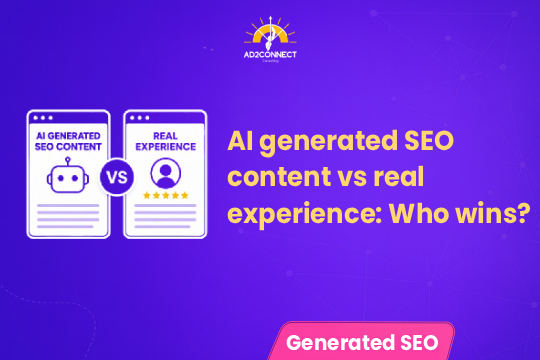
In the post-March 2026 search ecosystem, real experience wins completely. While AI generated SEO content is highly efficient for structural outlines and initial research, it lacks the original data, localized context, and unique industry insights required to rank. Google’s current algorithms actively prioritize firsthand human expertise, filtering out generic automated text that offers no new value to searchers.
Summary
- The Commodity Trap: Automated tools create information parity; when everyone has access to the same prompts, all industry blogs sound identical.
- E-E-A-T Is Non-Negotiable: Google’s Search Generative Experience and AI Overviews specifically extract content containing unique data points, real case studies, and practical field experience.
- The Hybrid Solution: Winning requires using automated tools strictly for efficiency while relying on an experienced digital team to inject authentic, conversion-focused strategy.
Why Pure Automation Fails the Modern Search Test
The digital landscape changed permanently following the March 2026 Core Update. When generative software flooded the web with clean, grammatically correct, yet utterly hollow articles, search engines adjusted.
Why the Problem Happens
Artificial intelligence does not know what it feels like to close a complex deal in BKC or manage supply chain disruptions at the Mumbai port. It simply looks at the existing top 10 results on Google, shuffles the sentences, and serves up an optimized average. When thousands of businesses use the same logic, search engine results pages turn into a sea of repetitive boilerplate content. Google’s quality filters are now explicitly trained to drop these unoriginal layers.
Common Content Mistakes Business Owners Make
- Publishing Unedited Drafts: Taking an automated output and dropping it straight into your CMS without changing a single line or adding personal perspective.
- Ignoring Hyper-Local Nuance: Writing broad, generic guides that fail to address the specific pain points, regulatory laws, or purchasing behaviors of consumers in your actual target market.
- Optimizing for Bots over Buyers: Stuffing related phrases into text to satisfy a software score rather than structuring a compelling argument that convinces a human visitor to fill out your contact form.
The Step-by-Step Fix
To protect your website from visibility drops, you must pivot to an experience-first workflow:
- Extract Internal Knowledge: Interview your sales or field teams for 10 minutes before writing an article to unearth real consumer objections and operational solutions.
- Incorporate First-Party Data: Use your own project timelines, localized cost estimates, or unique regional challenges to make your page entirely uncopiable by software algorithms.
- Refine Content Frameworks: Format your articles with custom comparison tables, native commentary, and highly specific case examples.
Case Study: Overhauling a Tanking Campaign
A mid-sized B2B logistics firm based in western Mumbai shifted its entire digital output to automated generation in late 2025. By the time the March 2026 Core Update concluded, their organic keyword visibility had collapsed by over 55%, leaving them with zero organic inbound leads.
| Performance Metric | Pure Automated Phase | Ad2Connect Strategy |
|---|---|---|
| Monthly Qualified Organic Leads | 8 Leads | 42 Leads |
| Average Cost Per Lead (CPL) | ?4,100 | ?890 |
| Overall Quarterly Organic ROI | Negative | 370% |
The Strategies Implemented
We completely halted their automated production loop. As a dedicated performance marketing agency in Mumbai, our team at Ad2Connect stepped in to fix their search infrastructure.
Instead of generating general articles on international shipping, we interviewed their operations head to write precise case breakdowns detailing how they bypassed customs bottlenecks at local ports. We seamlessly integrated localized insights that standard online tools simply have no access to.
By combining technical optimization with real on-the-ground context, their organic lead volume grew by more than 400% within one quarter, substantially reducing their reliance on expensive paid ads.
Expert Insights From the Optimization Desk
- AI Overviews Crave Conversational Directness: To get your website sourced in Google’s AI-generated answer boxes, stop using fluff introductions. State your main answer clearly within the first two sentences using exact, plain-spoken language.
- The Brand Authority Network: Google doesn’t just read your blog post; it looks for external signals to see if your business is recognized offline. If a top creative advertising agency in Mumbai or reputable local business directory isn’t co-mentioning your brand elsewhere on the web, your standalone website claims hold little weight with modern search crawlers.
- Intent Mapping Wins Over Volume: A keyword with 100 monthly searches consisting of highly motivated local buyers is worth far more than a generic phrase with 10,000 searches that only attracts students looking for definitions.
Your Practical Experience-First Checklist
- Review Your Top 5 Blogs: If a competitor could place their logo on your article without changing a single sentence, rewrite the piece to include your unique business perspective.
- Inject Original Media: Replace generic stock photography with real photos of your office, your field team, or your actual projects around town.
- Integrate Local Context: Explicitly mention neighborhood-specific case references, local compliance guidelines, or regional market trends to boost your visibility for local SEO services.
- Cite Primary Sources: Anchor your strategic arguments by linking out to official local government updates, verified economic papers, or internal company data.
- Engage Strategic Partners: If your internal team lacks the bandwidth to create deep, expert-level copy, collaborate with a professional digital marketing agency in Malad, Mumbai to build a sustainable, human-led content engine.
Conclusion
Artificial intelligence is an incredible operational assistant for brainstorming and outline creation, but it cannot duplicate the years of real, tactical problem-solving you have put into building your business. When you strip away your unique point of view, your website becomes identical to every other automated page on the web. Winning search rankings today requires a distinct, authoritative voice built on genuine real-world experience.
If you want your digital footprint to drive actual revenue rather than empty metrics, it pays to work with specialists who understand how to balance human insights with cutting-edge tech. As an established boutique digital marketing company in Mumbai, Malad, Ad2Connect designs search strategies that capture high-intent audiences and convert them into long-term clients. Contact our growth team today to secure your search authority and transform your organic performance.