
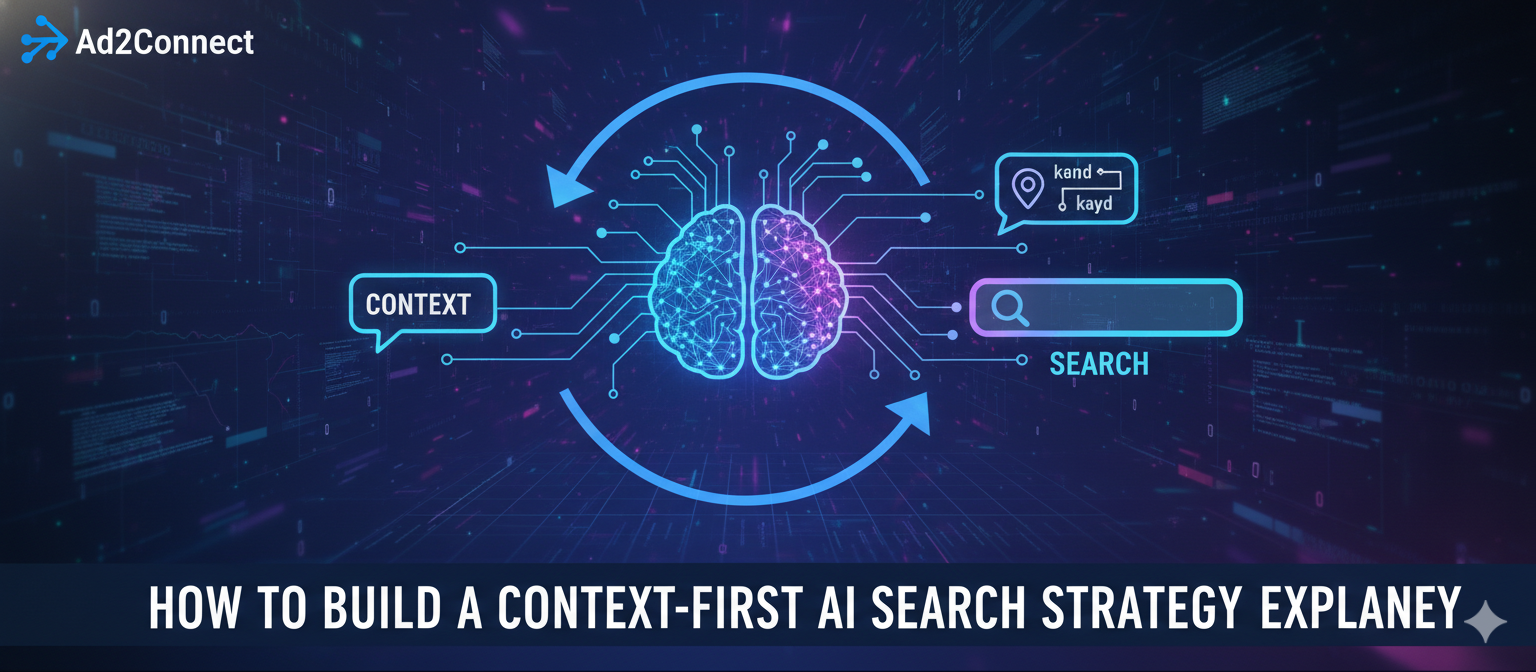
How to Build a Context-First AI Search Strategy
Search is evolving from keyword matching to meaning matching. Instead of rewarding pages that repeat phrases, AI-driven systems now prioritize content that understands user intent and explains topics in depth. This shift has made many traditional SEO tactics less reliable on their own.
As Google continues to expand AI-powered results and summaries, websites must adapt by building a context-first AI search strategy.
A context-first strategy focuses on meaning, relationships, and usefulness. It aims to answer real questions within a logical framework instead of chasing isolated keywords.
What Is a Context-First AI Search Strategy?
A context-first AI search strategy is an optimization method that prioritizes topic understanding over keyword density. It organizes content around themes, user intent, and related concepts rather than single search terms.
- Explains topics holistically
- Connects related ideas across multiple pages
- Matches content to user intent
- Uses natural language instead of forced phrasing
Instead of creating separate pages for every keyword variation, this approach builds core guides supported by focused subtopics such as intent modeling, content quality, and user experience.
Why Context Matters More Than Keywords
AI Understands Meaning, Not Just Words
Modern AI systems analyze language patterns to interpret what users want. Different queries may expect the same answer. Context-first content performs better because it covers variations of the same idea, anticipates follow-up questions, and builds topic depth.
Zero-Click Results Raise Content Standards
AI summaries and answer panels pull from content that clearly explains concepts. Strong contextual content uses definitions, structured explanations, and real-world examples, increasing its chance of being cited.
Core Components of a Context-First Strategy
Topic Entity Optimization (TEO)
Instead of focusing on pages, focus on themes. Identify your main topic, list supporting subtopics, and interlink them naturally to build topical authority.
Content Intent Optimization (CIO)
Each page should match a specific intent:
- Informational: explaining concepts
- Comparative: evaluating options
- Transactional: guiding decisions
This improves relevance and supports Conversion Rate Optimization (CRO).
AI Optimization (AIO)
AI favors content that is easy to read, well structured, and logically consistent. Use descriptive headings, short paragraphs, and clear definitions.
Visual Engagement Optimization (VEO)
Suggested images:
- Diagram of topic clusters – Alt text: “Diagram showing relationships between AI search optimization topics”
- Example AI result – Alt text: “Screenshot of AI-powered search result summarizing content”
Geographic and Local Context (GEO & LEO)
Context varies by region and audience. For example, a local business should include city and service relevance. Instead of “digital marketing tips,” use “digital marketing tips for startups in New York.”
Dedicated Tips, Strategies, and Examples
- Rewrite one high-traffic page to cover the full topic
- Add a “Who this is for” section
- Create internal links between related guides
- Add real examples
- Update headings to match user questions
CRO Strategy
Match CTAs to intent, place them after value-driven sections, and avoid interrupting educational content with sales language.
SMO Strategy
Write headings that double as social captions, summarize key sections for sharing, and use visuals that explain one idea clearly.
Conclusion
Search is no longer about matching words but matching meaning. A context-first AI search strategy aligns your content with how modern systems interpret language and how users explore topics.
- Build around topics
- Optimize for intent
- Improve UX and accessibility
- Support CRO and SMO