
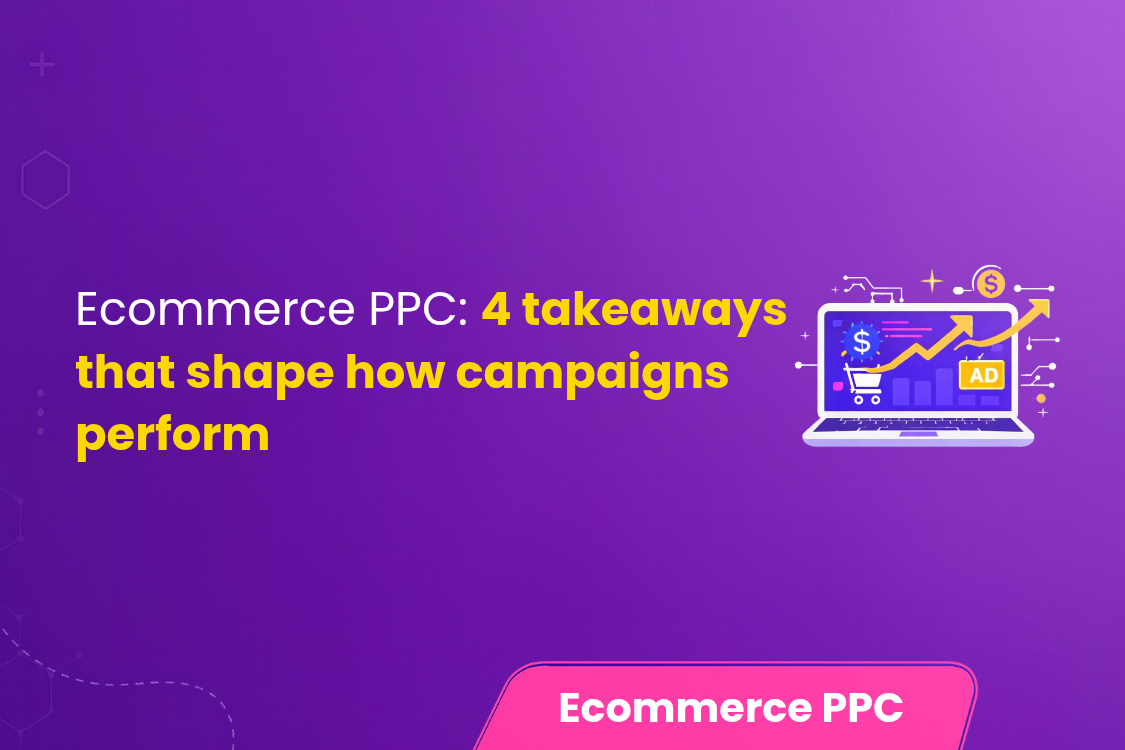
Ecommerce PPC Performance: 4 Takeaways That Shape Campaign Success
Product Data Quality Directly Controls PPC Performance
Your product feed is the foundation of ecommerce PPC success. Even the largest budgets cannot compensate for poor feed quality.
Why Product Feeds Matter
- Clear, keyword-rich titles and descriptions
- Accurate pricing and inventory
- Proper product categories and structured attributes
- High-resolution product images
- GEO-specific pricing and availability
Impact: Better impressions, higher ad relevance, lower wasted spend, and improved conversion rates.
Optimization Actions
- Regularly update your feed to reflect inventory and price changes
- Optimize titles with search-relevant keywords
- Add descriptive, high-quality images
- Map products to the correct categories
- Include regional targeting where relevant
Automation Improves Scale, But Strategy Still Drives ROI
AI-driven automation (AIO) powers modern ecommerce PPC, helping campaigns adjust bids, assets, and audience targeting in real-time. However, automation alone cannot replace human strategy.
How Automation Helps
- Real-time bid adjustments based on performance signals
- Cross-channel learning across Search, Shopping, and Display
- Dynamic creative asset rotation
- Audience signal optimization
Where Human Strategy Wins
- Segment audiences based on buyer behavior and lifecycle stage
- Test ad creatives and copy for effectiveness
- Align campaigns with your sales funnel and business goals
- Allocate budget to high-margin or high-priority products
Best Practice: Use automation for execution but maintain manual oversight for targeting, creative testing, and budget decisions.
UX and Conversion Optimization Now Drive PPC Results
Traffic alone is no longer enough. Platforms now measure user experience (UX) to determine ad performance, including page engagement and conversions.
Key UX Metrics Affecting PPC
- Page load speed and Core Web Vitals
- Mobile responsiveness
- Bounce rate and time on site
- Checkout friction and usability
Accessibility & WCAG Compliance Tips
- Ensure sufficient color contrast for readability
- Include ARIA labels for buttons and forms
- Enable keyboard navigation
- Use descriptive alt text for all images
Actionable UX & CRO Tips
- Optimize product pages for mobile-first browsing
- Display trust signals like reviews, guarantees, and secure checkout badges
- Simplify the checkout process to reduce friction
- Track micro-conversions to continuously improve the funnel
Result: Higher Quality Scores, lower CPCs, and improved ROAS.
First-Party Data & SMO Amplify PPC Impact
With cookies fading, first-party data and social media optimization (SMO) have become essential for targeting high-intent users and maximizing PPC effectiveness.
High-Value First-Party Data
- Email subscribers
- Past purchasers
- Website engagement metrics
- App users (ASO + PPC integration)
- Local intent signals (GEO + MEO)
SMO + PPC Strategies
- Retarget audiences on Meta, Instagram, and LinkedIn
- Incorporate social proof such as user-generated content, reviews, and testimonials
- Sync social engagement data to refine PPC targeting
- Use dynamic catalog ads for retargeting high-interest users
VEO Integration
- Include product demo videos in Shopping and YouTube ads
- Run short-form vertical videos optimized for mobile users
- Build remarketing audiences from video engagement
- Optimize video titles, captions, and descriptions with keywords and GEO signals
Impact: Increased engagement, lower CPA, and better multi-touch attribution across campaigns.
Practical Ecommerce PPC Checklist
- Audit product feeds for titles, descriptions, categories, and images
- Segment campaigns by product margin, lifecycle stage, and location
- Deploy Performance Max campaigns with controlled asset groups
- Track micro-conversions and revenue metrics to guide optimizations
- Sync GA4 and Google Ads for accurate reporting
- Apply GEO-targeted bids for region-specific campaigns
- Test ad creatives monthly, including video and static ads
- Leverage first-party and social media audience data for precision targeting
Conclusion
Ecommerce PPC performance in 2025 is shaped by product data quality, automation, UX/CRO, and first-party data combined with social signals. Brands that integrate AIO, VEO, SMO, GEO targeting, and behavioral insights consistently outperform competitors and maximize ROAS.
At Ad2Connect, we help ecommerce brands create high-performing PPC ecosystems that drive real growth, not just clicks.
Scale your ecommerce PPC profitably? Contact Ad2Connect today for a performance-backed PPC strategy.