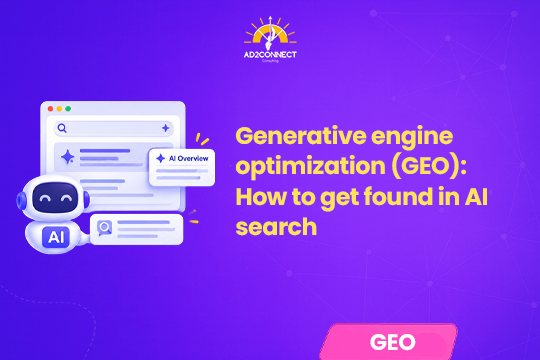
Generative Engine Optimization: How to Get Found in AI Search
People now ask ChatGPT, Gemini, and Perplexity before they open Google. Here is a simple, step-by-step way to make sure your brand shows up in the answer.
By Snehal Singh | Published: October 24, 2026
AI Overview Summary
Generative engine optimization (GEO) is the practice of shaping your content so AI tools such as ChatGPT, Perplexity, Gemini, Copilot, and Google AI Overviews can find it, understand it, and mention your brand in their answers. It does not replace SEO. Good content, a healthy website, and trusted signals still matter. GEO adds new habits on top. These include giving direct answers, citing sources, adding statistics and expert quotes, and keeping brand details consistent everywhere. They also include being present on community platforms and tracking where AI tools mention you. An early research study found that citing sources, adding quotes, and adding statistics raised visibility in AI answers by 30–40%. The study has also been criticised. GEO is an ongoing process, not a one-time task.
Table of Contents
- What Is GEO, Really?
- GEO vs. SEO: Similarities and Differences
- How to Combine GEO and SEO
- Why GEO Matters Now
- Key Benefits of GEO
- How AI Answer Engines Work
- What the Research Says Works
- How to Get Found in AI Search: A Step-by-Step Plan
- How to Measure GEO
- The Future of GEO
- Mistakes That Look Like Strategy
- How Ad2Connect Approaches GEO for Clients
- Key Takeaways
- Frequently Asked Questions
What Is GEO, Really?
GEO stands for generative engine optimization. It means preparing your website content so that AI-driven search tools can use it in their answers.
Those tools include ChatGPT, Perplexity, Gemini, Copilot, and Google AI Overviews. When someone asks them about your products or services, you want your brand to be part of the reply.
The goal is bigger than being seen. You want to reach the right people, build trust, and turn visitors into loyal customers who return, whichever tool they used to start their search.
GEO vs. SEO: Similarities and Differences
SEO helps your pages rank on search engines like Google and Bing, which show a list of links. GEO helps AI tools pick up your content and use it inside a written answer.
How They Are Similar
The two are close cousins. Both aim to make useful content easy to find, and both need a fast, mobile-friendly website that search systems can crawl.
Both depend on quality content that follows E-E-A-T, which stands for experience, expertise, authoritativeness, and trustworthiness. Both also rely on keywords, data, and authority building. Both must adapt as technology changes.
How They Are Different
SEO tries to rank individual pages. GEO focuses on how AI blends information from many sources into one answer. It asks whether your content is clear enough for a machine to use correctly.
| Area | Traditional SEO | GEO |
|---|---|---|
| What the user sees | A list of links | One written answer |
| Main goal | Rank individual pages higher | Be used and mentioned inside AI answers |
| Content focus | Keywords and meta tags | Clear, direct, well-sourced answers |
| Understanding intent | Match keywords to searches | Match the full meaning behind a question |
| Formatting | Search-engine-friendly pages | Structured data and natural-language formats |
| What you track | Rankings and clicks | Brand mentions, cited sources, and AI referral visits |
| Where it works | Google and Bing | ChatGPT, Gemini, Perplexity, Copilot, and AI Overviews |
How to Combine GEO and SEO
GEO works best when it sits on top of solid SEO. Traditional SEO usually lays the groundwork that GEO then builds on.
Here is how to make the two work as one team:
- One content plan. Write content that serves both Google and AI tools, with quality and E-E-A-T at the centre.
- Wider keyword research. Include long-tail phrases and the natural, conversational questions people ask AI tools.
- Strong technical health. Keep the site fast, mobile-friendly, and marked up with structured data.
- Decide with data. Use insights from both worlds to improve your strategy.
Why GEO Matters Now
Search habits are changing, and more people now start their research, product comparisons, and buying decisions inside AI tools.
Gartner once predicted that traditional search volume would fall by about 25% by 2026 as people move to AI chatbots. Whatever the exact figure turns out to be, the direction is clear.
Google also faces more competition from AI tools that give a direct answer without a page of links, so traditional SEO alone is no longer enough.
Key Benefits of GEO
- More reach. You appear in places beyond the usual search results.
- A better user experience. People get quick, relevant answers that point to your brand.
- A head start. Early movers become the names AI tools learn to recommend.
- More authority. When AI tools mention your brand beside trusted sources, your credibility grows.
- A future-proof plan. Your marketing keeps working as search keeps changing.
How AI Answer Engines Work
A regular search engine lists web pages. An AI answer engine reads huge amounts of information and then writes a fresh answer in plain language.
In simple terms, it gathers data, learns patterns in language, and builds an answer by combining the most relevant, high-quality pieces. That is why your content needs to be easy for a machine to read, as well as pleasant for a person.
What the Research Says Works
Researchers from Princeton, Georgia Tech, the Allen Institute for AI, and IIT Delhi studied about 10,000 search queries to see which tactics help content appear in AI answers. They tested ideas such as adding keywords, citing sources, adding statistics, adding quotes, simplifying language, and using technical terms.
The top three tactics were citing reliable sources, adding expert quotes, and adding statistics, and together they improved visibility in AI answers by roughly 30–40%, which is encouraging because each of these changes is small and easy to make, and they all work by giving the AI tool facts it can trust and repeat, so a page that backs up its claims with clear numbers, named sources, and real expert voices is far more likely to be picked up than a page that simply states opinions without any proof.
The best tactic also depends on the topic:
- Debate, history, and science: technical terms and an authoritative style helped.
- Business, science, and health: smooth, clear writing helped most.
- Facts, law, and government: credible citations mattered most.
- People, society, and explanations: expert quotes boosted visibility.
- Law, government, and opinion: relevant statistics helped.
The study has critics too. Some experts pointed to possible bias, the use of simulated data, and the large overlap between GEO and ordinary SEO. So treat it as a useful starting point and not as a guarantee.
How to Get Found in AI Search: A Step-by-Step Plan
Step 1: Research How AI Talks About You
Ask AI tools the questions your customers would ask. Note which brands they mention, which sources they cite, and how they describe your business.
Step 2: Write Clear, Useful Content
Answer the main question in the first few sentences. Use short paragraphs, descriptive headings, bullet points, and tables. Avoid jargon, stay on topic, and cover the subject fully. Refresh pages regularly so they stay current.
Step 3: Help Machines Understand Your Page
Add structured data, also called schema markup, so AI tools can tell what each part of your page is. Name the key people, places, and topics clearly. Link to trusted sources. This is called entity optimization, and it helps AI describe you correctly.
Step 4: Spread Your Content Beyond Your Website
AI tools learn from many places, including community sites like Reddit and Quora. Share helpful content on social media, encourage customer reviews and testimonials, and build a community around your brand.
Step 5: Build Brand Authority
Keep your brand name, details, and messages the same on your website, social profiles, and listings. Earn quality links from trusted sites, and be open about your sources and sponsorships.
Step 6: Keep the Technical Basics Strong
Use clear title tags and headings, make the site fast and mobile-friendly, secure it with HTTPS, and fix crawling and indexing problems. AI tools cannot use what they cannot reach.
Step 7: Test, Learn, and Repeat
Try different formats, compare what performs best, and adjust. GEO is never finished, so review it every month.
How to Measure GEO
Classic reports only tell part of the story. For GEO, also track how often AI tools mention your brand for your key questions, which of your pages they cite, and how much traffic arrives from AI tools.
The Future of GEO
AI search keeps growing and changing, so GEO will keep changing with it. Several trends are worth watching:
- Smarter answers. AI tools may soon suggest things people have not even searched for.
- Voice and visual search. More people will ask questions out loud or search with a photo, so your content should work in those formats too.
- Personal results. Answers will be shaped by each person’s habits and preferences.
- Mixed formats. Text, images, audio, and video will blend into one answer, so brands will need content in several formats.
Mistakes That Look Like Strategy
These habits feel smart, but they rarely help:
- Treating GEO as a replacement for SEO instead of building on it.
- Stuffing keywords and hoping AI tools will pick the page up.
- Publishing claims without sources, numbers, or proof.
- Giving different brand details on different websites and profiles.
- Ignoring forums, reviews, and social platforms where AI tools also learn.
- Treating GEO as a one-time project instead of an ongoing habit.
How Ad2Connect Approaches GEO for Clients
At Ad2Connect, a boutique digital marketing agency in Malad, we treat GEO as an extension of strong SEO and not as a separate trick. We first check how AI tools describe a brand today, then improve the content, structure, and trust signals that those tools rely on.
As a best SEO agency in Mumbai for growing businesses, we combine keyword research, technical fixes, and answer-focused content so one strategy serves both Google and AI search.
A consistent identity also helps AI tools describe you correctly, which is why we work like a branding agency in Mumbai would, keeping your name, message, and details the same everywhere your customers might find you.
Key Takeaways
- GEO builds on SEO. It does not replace it.
- Answer questions directly. Put the main answer in the first few sentences.
- Back up your claims. Sources, quotes, and statistics make content easier for AI tools to trust.
- Be consistent everywhere. Your brand details should match across the web.
- Go where AI tools learn. Reviews, forums, and social platforms all count.
- Keep testing. GEO is ongoing and changes as AI tools change.
Ad2Connect is a digital marketing agency helping brands grow through data-driven SEO, performance marketing, and content strategy. If you want to know how AI tools describe your brand today, talk to our team about a GEO audit.