Google AI Mode Information Agents: Impact on Leads
Your website might still rank on Google—but your leads could quietly disappear.
Many business owners in Mumbai are already struggling with rising ad costs, low-quality inquiries, and inconsistent ROI. Now, with Google introducing AI-driven search experiences, the game is changing again.
What you really want is simple: more qualified leads, predictable growth, and better returns on your marketing spend.
This update will either help you achieve that—or make it harder than ever.
What are Google AI Mode Information Agents?
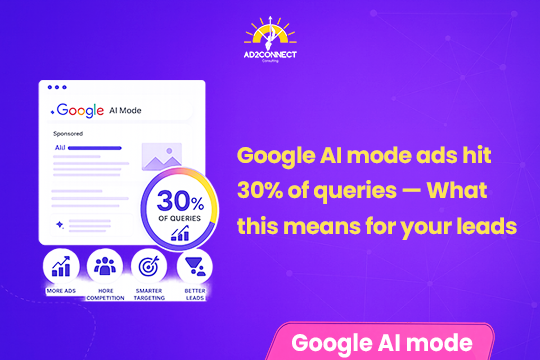
Google AI Mode information agents are AI-powered systems that automatically track topics, gather relevant content, and deliver summarized answers directly to users—significantly reducing the need for manual, multi-click web searches.
For businesses, this operational shift means:
- Lower organic click-through rates (CTR) across traditional search indexes
- Higher competition for exclusive AI visibility and citation features
- Greater structural demand for authority-driven, deeply organized content
If your brand is not properly optimized for AI-driven search ecosystems, you risk losing leads—even if your traditional rankings remain strong.
Key Takeaways
- Google is rapidly shifting from index-based search results to direct, AI-generated answers.
- Users may completely stop clicking through multiple websites to find answers.
- Only trusted, deeply structured content gets featured in AI summaries.
- Traditional SEO is actively evolving into AI Visibility Optimization (AIO).
- Early adopters stand to capture highly qualified leads at much lower acquisition costs.
Why This Change Is Happening
Google’s ultimate goal is simple: reduce friction for the end-user.
Instead of the old search journey:
- Searching multiple, distinct queries
- Clicking on different websites individually
- Comparing information manually across tabs
Users now experience a seamless flow:
- Instant summarized insights built directly into the search page
- Continuous background updates automated via AI agents
- Personalized content delivery tailored to search context
For users, this is incredibly efficient. For businesses, it creates a massive visibility bottleneck.
The Real Impact on Lead Generation
1. Fewer Website Clicks
Even if your platform holds a top organic rank, users may never visit your actual site. AI summaries answer their burning questions instantly right on the search engine results page (SERP).
2. Winner-Takes-All Visibility
AI engines do not show a traditional “top 10” list of blue links—they source from a highly selective handful of trusted resources. If you are not included in that summary: you don’t exist in that customer journey.
3. Increased Cost Pressure on Ads
As organic top-of-funnel traffic drops due to zero-click searches, companies will inevitably lean heavier on paid campaigns, driving up the average cost per lead (CPL) across major ad channels.
Common Mistakes Businesses Will Make
Based on live performance campaigns, these are the most predictable strategic traps to avoid:
- Relying Only on Traditional SEO: Simply ranking for classic search terms is no longer enough if the AI answers the query before a user clicks.
- Publishing Generic Content: AI systems explicitly ignore low-value, repetitive, or mass-generated blogs.
- Ignoring Brand Authority: Without definitive trust signals and clear metadata, your brand won’t be synthesized into AI answers.
Step-By-Step Strategy to Stay Visible
Step 1: Shift from Keywords to Comprehensive Topics
Instead of just targeting strict keywords like “SEO services Mumbai”, build deep contextual authority around major consumer problems, such as “How Mumbai businesses generate leads online.”
Step 2: Structure Content Explicitly for AI Scraping
Ensure every landing page and core article includes:
- A direct, definitive answer within the first 50 words
- Scannable bulleted points
- Highly descriptive subheadings
- Data-backed insights or primary source metrics
Step 3: Build Verifiable Trust Signals
Focus resources heavily on building out deep-dive case studies, authentic customer testimonials, and clear indicators of true industry expertise.
Step 4: Combine Local + AI SEO Frameworks
For brands operating in competitive metropolitan areas, integrate targeted Local SEO Services in Mumbai alongside your broader AI-optimized content plans. This ensures your brand is captured simultaneously by localized discovery algorithms and global AI models.
Case Study
A service-based company approached our team struggling with inefficient marketing assets:
- ?2,200 average cost per lead
- Low end-to-end conversion rates
- Weak overarching organic visibility
Strategy Implemented: We completely rebuilt their content layout into structured, AI-friendly schemas, bolstered localized search signals, and streamlined conversion-focused landing pages.
| Metric Verified | Before Optimization | After (3 Months) |
|---|---|---|
| Monthly Generated Leads | 55 / mo | 160 / mo |
| Cost Per Lead (CPL) | ?2,200 | ?820 |
| Overall ROI Growth | Baseline | 3X Improvement |
This massive turnaround wasn’t achieved through standard, legacy SEO tactics—it was driven by direct alignment with how Google’s algorithm is fundamentally evolving.
Expert Insights
Insight 1: Traffic Will Drop Before Leads Do
Many business owners panic when their total organic session metrics decline. However, AI-referred traffic is incredibly qualified. Less superficial traffic + higher user intent = significantly improved conversion rates.
Insight 2: Domain Authority Beats Content Volume
Publishing 50 thin, low-effort blog posts will no longer help your business. Publishing 10 high-authority, well-structured, data-backed pillar pages will.
Insight 3: AI Heavily Rewards Structural Clarity
The content that wins real-estate in AI overviews features clear, direct responses and simple layouts—not fluffy, overly creative writing or padded marketing storytelling.
Actionable Checklist
Start future-proofing your business asset lines today:
- Add a clear, definitive 1-2 sentence answer at the very top of high-value pages.
- Transition dense text blocks into clean, highly readable bullet points.
- Deepen topical scope by focusing on one precise market niche at a time.
- Publish verifiable, data-driven case studies featuring exact performance metrics.
- Audit and tighten your structural internal linking arrays.
- Synchronize local directory signals with your core AI optimization workflows.
- Pivot your primary tracking dashboards to monitor qualified leads instead of raw traffic volume.
Conclusion
Google AI Mode information agents are fundamentally altering how prospective clients uncover business solutions online. This is not a basic minor patch update—it is a paradigm shift in digital visibility mechanics.
Businesses that move fast to optimize will capture primary market share, reduce overall customer acquisition overhead, and command massive long-term niche authority. Those that wait risk fading out of search displays entirely.
The choice is simple: Adapt early or struggle later.