
Google Confirms AI Search Optimization Is the Same as SEO
Why Google’s Statement Matters More Than You Think
As AI-powered search experiences like Google AI Overviews and Search Generative Experience (SGE) become more visible, many businesses are asking a critical question: Do we need a new SEO strategy for AI search?
Google’s answer is refreshingly clear.
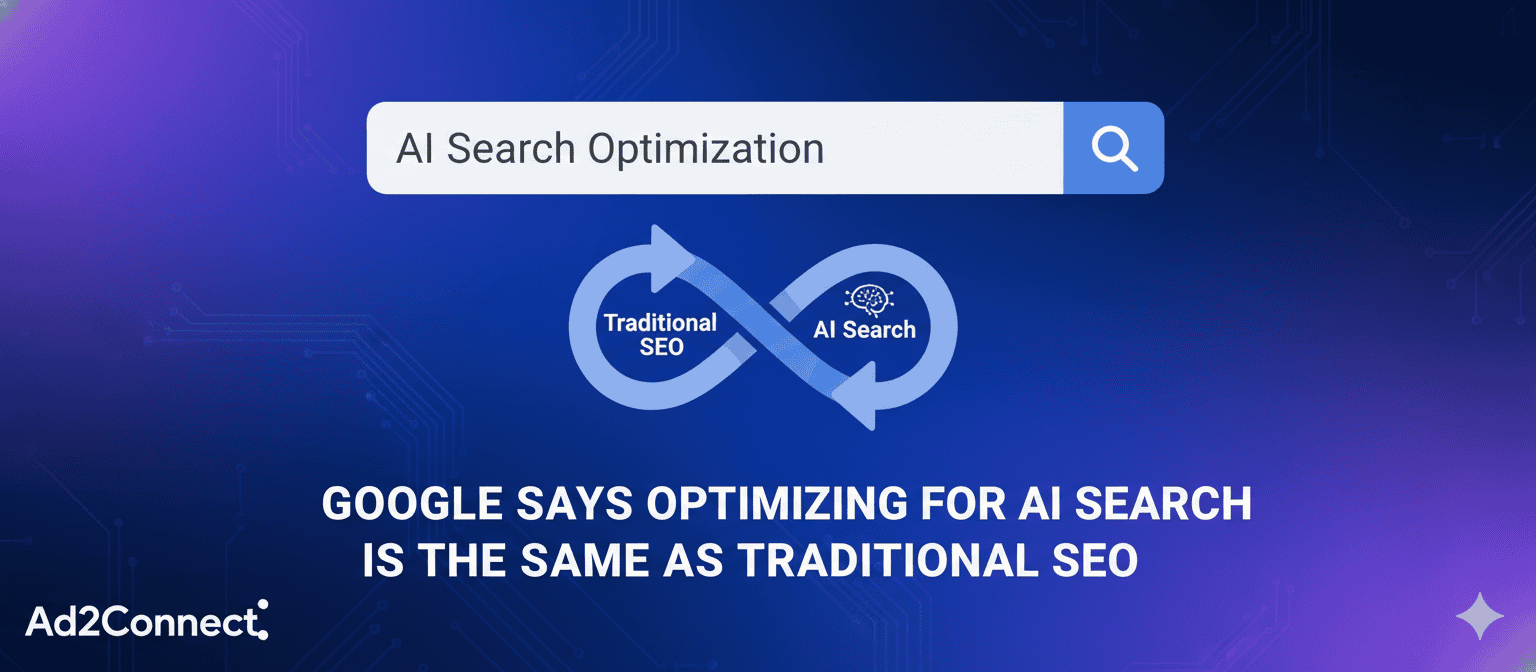
According to Google, optimizing content for AI-driven search is no different from optimizing for traditional search. This confirmation cuts through speculation and reinforces a core truth—SEO fundamentals still power visibility, even in AI-generated results.
For businesses in India and competitive markets like Mumbai, this clarity is essential. Instead of chasing AI shortcuts, success depends on content quality, intent satisfaction, trust signals, and user experience.
What Google Really Means by “AI Search Optimization Is SEO”
Google’s ranking systems have not been replaced by AI. Instead, AI search experiences build on existing ranking signals.
AI Overviews:
- Do not introduce new ranking factors
- Do not favor AI-written content
- Do not reward keyword stuffing or automation
They rely on the same evaluation principles Google has refined for years:
- Relevance to search intent
- Content depth and clarity
- Expertise and accuracy
- Page experience and accessibility
Key Insight: If your content helps users make decisions, learn something new, or solve a problem, it is already aligned with AI search expectations.
How AI Search Understands and Selects Content
Semantic Understanding Comes First
AI relies on semantic SEO, meaning it looks beyond keywords to understand context, topic relationships, and entity connections.
A page about AI search optimization should naturally reference entities such as Google AI Overviews, the Helpful Content System, search intent, E-E-A-T, and user experience signals. This helps AI systems confidently extract and summarize your content.
Structure Improves AI Visibility
AI prefers content that is easy to interpret and reuse. Clear structure improves AI Overview inclusion, featured snippet eligibility, and conversational search visibility.
Best practices include logical heading hierarchy, short explanatory paragraphs, bullet points, and summary-style sections. These also improve scroll depth and engagement—important behavioral SEO signals.
Trust and Expertise Drive AI Selection
AI systems prioritize content that demonstrates real-world experience and credibility.
Trust signals include:
- Author transparency
- Clear business identity and location
- Updated and maintained content
- Consistent topical authority
For Indian businesses, especially service providers in Mumbai, local entity optimization strengthens AI trust and relevance.
What Still Matters Most in the AI Search Era
Despite new interfaces, Google confirms that nothing replaces strong SEO fundamentals.
AI-powered search still rewards:
- Original, helpful content
- Mobile-first performance
- Fast loading pages
- Clear navigation
- Accessible design
Accessibility is increasingly important. Content aligned with WCAG best practices—readable fonts, strong contrast, descriptive alt text, and logical layout—improves usability for users and interpretability for AI.
Actionable SEO Strategies That Work for AI Search
Focus on Intent Completion, Not Just Rankings
AI favors content that fully satisfies search intent. This means answering the main question early, addressing related follow-up questions, and avoiding thin or fragmented pages.
Design Content for AI Extraction
Make content easier for AI to summarize by including concise definitions, step-by-step explanations, recap sections, and natural language phrasing. This supports visibility in AI Overviews, zero-click results, and voice search.
Optimize for Behavioral SEO Signals
Engagement still matters. Improve behavioral signals by placing key insights above the fold, using visual breaks, layering content from basic to advanced, and adding helpful calls to action.
How Advanced Optimization Models Strengthen AI Search Performance
At Ad2Connect, AI search optimization is part of a broader growth framework:
- AIO (AI Intelligence Optimization): Improving AI comprehension
- VEO (Visibility Experience Optimization): Aligning UX and discoverability
- TEO (Trust Entity Optimization): Building topical authority
- CRO (Conversion Rate Optimization): Turning AI traffic into leads
- SMO (Social Media Optimization): Reinforcing content signals
- LEO (Local Entity Optimization): Enhancing AI-driven local results
- CIO (Content Intelligence Optimization): Data-backed content planning
- MEO (Multi-Experience Optimization): Consistency across devices
AI doesn’t replace SEO—it amplifies well-executed strategies.
Conclusion: AI Search Rewards the Same SEO Done Right
Google’s message is reassuring: the future of search is built on the same foundations that already work.
AI-powered search rewards helpful, people-first content, clear structure, real expertise, and excellent user experience.
If your SEO strategy focuses on genuine value, you are already optimizing for AI search.