
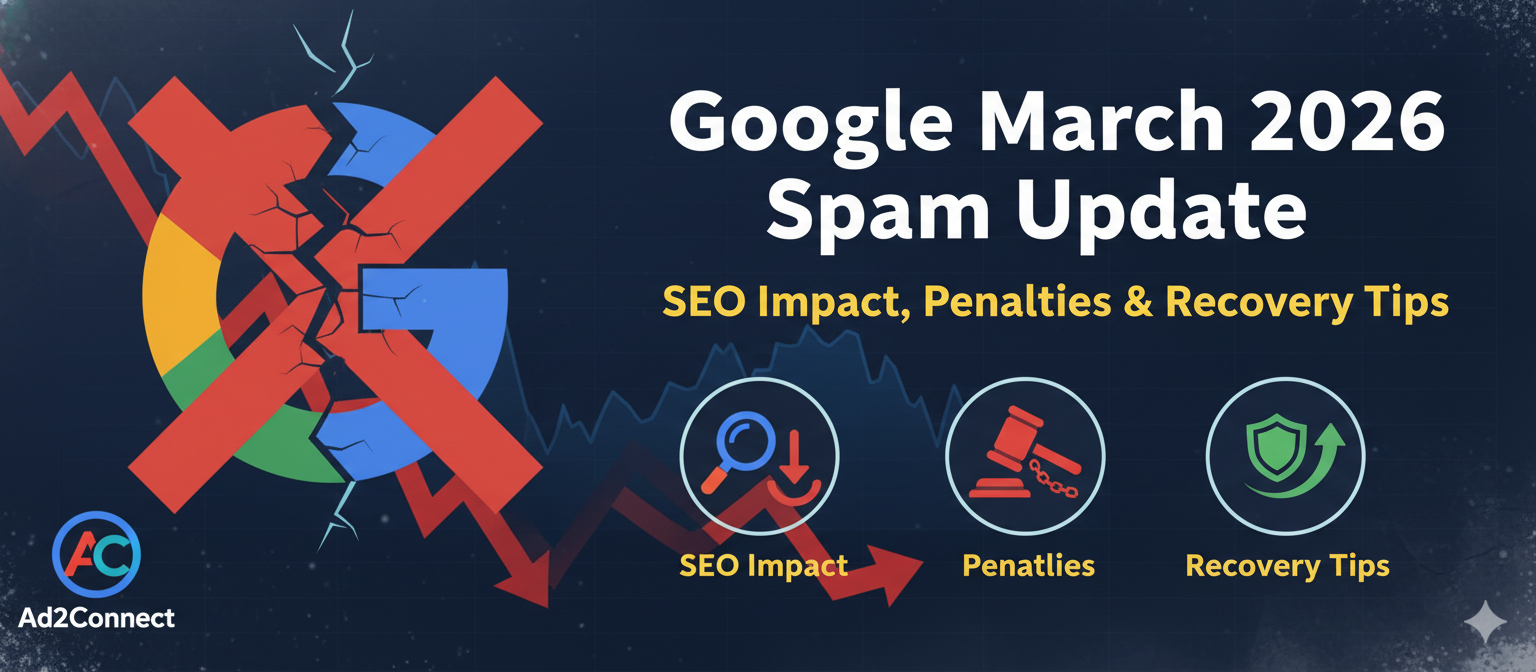
Google March 2026 Spam Update: SEO Impact, Penalties & Recovery Tips
The Google March 2026 spam update has officially rolled out, reinforcing Google’s commitment to improving search quality and eliminating manipulative practices. With every update, Google gets better at identifying spammy tactics, and this time, the focus is sharper than ever on low-value content, link manipulation, and scaled content abuse.
For website owners, bloggers, and SEO professionals, this update is a clear signal: quality, authenticity, and user-first content are essential. Many sites relying on shortcuts have already seen ranking drops, while those following ethical SEO practices are gaining visibility.
In this article, you’ll learn what the update is about, its SEO impact, common penalties, and actionable recovery tips.
Table of Contents
- What Is the Google March 2026 Spam Update?
- Key Highlights of the Update
- SEO Impact of the Spam Update
- Common Penalties You Should Know
- How to Identify If Your Site Is Affected
- Recovery Tips After the Update
- Best Practices to Stay Safe
- Common Mistakes to Avoid
- FAQs
- Conclusion
What Is the Google March 2026 Spam Update?
The Google March 2026 spam update is a targeted algorithm update designed to detect and reduce spam content in search results. Unlike core updates, spam updates specifically focus on violations of Google’s spam policies.
This update filters out websites that attempt to manipulate rankings using unethical methods such as mass content generation, cloaking, and unnatural backlinks.
Key Highlights of the Update
Stronger Detection of Low-Quality Content
Google has improved its ability to identify content that lacks originality or is created at scale without value.
Focus on Expired Domain Abuse
Sites using expired domains to exploit authority for unrelated niches are now penalized.
Improved Link Spam Systems
Unnatural backlinks and paid link schemes are more effectively handled.
Better Cloaking Detection
Showing different content to search engines and users is easier for Google to detect.
SEO Impact of the Spam Update
The Google March 2026 spam update has significantly impacted search rankings across industries.
Positive Effects
- High-quality content ranks better
- Authority websites gain visibility
- User-focused content performs well
Negative Effects
- AI-generated bulk content loses rankings
- Thin affiliate sites are penalized
- Black-hat SEO tactics lead to traffic drops
Most Affected Industries
- Affiliate marketing
- Finance and crypto
- Health and wellness
Common Penalties You Should Know
Content Devaluation
Low-quality or duplicate content may fail to rank.
Ranking Drops
Pages may lose positions due to spam signals.
Deindexing
Severe violations can lead to removal from search results.
Link Ignoring
Spammy backlinks may be ignored, reducing authority.
How to Identify If Your Site Is Affected
Check Traffic Trends
Look for sudden drops in organic traffic.
Monitor Google Search Console
- Impressions decline
- Click reduction
- Manual actions
Track Keyword Rankings
Significant keyword drops may indicate impact.
Recovery Tips After the Update
Perform a Content Audit
- Remove thin content
- Update outdated posts
- Add original insights
Improve Content Quality
Focus on expertise, clarity, and user intent.
Clean Your Backlink Profile
- Remove toxic links
- Avoid paid backlinks
- Build natural links
Fix Technical Issues
- Secure your site
- Remove hacked content
- Improve site performance
Best Practices to Stay Safe
- Create helpful, user-first content
- Use AI responsibly with human editing
- Follow Google spam policies
- Build trust and authority
Common Mistakes to Avoid
- Publishing bulk AI content without editing
- Buying low-quality backlinks
- Ignoring content updates
- Using clickbait titles
- Misusing expired domains
Conclusion
The Google March 2026 spam update clearly emphasizes quality, trust, and user value. Websites relying on manipulative tactics are losing visibility, while those focusing on helpful content are gaining rankings.
To stay competitive, prioritize original content, follow ethical SEO practices, and continuously improve your website. Long-term success depends on building trust and delivering real value to users.