Google’s September 2026 Spam Update: What It Means for You
Google just released its fourth spam update of the year. Here is what it actually does, why most sites have nothing to worry about, and what small business owners should still check.
By Snehal Singh | Updated September 25, 2026
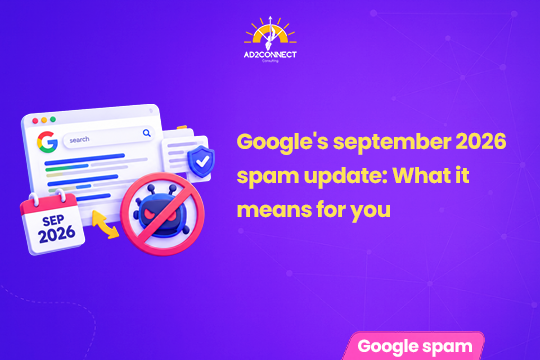
Google released its September 2026 spam update on September 24, rolling out globally across all languages over roughly two weeks. It is the fourth spam update Google has issued this year, following the August 2026 update. Spam updates target manipulative practices like scaled low-quality content, cloaking, and site reputation abuse. Most genuine businesses will see no change, but this is a good moment to check your site’s health.
Table of Contents
What Google Actually Announced
On September 24, 2026, Google confirmed it had released a new spam update. The company posted the news on its search status dashboard. The announcement was short and factual, with no drama attached.
The rollout applies worldwide. It covers every language Google supports, not just English websites.
Google says the update can take up to two weeks to fully roll out. Rankings for some sites may keep shifting for several days after the announcement. This can happen even if nothing on the site itself has changed.
This is the fourth spam update Google has released in 2026. The last one landed in August 2026. That means Google is now updating its spam systems roughly every six to eight weeks this year.
Spam updates are different from Google’s regular “core updates.” A core update reshuffles how pages are ranked overall. A spam update is narrower. It mainly targets sites and pages that break Google’s spam policies, not general content quality.
What Spam Updates Usually Target
Google rarely lists exact ranking factors for a spam update. But its published spam policies are public, and past updates have consistently gone after the same handful of tactics.
To understand why this matters even if your site was never flagged, it helps to know how Google groups spam into a few clear buckets, not one vague pile. Most small businesses fall outside every one of them without even trying. Scaled content abuse means pages made in bulk with little human editing, churned out just to grab search traffic instead of answering a real question. Site reputation abuse means a trusted website rents out space to unrelated low-quality content, like a news site hosting random coupon pages just to borrow its own good name. Cloaking means showing search engines one version of a page while showing visitors something else entirely. Expired domain abuse means buying an old domain purely for its existing backlinks, then filling it with content that has nothing to do with why those links were earned. None of this describes an honest local business writing its own service pages, blog posts, and customer information. That is exactly why most genuine websites pass through a spam update without a single ranking change.
Should You Be Worried?
For most small and medium businesses, the honest answer is no.
Spam updates are built to catch manipulative practices. They are not aimed at ordinary businesses that write their own content and serve real customers. If your site was not built around any of the tactics above, a spam update is unlikely to move your rankings at all.
That said, “unlikely” is not “impossible.” Google itself admits that some sites get caught even when they were not trying to spam anyone. This usually happens two ways. Either a site has old, low-quality pages sitting untouched for years. Or a hired freelancer or agency used shortcuts the business owner never approved.
The two-week rollout window is a good time to simply watch your search traffic and rankings. There is no need to panic or make sudden changes.
A Quick Site Health Check
Use this table to get a rough read on where your website stands before or during a spam update rollout.
| Area | Lower Risk Signs | Higher Risk Signs |
|---|---|---|
| Content origin | Written or reviewed by a real person on your team | Bulk-published, thin, or auto-generated pages |
| Old pages | Regularly reviewed and updated | Hundreds of forgotten pages from years ago |
| Guest content | Rare, relevant, and clearly labelled | Large volumes of unrelated third-party content |
| Domain history | You built the domain’s reputation yourself | Bought an old, unrelated domain for its backlinks |
| Page behaviour | Same content for users and search engines | Different content shown to bots versus visitors |
If most of your answers land in the lower risk column, there is usually nothing urgent to do. If a few sit in the higher risk column, that is not a reason to panic either. It is simply a clear list of what to clean up first.
Mistakes That Look Like Strategy
Panicking and deleting pages the moment a spam update is announced. Most sites are never touched by a given update. Reacting before you see real data wastes time. It can even hurt pages that were doing fine.
Assuming a traffic dip during the rollout window is caused by the spam update. Seasonal trends, algorithm noise, and technical issues can all overlap with the same two-week period.
Hiring an agency that promises to “beat” a spam update with a quick trick. If a tactic sounds too easy, it is often the exact kind of shortcut these updates are built to catch.
Ignoring old, neglected pages simply because they were never flagged before. A page that has sat untouched for years is exactly the kind of content a future update could target.
How Ad2Connect Approaches Spam Updates
At Ad2Connect, we do not chase every Google announcement with sudden changes. As a Top SEO Company And Agency In Mumbai, India, our process is built around clean, original content and technical hygiene. Spam updates rarely require a reaction from our clients at all.
Before any update lands, our Best Local SEO Company in Mumbai team reviews old pages, thin content, and forgotten sections of a website. Clients often forget these pages even exist.
For businesses worried their brand voice feels generic or templated, our Branding & design agency work makes sure your website sounds like your business, not a mass-produced page built for search engines alone.
Clients who need fresh, human-written content instead of bulk-generated pages work with our Creative Brand Agency in Mumbai team. This builds content that holds up through every future update, not just this one.
And when it is time to turn steady rankings into real leads, our Performance Marketing agency team connects the SEO groundwork to actual business results.
This is the same approach we bring as one of the Boutique digital marketing agency in Mumbai teams working with local and national brands alike. Learn more about our team.
Key Takeaways
- Google released its September 2026 spam update on September 24, rolling out globally over roughly two weeks.
- This is the fourth spam update of 2026, following the August 2026 update.
- Spam updates target manipulative tactics like scaled content, cloaking, and reputation abuse, not ordinary business websites.
- Most small businesses will see no change, but a quiet review of old or thin pages is always a good habit.
- Wait for real data before making sudden changes during a rollout window.
Spam updates are not something most business owners need to fear. They are a good reminder to keep your website honest, current, and built for real customers, not shortcuts.