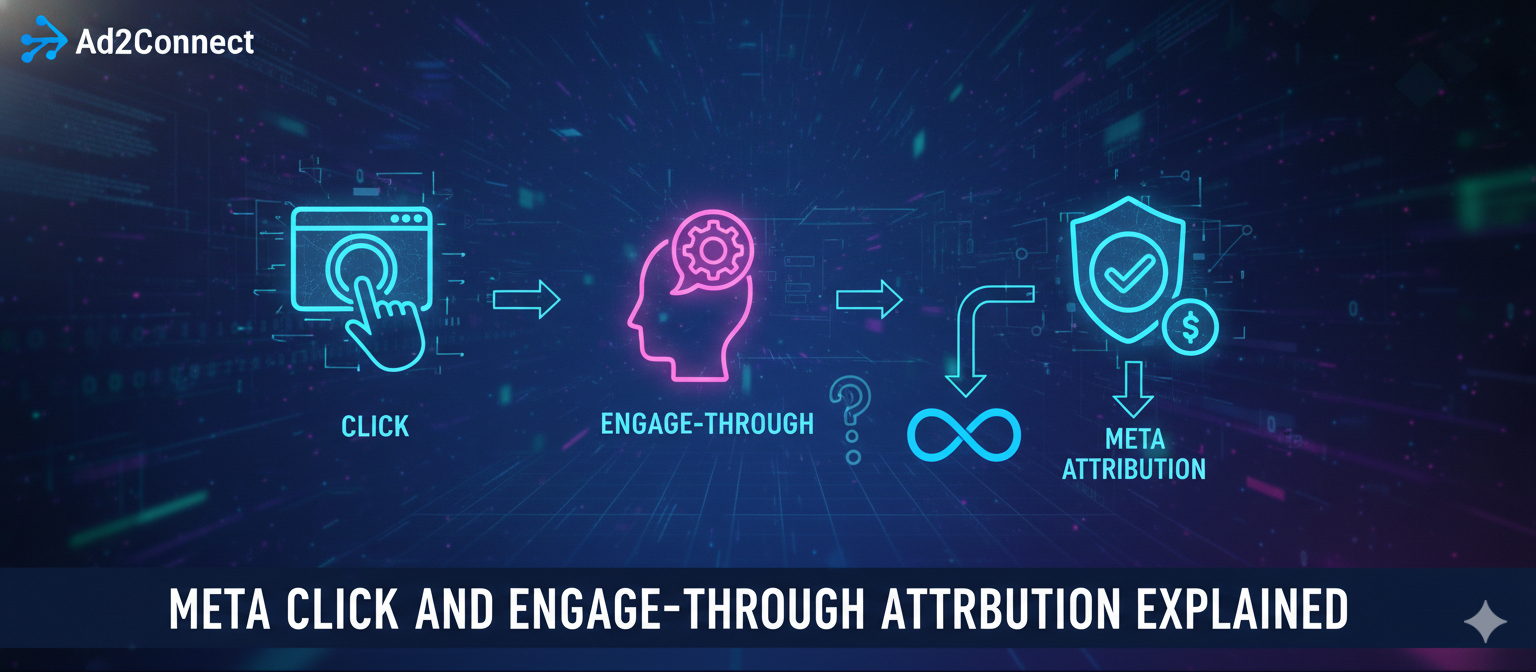
Meta Click and Engage-Through Attribution Explained
Measuring what truly drives conversions has become more difficult as user journeys grow more complex. People scroll, watch, save, and return later—often on a different device. Traditional click-only attribution struggles to capture this behavior. To close this gap, Meta introduced click and engage-through attribution updates that recognize not only clicks but also meaningful interactions with ads.
These updates matter because they reshape how performance is reported and how campaigns are optimized. Instead of crediting only the final click, advertisers can now understand how engagement contributes to conversions over time. This article explains what these attribution updates mean, why they matter, and how to use them effectively.
Why Attribution Is Evolving
Attribution connects user actions to business outcomes. When attribution is incomplete, marketers risk:
- Overvaluing last-click channels
- Undervaluing awareness campaigns
- Optimizing for short-term wins instead of sustainable growth
Privacy-first measurement models and platform changes are accelerating this shift. Search platforms like Google increasingly rely on modeled and aggregated data. Meta’s updates align with this trend by using interaction signals that better reflect how people behave on social platforms.
In reality, many conversions happen after a user:
- Watches a video ad
- Likes or saves a promoted post
- Views a carousel and returns later through another channel
Click-only models miss these important influence points.
Understanding the Two Attribution Types
Click-Through Attribution
Click-through attribution assigns conversion credit when a user clicks an ad and completes a conversion within a defined window. It works well for:
- Lead generation campaigns
- Direct-response e-commerce
- Short buying cycles
Its limitation is that it ignores influence when no immediate click occurs.
Engage-Through Attribution
Engage-through attribution credits conversions when users interact with an ad—such as watching a video, expanding a carousel, or liking a post—and later convert without clicking the ad.
This model reflects:
- Mid-funnel impact
- Brand exposure value
- Social discovery behavior
Together, click-through and engage-through attribution provide a more complete picture of ad influence.
What Changed With Meta’s Attribution Updates
Meta’s updates expand how interactions are considered in reporting and optimization. Advertisers can now:
- Attribute conversions based on engagement signals
- Compare click-based and engagement-based results
- Adjust attribution windows more flexibly
- Analyze performance by interaction type
This supports CIO (Customer Intent Optimization) by mapping real user behavior instead of assuming all conversions come from direct clicks.
Key benefits include:
- Better insight into awareness and consideration campaigns
- Clearer links between creative engagement and outcomes
- Stronger machine-learning signals for delivery optimization
Impact on Campaign Optimization
Improved Funnel Visibility
With both click and engagement data, marketers can:
- Identify which creatives spark interest
- See which placements influence delayed conversions
- Understand the role of video and carousel formats
This supports TEO (Topic Experience Optimization) and MEO (Multimodal Experience Optimization) by showing how formats perform at different funnel stages.
Stronger CRO Insights
Conversion optimization improves when teams understand what influenced users before they arrived on a landing page. With engagement attribution:
- Landing pages can be aligned with ad messaging
- Funnel friction can be diagnosed more accurately
- Creative testing can focus on interaction quality rather than only CTR
GEO and Market Considerations
In competitive regions such as the US, UK, and EU, attribution accuracy is critical due to:
- Higher advertising costs
- Multi-device user behavior
- Privacy regulations affecting tracking
Engage-through attribution helps marketers in these markets:
- Measure delayed conversions more accurately
- Capture brand influence across sessions
- Support LEO (Local Experience Optimization) through better regional insights
Practical Strategies for Advertisers
How to use the new attribution features effectively:
- Review attribution settings in Meta Ads Manager.
- Compare click-through and engage-through results.
- Segment reports by format (video, image, carousel).
- Evaluate engagement quality, not only impressions.
- Align results with analytics and CRM data.
- Test different attribution windows based on buying cycles.
- Train stakeholders to interpret engagement-based insights.
Measurement Beyond Clicks
Modern attribution must account for:
- Multi-session journeys
- Cross-platform movement
- Awareness-driven influence
Key KPIs to track alongside attribution updates:
- Engagement rate
- Assisted conversions
- Conversion lag time
- Cost per engaged user
- Growth in branded search volume
Conclusion
Meta’s click and engage-through attribution updates mark a shift toward more realistic ad measurement. By capturing both direct actions and meaningful interactions, advertisers gain a clearer understanding of what drives conversions and how campaigns influence the full customer journey.
This approach aligns with modern marketing priorities: intent, experience, and long-term brand impact rather than only last-click performance.