
Paid Search Clicks Double as Organic Clicks Drop
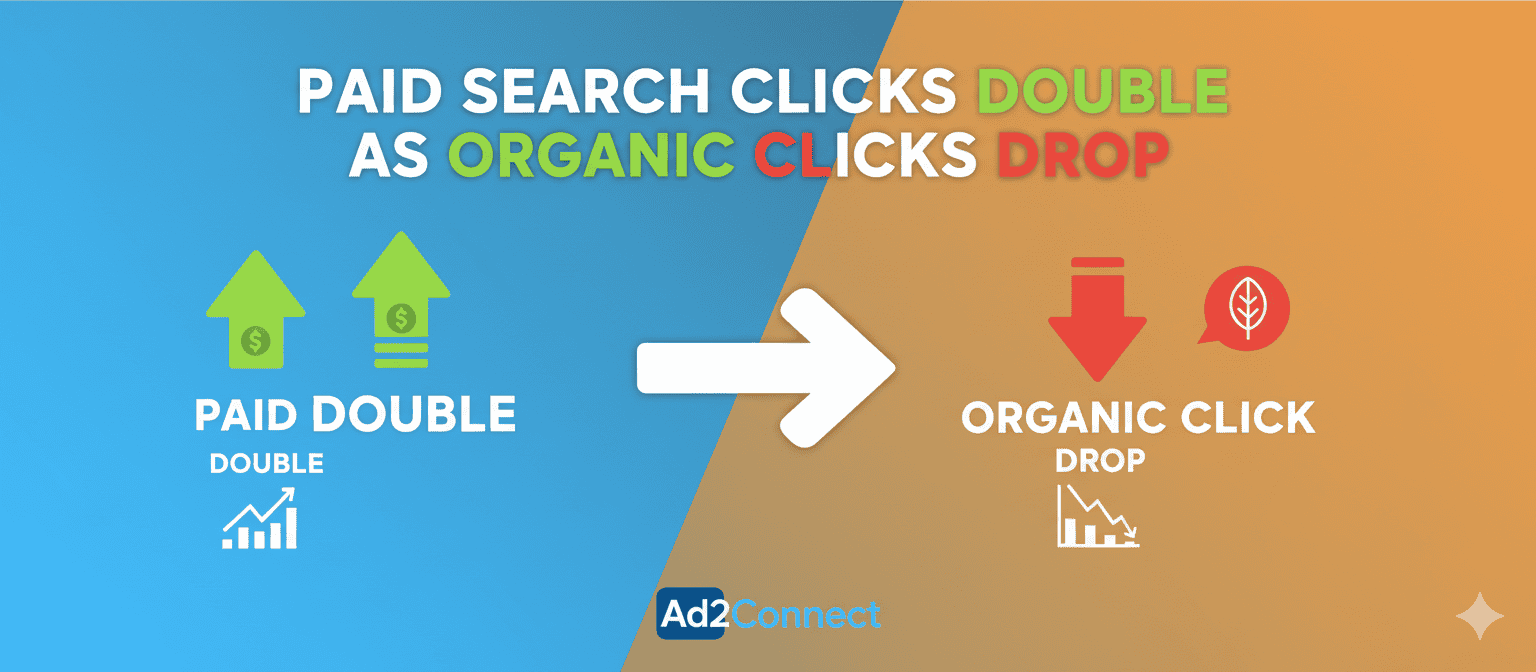
Search engines are changing how users discover information, and the impact on website traffic is becoming impossible to ignore. A recent industry study reveals a major shift in user behavior: paid search clicks have doubled, while organic clicks are steadily declining. This trend is reshaping how brands compete for attention on search engine results pages (SERPs).
For businesses in India—especially in highly competitive markets like Mumbai, Delhi, and Bengaluru—this change carries strategic consequences. Organic rankings alone are no longer enough to guarantee traffic or leads. Instead, visibility is increasingly driven by paid placements, AI-powered answers, and rich SERP features.
In this article, we explore what the study uncovered, why organic clicks are falling, why paid search is gaining ground, and how businesses can adapt their SEO and PPC strategies for sustainable growth.
What the Study Shows
According to analysis reported by :contentReference[oaicite:0]{index=0}, paid search now captures a significantly larger share of total clicks compared to previous years, while organic click share has dropped.
The research highlights three important shifts:
- Paid ads are taking up more space at the top of search results.
- Users are interacting more with sponsored listings, particularly for commercial queries.
- Organic results are being pushed lower due to AI summaries, shopping units, and local packs.
This indicates a structural change in how search engines distribute attention. Ranking first organically does not guarantee the same traffic levels it once did because user focus is split between multiple visual and interactive elements.
Why Organic Clicks Are Declining
More Ads Above Organic Results
Search engines now display multiple paid ads before any organic listing appears, especially for product searches, service-based keywords, and competitive B2B queries. A search for “best digital marketing agency in Mumbai,” for example, can show four paid ads before the first organic result becomes visible.
Growth of AI and Zero-Click Searches
Search engines increasingly provide instant answers through AI-generated summaries, featured snippets, and knowledge panels. These features satisfy user intent directly on the results page, reducing the need to click through to a website.
Visual SERP Features Dominate Attention
Elements such as product carousels, map packs, and video previews draw user attention away from traditional blue links. This makes it harder for organic listings to compete visually.
Why Paid Search Clicks Are Increasing
Stronger Commercial Intent
Users who click paid ads are often closer to making a decision. These searches typically involve buying a product, booking a service, or requesting a quote. This makes paid search especially valuable for lead generation and ecommerce businesses.
Smarter Targeting and Automation
Platforms like Google Ads use machine learning to optimize bidding strategies, audience targeting, and device and location preferences. This ensures ads are more relevant and more likely to earn clicks.
Enhanced Ad Formats
Modern paid ads include call extensions, location information, reviews, ratings, and pricing. These features make ads appear more trustworthy and informative than standard organic links.
What This Means for Businesses in India
For Indian brands operating in saturated digital markets, this shift means that relying only on organic SEO is becoming riskier. Industries such as education, healthcare, real estate, SaaS, and ecommerce are already seeing stronger competition in paid search than in organic rankings alone.
This does not mean SEO is obsolete. Instead, it means SEO must evolve toward informational and problem-solving content, topical authority, and trust-building material aligned with E-E-A-T principles.
Actionable Strategies You Can Apply Now
Analyze Your SERP Environment
Search for your main keywords and evaluate how many ads appear, whether AI summaries are shown, and how far organic results are pushed down.
Shift SEO Toward Informational and Long-Tail Queries
Focus your organic strategy on how-to guides, educational blog posts, comparison content, and industry explainers. These queries still attract organic clicks and support topical authority optimization.
Combine Paid Search With CRO
Optimize landing pages for fast loading, mobile usability, clear calls to action, and simple navigation to improve conversion rate optimization.
Strengthen Local and Mobile Experience
Ensure pages load quickly on mobile, contact details are easy to access, location pages are optimized, and click-to-call buttons are visible.
Use Content Intelligence to Guide Decisions
Track which pages drive conversions, which keywords trigger AI summaries, and where users exit your site.
Conclusion
The evidence is clear: paid search clicks are rising while organic clicks are becoming harder to win. This does not signal the end of SEO, but it does mark a turning point in how search visibility works.
For businesses in India, success now depends on understanding SERP behavior, balancing paid and organic strategies, investing in mobile and local optimization, and creating trust-driven content.


