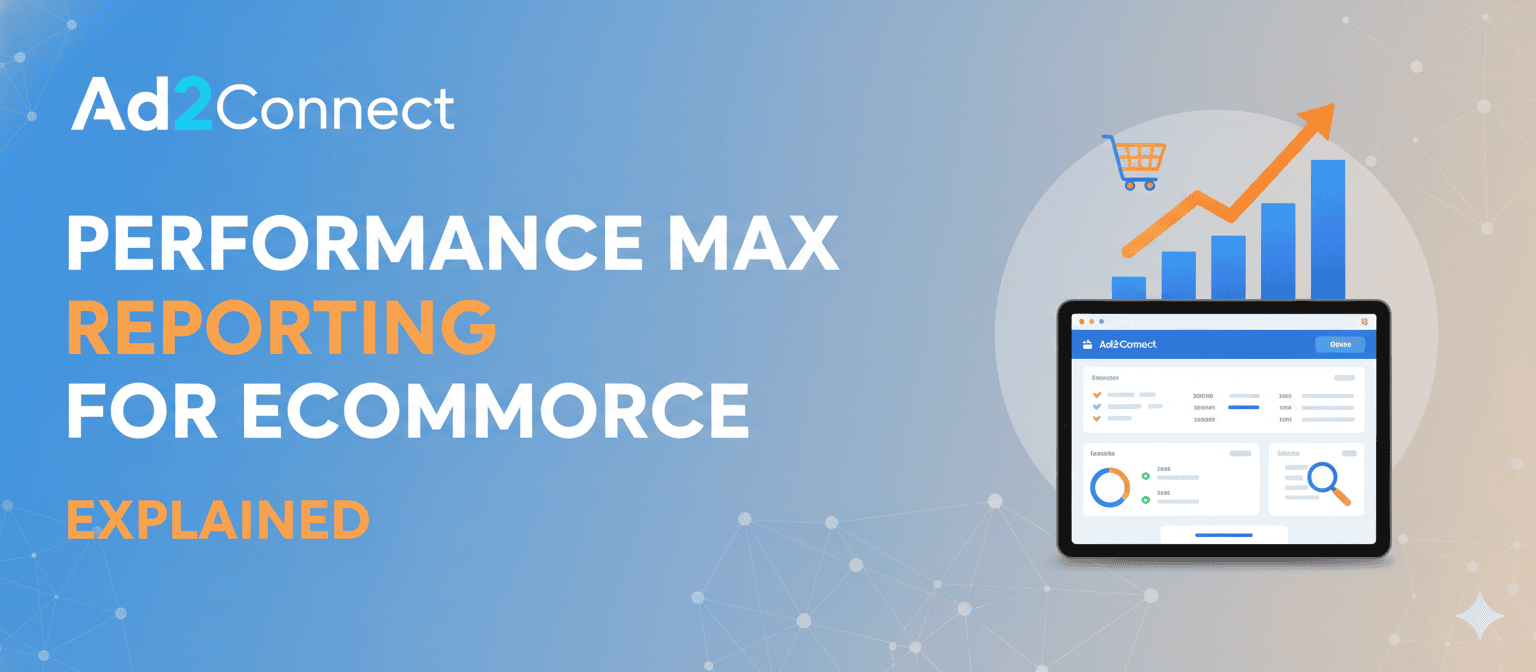
Performance Max Reporting for Ecommerce Explained
Why Performance Max Reporting Feels Incomplete
Performance Max campaigns were designed to simplify Google Ads by letting AI decide where, when, and how ads appear across Search, Shopping, Display, YouTube, Discover, and Gmail. For ecommerce brands, this promises scale and efficiency.
But when it comes to reporting, many advertisers feel like they are flying blind.
Unlike traditional Search or Shopping campaigns, Performance Max does not provide full visibility into search terms, placements, or channel performance. Instead, advertisers see aggregated results, which makes diagnosing problems and proving ROI more difficult.
Understanding what Google is showing—and what it is not—is critical for ecommerce businesses that depend on accurate performance data to manage inventory, margins, and growth.
What Google Shows You in Performance Max
Asset Group Performance
Google reports performance at the asset group level, including impressions, clicks, conversions, and conversion value. Asset groups bundle creative assets, products, and audience signals together.
You do not see which specific image, headline, or video drove a conversion. This limits creative-level optimization and makes testing slower.
AIO (AI Optimization): Google’s machine learning evaluates asset groups as systems, not individual ads. Your role is to improve the quality of the system by providing better inputs rather than tweaking outputs.
Product-Level Reporting
If your Performance Max campaign is linked to Merchant Center, you can view metrics by product ID such as spend, conversion value, and ROAS.
This helps ecommerce advertisers identify high-performing products, low-margin products draining budget, and seasonal or clearance items that need separate treatment.
MEO (Market Entity Optimization): Segmenting products by category and profit margin helps Google’s AI better understand your inventory structure and demand patterns.
Audience Signal Insights
Google shows which audience signals are influencing campaign learning, such as past purchasers, in-market segments, and customer match lists.
These signals do not restrict targeting but guide the algorithm toward likely converters.
LEO (Local Entity Optimization): For retailers targeting specific regions such as the US, UK, or EU, adding geo-based customer lists and store visit signals improves relevance and delivery accuracy.
What Google Does Not Show You
Search Terms and Queries
Performance Max does not provide a full list of search terms. You only receive limited insights into broad query themes.
This means you cannot identify wasted spend on irrelevant keywords, build keyword-level negative lists, or measure intent strength.
Channel-Level Performance
You cannot see how much budget or performance comes from YouTube, Display, Search, Discover, or Gmail.
Everything is grouped under one campaign result, making it impossible to know which channel is driving conversions.
Placement-Level Reporting
Advertisers cannot see specific websites, YouTube channels, or mobile app placements.
CIO (Content Intelligence Optimization): Without placement data, advertisers must rely on creative quality and audience intent rather than manual exclusions.
Why Google Limits Performance Max Reporting
Google states that limited reporting prevents over-optimization and protects machine learning systems. By removing granular controls, advertisers are encouraged to focus on outcomes rather than tactics.
In practice, this shifts advertisers toward trusting automation and away from channel-level management.
Tips, Strategies, and Real-World Examples
Segment by Business Logic
Instead of one broad campaign, structure asset groups by high-margin products, bestsellers, seasonal inventory, and clearance items.
Use First-Party Data Aggressively
Upload email subscriber lists, past purchasers, and loyalty members. This improves learning speed and helps Google distinguish between new and returning customers.
TEO (Technical Optimization): Ensure GA4 and Google Ads conversion tracking passes accurate revenue values, not just conversion counts.
Measure Incrementality
Compare branded vs non-branded trends, run holdout tests, and monitor assisted conversions to determine if Performance Max is creating new demand.
Optimize Creative for Accessibility and UX
Use high-contrast text, avoid small fonts, write alt text for all images, ensure mobile-friendly landing pages, and create clear calls to action.
VEO (Visual Experience Optimization): High-quality product photos and short-form videos increase engagement across YouTube, Discover, and Display placements.
Behavioral SEO and Engagement Signals
Improve dwell time and interaction by adding jump links, using scannable bullet points, including visual diagrams, and offering downloadable checklists.
Conclusion: Optimize What You Control
Performance Max reporting does not tell you where your ads appear or which queries drive conversions. It only tells you what the outcome was.
For ecommerce advertisers, success depends on feed quality, conversion accuracy, creative clarity, audience intelligence, and strategic segmentation.