PPC Strategies to Stay Profitable in Zero-Click Search
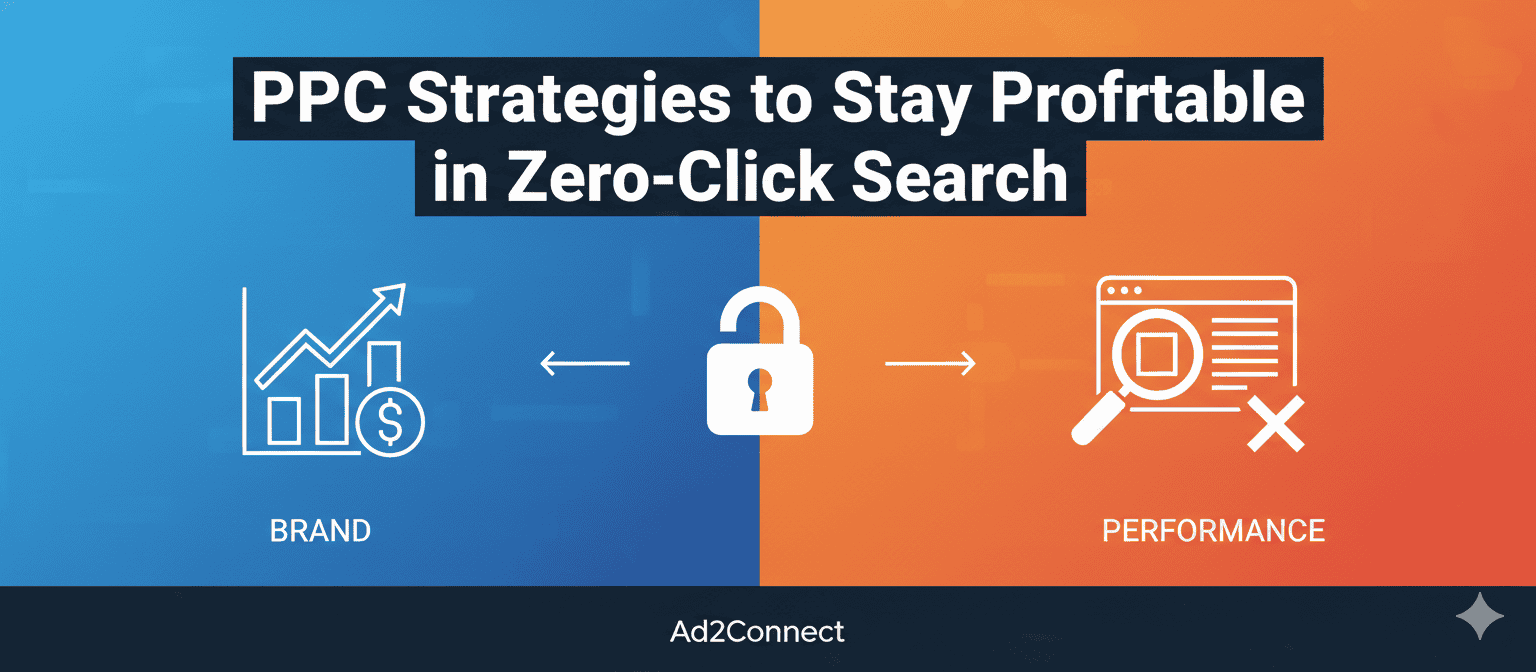
Digital advertising is evolving fast. Users increasingly get the answers they need directly on the search results page via featured snippets, maps, knowledge panels, or AI Overviews—without clicking a website. This is known as zero-click search, presenting both challenges and opportunities for PPC marketers.
Fewer clicks can seem threatening, but zero-click search doesn’t mean PPC is dead. Paid search now focuses on capturing intent, influencing brand perception, and driving assisted conversions, not just raw traffic. Understanding zero-click dynamics and optimizing campaigns accordingly is essential to stay profitable in today’s competitive landscape.
Understanding Zero-Click Search
Zero-click search occurs when users find the information they need directly on the SERP without visiting any paid or organic result.
Common zero-click elements include:
- Featured snippets
- People Also Ask (PAA) boxes
- Knowledge panels
- Google Maps and Local Pack
- Shopping carousels
- AI-generated Overviews
Even without clicks, your ads and content generate brand visibility—influencing later search, social engagement, and offline behavior.
How Zero-Click Search Affects PPC Performance
Rising CPC and Fewer Conversions
As fewer users click through, cost-per-click (CPC) tends to rise due to higher competition for high-intent queries. Conversion rates may stagnate if campaigns are not adjusted, making efficiency and ROI tracking critical.
Brand Impressions Become Critical
Even when ads aren’t clicked, they build brand awareness and trust. Brand visibility influences:
- Branded searches
- Social engagement
- Repeat website visits
- Offline conversions
This positions PPC as a hybrid channel, combining performance with brand-building.
PPC Strategy Adjustments for Zero-Click Search
Target High-Intent, Niche Queries (TEO)
Topical Entity Optimization (TEO) helps marketers target context-rich, high-intent queries that are less likely to be fully answered by zero-click elements.
For example:
- Generic term: “CRM software”
- High-intent alternatives:
- “CRM software for healthcare compliance”
- “Best CRM for remote sales teams”
- “CRM with predictive analytics for small business”
Optimize Landing Pages for AI Overviews (AIO)
AI-generated summaries and Overviews pull information from structured, trusted sources. PPC landing pages should:
- Answer common questions clearly
- Include scannable headings and bullet points
- Provide examples or comparisons
- Align ad copy with page content
Optimizing pages this way improves Quality Score, increases click-through rates, and positions your content for AI-driven SERP visibility.
Behavioral SEO and PPC Alignment
Behavioral signals measure how users interact after clicking:
- Time on page
- Scroll depth
- Low return-to-SERP behavior
- Repeat visits
Landing pages optimized for behavior improve:
- Organic rankings
- Paid ad performance
- Remarketing efficiency
CRO and Visual Engagement Optimization (VEO)
Conversion Rate Optimization (CRO)
With fewer clicks available, every visitor matters. Key strategies:
- Reduce form friction
- Use social proof and testimonials
- Match CTA to search intent
- Provide immediate value (calculators, guides, demos)
Visual Engagement Optimization (VEO)
Design impacts how quickly users process content:
- Short paragraphs and bullets
- Icons and visual cues for scanning
- Interactive elements to guide user actions
- Clear visual hierarchy emphasizing CTAs
Content Intelligence (CIO) and Media Optimization (MEO)
CIO for Campaign Insights
Content Intelligence Optimization identifies:
- Gaps in existing content
- Emerging trends in user queries
- Weak ad-to-page alignment
MEO for Engagement and AI Recognition
Media assets enhance human engagement and AI comprehension:
- Product diagrams
- Explainer videos
- Infographics
- Comparison charts
Social Media Optimization (SMO) for PPC
Social signals reinforce PPC campaigns by:
- Increasing brand familiarity
- Expanding remarketing audiences
- Improving perceived authority
Practical SMO tactics:
- Share PPC landing pages on social channels
- Encourage engagement and sharing
- Promote visually rich, informative content
- Collaborate with influencers
GEO Strategy for Local PPC
Zero-click search heavily favors local results. Optimize local PPC by:
- Creating location-specific ad groups
- Developing city-level landing pages
- Optimizing Google Business Profile
- Implementing local schema markup
Structured Data and Schema Implementation
Structured data helps AI and search engines understand your content:
- Organization schema – Brand identity
- Article schema – Page type and structure
- Author schema – Establishes credibility
- Breadcrumb schema – Navigation hierarchy
- Product/Service schema – Context for ads
- FAQ schema – Common user questions
Actionable Tips to Stay Profitable
- Focus on niche, high-intent keywords
- Optimize landing pages for AI summaries
- Track assisted conversions, not just last-click
- Align PPC with organic and social strategies
- Maximize engagement through CRO and VEO
- Implement structured data to enhance visibility
- Measure brand visibility as a KPI
Conclusion
Zero-click search doesn’t signal the end of PPC—it signals evolution. Paid search is now a hybrid channel that drives brand influence, intent capture, and conversions simultaneously.
To stay profitable, marketers must:
- Target high-intent, niche queries
- Optimize landing pages for AI and humans
- Focus on UX, accessibility, and mobile performance
- Measure success beyond clicks