
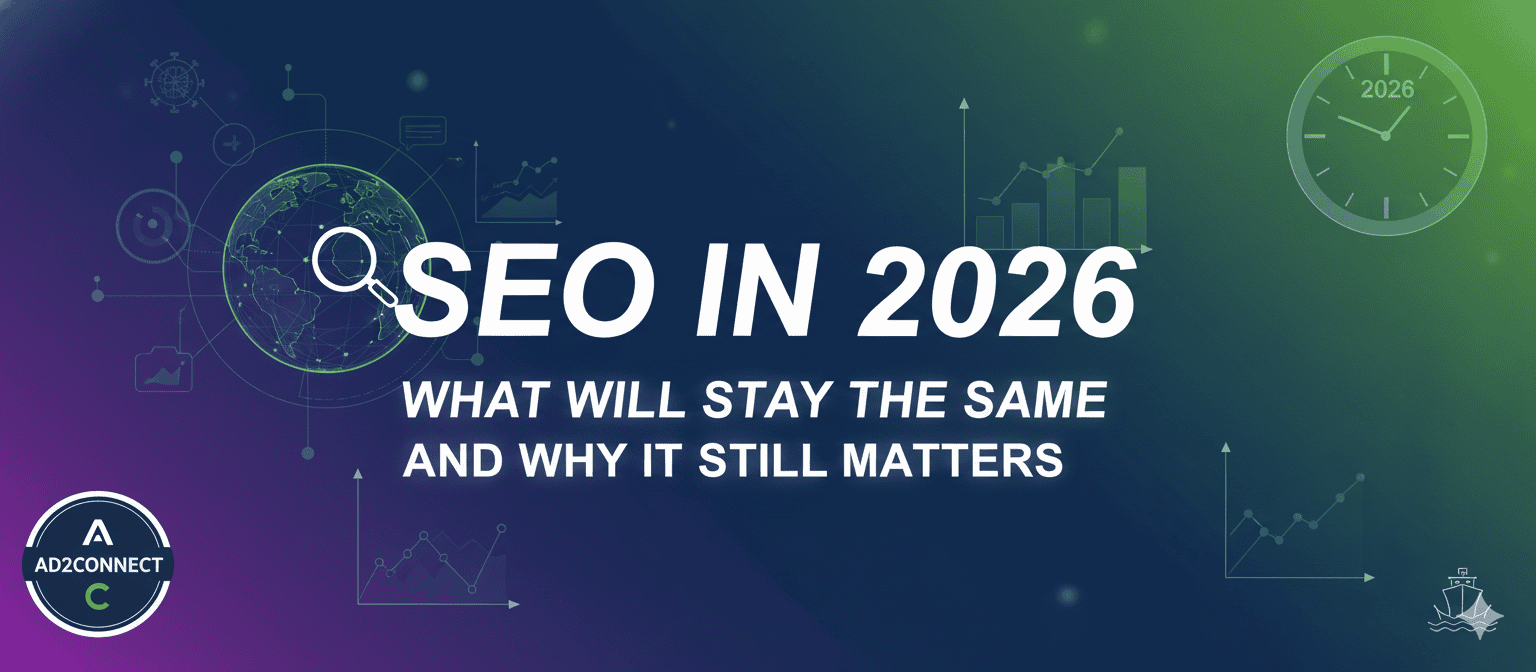
SEO in 2026: What Will Stay the Same And Why It Still Matters
Why SEO Stability Matters in 2026
Every year, SEO professionals prepare for disruption—new algorithms, new AI-driven SERPs, and new ranking signals. Yet despite constant innovation, the core of SEO remains surprisingly consistent.
As we move into 2026, Google’s mission has not changed: to deliver the most helpful, trustworthy, and relevant information to users.
While AI Overviews, generative search, and entity-based indexing are reshaping visibility, the fundamental principles of SEO still drive rankings. This guide explains what will stay the same in SEO in 2026 and how to future-proof your strategy.
The SEO Fundamentals That Will Not Change in 2026
1. Search Intent Remains the Core Ranking Driver
No matter how advanced AI becomes, search intent remains the foundation of SEO. Google continues to prioritize pages that best satisfy user intent.
- Informational: learning or research
- Transactional: purchasing or converting
- Navigational: finding a brand or platform
- Commercial investigation: comparisons and evaluations
What stays the same in 2026:
- Intent-matched pages outperform others
- Poor intent alignment increases bounce rates
- Clear answers improve AI visibility
TEO (Topic Experience Optimization) Tip:
Build content clusters around a single intent and answer related questions within one authoritative page.
2. Helpful, Human-Centered Content Still Wins
AI-generated content will continue to scale, but helpful content remains human-first. Google’s Helpful Content System rewards experience, originality, and depth.
What does not change:
- Thin content loses visibility
- Over-optimized content underperforms
- First-hand experience improves trust
AIO (AI Optimization) Best Practice:
Use AI to assist research and structure, but always add original insights, expert opinions, and real-world examples.
3. Technical SEO Is Still the Backbone of Visibility
Strong content cannot rank if search engines cannot crawl, render, and understand your website.
- Mobile-first optimization
- Fast-loading pages
- Secure HTTPS
- Clean site architecture
- Structured data
Core Web Vitals remain critical:
- LCP (Largest Contentful Paint)
- INP (Interaction to Next Paint)
- CLS (Cumulative Layout Shift)
CIO (Content Infrastructure Optimization):
Use logical URL structures, strong internal linking, and indexation controls to support crawl efficiency.
4. E-E-A-T & Trust Signals Will Remain Critical
Google ranks trusted sources, not just optimized pages. E-E-A-T (Experience, Expertise, Authoritativeness, Trustworthiness) remains essential in 2026.
- Author transparency builds credibility
- Brand reputation influences rankings
- High-quality backlinks still matter
LEO (Link & Entity Optimization):
Focus on topical authority, entity consistency, and earning links from reputable publications.
What Changes vs What Stays the Same in SEO
| SEO Element | What Changes | What Stays the Same |
|---|---|---|
| AI in Search | More AI summaries & citations | Quality content fuels AI |
| Keywords | Less exact match | Semantic relevance |
| Content | AI-assisted creation | Helpfulness & depth |
| User Experience | New SERP layouts | Speed & accessibility |
| Links | Fewer spam links | Authority links matter |
SEO Strategies That Still Work in 2026
- Match content to search intent
- Use semantic keywords and entities
- Optimize for mobile and accessibility (WCAG 2.2)
- Improve engagement and dwell time (VEO)
- Strengthen internal linking
- Refresh content regularly
CRO + SMO Impact:
Clear CTAs, social proof, and UX improvements increase both conversions and search visibility.
Local & Global SEO Signals Still Matter
Even global SEO content benefits from soft geographic signals.
- Reference global markets (US, UK, EU)
- Maintain region-neutral language
- Ensure consistent entity information
MEO (Market & Entity Optimization):
Accurate business data, reviews, and brand consistency remain vital for local and global SEO.
Conclusion: SEO in 2026 Rewards Fundamentals, Not Shortcuts
SEO in 2026 is not about chasing algorithms—it is about mastering the fundamentals. Search intent, helpful content, technical excellence, trust, and user experience continue to define success.