
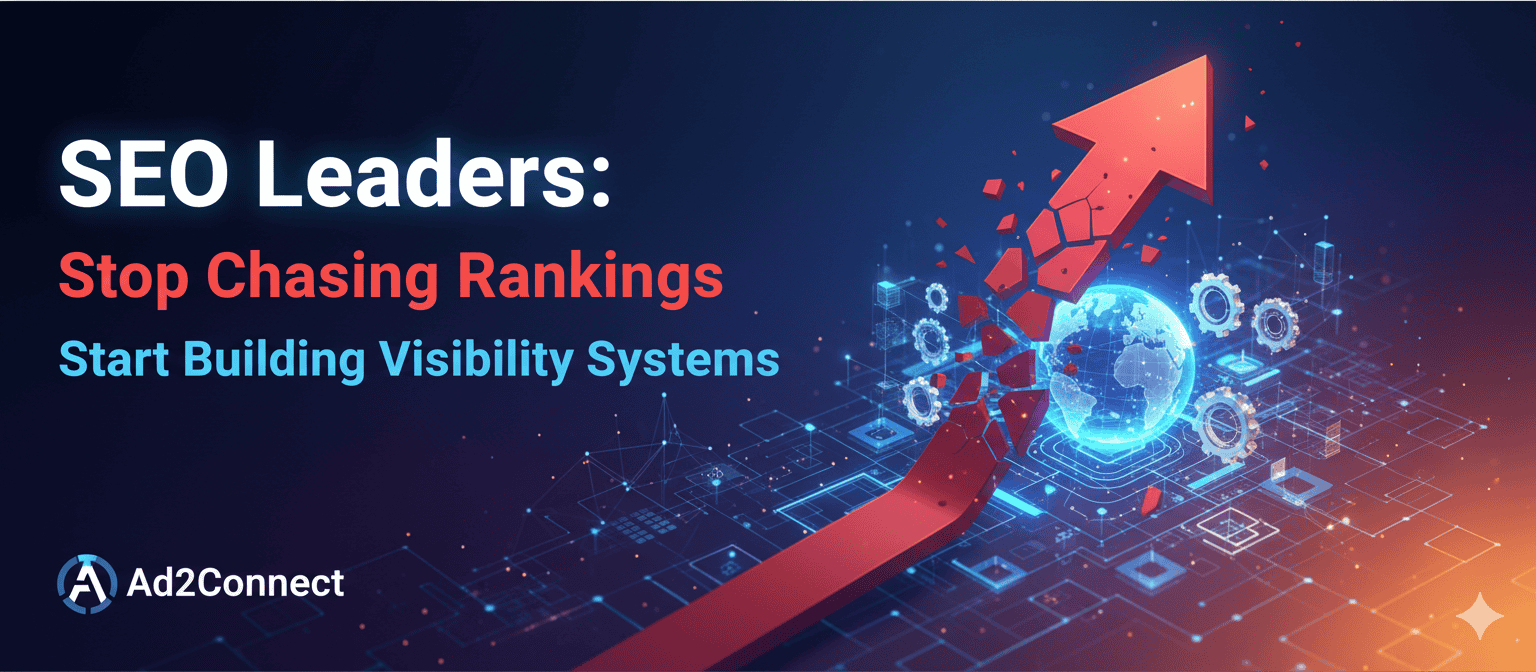
SEO Leaders: Stop Chasing Rankings, Start Building Visibility Systems
For more than a decade, SEO leaders were trained to think in rankings. Rank for the keyword, win the traffic. But today, that formula is breaking.
Search results are now crowded with AI summaries, video results, featured snippets, and local packs. Even when a page ranks in the top three positions, users may never reach it. This shift means visibility is no longer guaranteed by rankings alone.
Modern SEO leadership requires a new model: visibility systems. Instead of focusing on isolated keywords, visibility systems ensure your brand appears consistently across search engines, AI-driven results, social platforms, and key decision-making moments.
This article explains why ranking obsession is outdated, what a visibility system really is, and how SEO leaders can build one that performs in both traditional and AI-powered search environments.
What Is a Visibility System in SEO?
A visibility system is a strategic framework that ensures your brand is discoverable wherever your audience looks for answers. That includes:
- Organic search listings
- AI-generated answers and summaries
- Featured snippets and People Also Ask boxes
- YouTube and social search platforms
- Local map results and business profiles
- Brand and navigational queries
- Conversion-focused landing pages
Instead of asking, “How do we rank for this keyword?” visibility systems ask, “How do we own this topic across every search experience?”
This aligns SEO with business outcomes such as authority, trust, and revenue rather than vanity metrics.
Why Chasing Rankings Is No Longer Enough
SERPs Have Changed Permanently
Modern search results are no longer a list of blue links. They are multi-format ecosystems. AI answers, video carousels, and zero-click results dominate the page. Ranking fourth might still be visible, while ranking second might not be.
Visibility now depends on format coverage rather than just numeric position.
AI Search Rewards Entities, Not Pages
AI systems extract answers from sources they trust. That trust is built through entity signals such as:
- Consistent brand mentions
- Structured data and schema
- Author authority
- Topical depth
Rankings Don’t Measure Business Impact
A keyword ranking does not show whether users stayed, engaged, or converted. Visibility systems integrate SEO with CRO and UX, focusing on behavioral outcomes like:
- Scroll depth
- Time on page
- Assisted conversions
- Return visits
- Growth in branded search queries
Core Components of a Visibility System
Topical Authority and Content Architecture (TEO)
Visibility begins with topical coverage. Instead of publishing disconnected blog posts, build structured topic hubs that fully address a subject from multiple angles.
This improves:
- Crawl efficiency
- Semantic relevance
- AI extractability
- User comprehension
Each hub should include definitions, how-to guides, comparisons, FAQs, and implementation content. This creates a knowledge footprint rather than isolated pages.
Entity Optimization (LEO and CIO)
Search engines understand the web through entities. These include:
- Brand entities
- Author entities
- Product or service entities
- Location entities
Optimization actions include:
- Consistent brand naming
- Schema markup
- Author bios and credentials
- Internal linking using descriptive anchors
- Building branded search demand
Instead of generic anchor text such as “click here,” use anchors like “entity SEO strategy” or “conversion optimization guide” to reinforce meaning.
Multi-Channel Search Presence (SMO and MEO)
Visibility does not live only on Google. Audiences search on YouTube, TikTok, LinkedIn, and map platforms.
A visibility system turns one content idea into multiple assets:
- Blog content for search
- Short-form video for social discovery
- Visual explainers for featured snippets
- Location pages for local results
This creates repeated exposure across channels, improving recall and trust.
How Visibility Systems Work for Local and Global Brands (GEO, SEO)
Geographic relevance strengthens visibility systems.
For local brands, this means:
- Optimizing map profiles
- Publishing location-specific content
- Building regional authority
- Earning reviews and citations
For global or SaaS brands, GEO optimization includes:
- Localized content hubs
- Country or language pages
- Regional schema markup
- International internal linking
How to Optimize for AI Overviews and Generative Search
To appear in AI-generated answers, content must be structured for extraction and trust.
- Clear definitions near the top of sections
- Step-by-step explanations
- Bulleted summaries
- Strong entity clarity
- Citations to reputable sources
- Consistent topical depth
AI systems favor precise, authoritative language that answers questions directly.
Practical Strategies You Can Implement Now
Build an Answer Engine
Design content to solve real questions:
- What is it?
- Why does it matter?
- How does it work?
- When should it be used?
Structure pages with summaries, subheadings, and short paragraphs that are easy to scan.
Optimize for Behavioral SEO Signals
Evaluate content based on user actions:
- Do readers scroll?
- Do they interact?
- Do they click internal links?
- Do they convert later?
Add jump links, visual callouts, inline FAQs, and contextual calls to action.
Strengthen Internal Linking Pathways
Internal links should map knowledge rather than just pages. Examples include:
- Link “entity SEO strategy” to your entity optimization guide
- Link “conversion optimization” to your CRO hub
- Link “AI search visibility” to your generative search explainer
Interactive Element: Do You Have a Visibility System?
Answer yes or no:
- Do you measure visibility beyond rankings?
- Do you publish structured topic hubs?
- Do you optimize for AI and snippets?
- Do you track engagement, not just traffic?
- Do you distribute content beyond Google?
If you answered “no” to three or more, your SEO strategy is likely still ranking-based.
Conclusion
Rankings are a tactic. Visibility systems are a strategy.
The future of SEO belongs to leaders who build topical authority, optimize entities, design for AI extraction, integrate UX and CRO, and expand beyond one search engine.
If you want sustainable growth, stop chasing rankings and start engineering visibility.