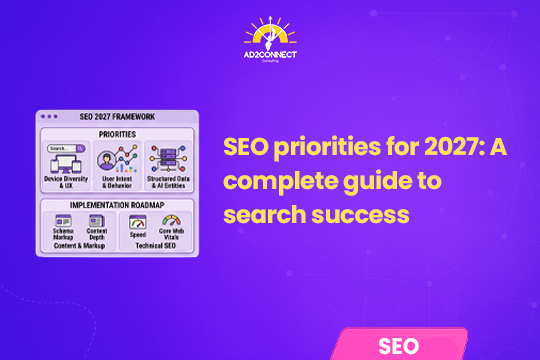
SEO Priorities for 2027: A Complete Guide to Search Success
Search no longer starts and ends with a blue link. Here’s what actually moves the needle in 2027 — and what’s just noise.
By Snehal Singh | Published: August 21, 2026
AI Overview Summary
SEO in 2027 is no longer about ranking one page for one keyword. Search results now blend AI Overviews, zero-click answers, and results from platforms beyond Google — YouTube, Amazon, TikTok, and AI tools like ChatGPT and Perplexity. Businesses that want to stay visible need to build genuine topical authority, structure content for direct answers, strengthen E-E-A-T signals, and treat technical performance (Core Web Vitals, mobile experience, structured data) as non-negotiable. The brands winning in 2027 are the ones creating content that helps real people, not just content built to please an algorithm.
Table of Contents
- Search Has Moved Beyond Google
- Why Zero-Click Search Changes Everything
- Building Content That Actually Ranks
- Why E-E-A-T Decides Who Gets Trusted
- The Technical Basics You Can’t Skip
- Old SEO vs 2027 SEO: What Changed
- Mistakes That Look Like Strategy
- How Ad2Connect Approaches SEO for Clients
- Key Takeaways
Search Has Moved Beyond Google
Ten years ago, “SEO” meant one thing: rank on Google. That’s no longer true.
People now search for answers on YouTube, Amazon, TikTok, Instagram, Pinterest, and increasingly, inside AI tools like ChatGPT and Perplexity. Each of these platforms has its own ranking logic.
Google still handles the overwhelming majority of traditional search queries. But that number hides how fragmented discovery has actually become.
What to check right now:
- Where does your traffic actually come from? Look beyond Google Search in your analytics.
- Are you tracking brand visibility on YouTube, Amazon, or AI search tools — even if those don’t send clicks?
- Do you know which platforms your specific audience actually uses to search?
This shift matters most for local and multi-location businesses. A user searching for a nearby service is just as likely to check Google Maps, Instagram, or an AI assistant as they are to type a query into the Google search bar.
Why Zero-Click Search Changes Everything
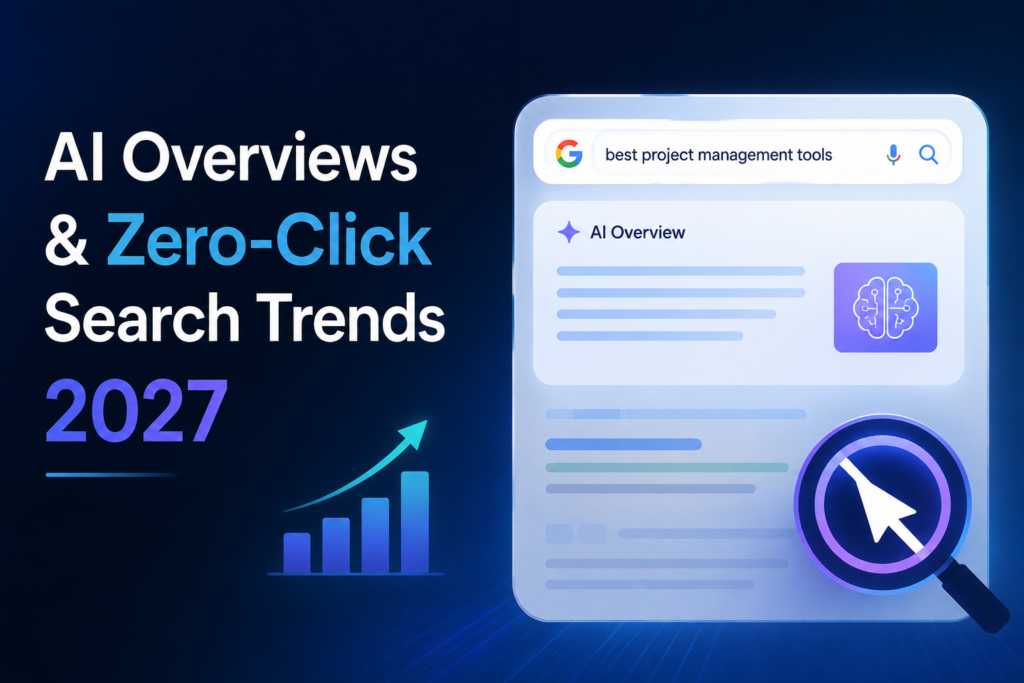
A large share of searches today end without a single click. The user gets their answer directly on the results page — through an AI Overview, a featured snippet, or a knowledge panel — and never visits a website at all.
This isn’t a temporary trend. It’s the direction search is permanently headed.
AI Overviews summarize information pulled from multiple websites and place it right at the top of the results page, above every organic listing. For many informational queries, that summary alone answers the question completely.
The practical challenge is this: you have to give search engines enough information to get featured in these prominent spots, while still giving readers a genuine reason to click through for more depth.
How to format content for AI Overviews:
- Use question-based headings that mirror how people actually search.
- Write direct, 40–60 word answers near the top of each section.
- Use bullet points and tables so both readers and search engines can scan quickly.
- Back up claims with credible data and cite the source.
- Use proper heading tags (H2, H3) so the structure is machine-readable.
Building Content That Actually Ranks
Trying to rank a single page for a single keyword is an outdated approach. It doesn’t reflect how people actually search anymore.
People research topics across multiple sessions, comparing options and asking follow-up questions before deciding. Content strategy in 2027 has to account for that entire journey, not just the first query.
A practical content plan looks like this:
- Run a content gap analysis against your top three to five competitors.
- Build a pillar page for each core topic, supported by pages that go deeper into specific angles.
- Set a quarterly refresh schedule for pages that haven’t been updated in six months or more.
- Group related pages into clear topic clusters so search engines understand how your content connects.
Why E-E-A-T Decides Who Gets Trusted
E-E-A-T stands for experience, expertise, authoritativeness, and trustworthiness. It’s how search engines judge whether content is genuinely worth surfacing, and it’s become far harder to fake with AI-written content flooding the web.
Who actually wrote your content matters more than ever. Real experts writing or reviewing your content is especially critical for anything touching health, money, or safety decisions.
This is the piece most businesses still underestimate, and it’s worth spelling out in full: strengthening E-E-A-T isn’t a single fix, it’s a layered process that touches your author pages, your editorial workflow, and your citation habits all at once — you need author bios with real, verifiable credentials and links to published work; a documented fact-checking process, particularly for anything that could affect a reader’s health, finances, or safety; visible “last updated” dates on evergreen pages, refreshed on a real schedule rather than left to go stale; clear citations linking back to primary, authoritative sources for every statistic or claim you make; and, where possible, quotes or insights from recognized experts in your field, since their credibility lends weight to your own. None of these individually will transform your rankings, but together they signal — to both search engines and actual readers — that a real, accountable person or team stands behind what’s published.
The Technical Basics You Can’t Skip
Great content on a slow, broken site still underperforms. Technical fundamentals decide whether search engines can even find and trust your content in the first place.
Core Web Vitals measure loading speed, interactivity, and visual stability. To improve them:
- Compress images using modern formats like WebP.
- Remove unused JavaScript that slows down page rendering.
- Use lazy loading for content below the fold.
- Reserve space for ads and embeds so the page doesn’t shift as it loads.
Mobile-first indexing means Google primarily evaluates your mobile site, not desktop. Responsive design, touch-friendly navigation, and readable fonts without horizontal scrolling are baseline requirements now, not nice-to-haves.
Structured data (schema markup) helps search engines understand exactly what your content is about, unlocking rich results like star ratings, FAQs, and product details directly in the search results. It’s also increasingly important for AI systems trying to understand your content’s context and relationships to other entities.
Old SEO vs 2027 SEO: What Changed
| Focus Area | Old Approach | 2027 Priority |
|---|---|---|
| Keyword targeting | One page, one keyword | Topic clusters covering the full user journey |
| Search visibility | Google rankings only | Google, AI Overviews, YouTube, Amazon, AI search tools |
| Author credibility | Optional byline | Verified author bios and real expertise (E-E-A-T) |
| Content format | Long-form text only | Q&A structure, tables, and direct-answer summaries |
| Technical SEO | Nice-to-have | Core Web Vitals and schema markup as ranking essentials |
Mistakes That Look Like Strategy
- Chasing keyword rankings while ignoring where zero-click searches are eating your traffic.
- Publishing new content instead of refreshing high-potential pages that already have traffic history.
- Treating structured data as optional instead of foundational.
- Ignoring mobile experience because desktop numbers still “look fine.”
- Writing content with no real author expertise behind it, especially on sensitive topics.
- Optimizing only for Google while your audience is actively searching elsewhere.
How Ad2Connect Approaches SEO for Clients
At Ad2Connect, one of the top SEO companies and agencies in Mumbai, India, we don’t chase every algorithm headline. As a professional SEO services provider, our SEO services are built around what’s actually measurable: topical authority, technical health, and content that earns trust with both readers and search engines. Whether you need the best SEO agency in Mumbai for a national brand or local SEO services in India for a business tied to a specific market, we start with the same question — where is your audience actually searching, and are you visible there?
For businesses that depend on foot traffic or regional visibility, we’re often engaged as a best local SEO company in Mumbai, strengthening Google Business Profile signals, citation consistency, and location-specific content. Search rarely works in isolation, so our SEO work is frequently paired with performance marketing to convert the visibility we build into revenue, and with branding support from our team — recognized among the top branding agencies in Mumbai — so your search presence and brand identity stay consistent everywhere someone finds you.
Key Takeaways
- Search is fragmented. Google still leads, but YouTube, Amazon, and AI tools are now real discovery channels too.
- Zero-click search is permanent. Structure content to earn AI Overview placement while still giving readers a reason to click through.
- E-E-A-T is a system, not a checkbox. Real author expertise and documented fact-checking matter more than ever.
- Technical SEO is foundational. Core Web Vitals, mobile experience, and structured data decide whether your content even gets a fair shot.
- Refresh before you publish new. A quarterly audit of existing high-potential pages often beats another blog post.
Ad2Connect is a boutique digital marketing agency in Malad, Mumbai, helping SaaS, eCommerce, D2C, and local businesses grow through data-driven SEO, performance marketing, and branding. If you’re not sure whether your SEO strategy is built for 2027’s search landscape, talk to our SEO team about a full visibility audit.