
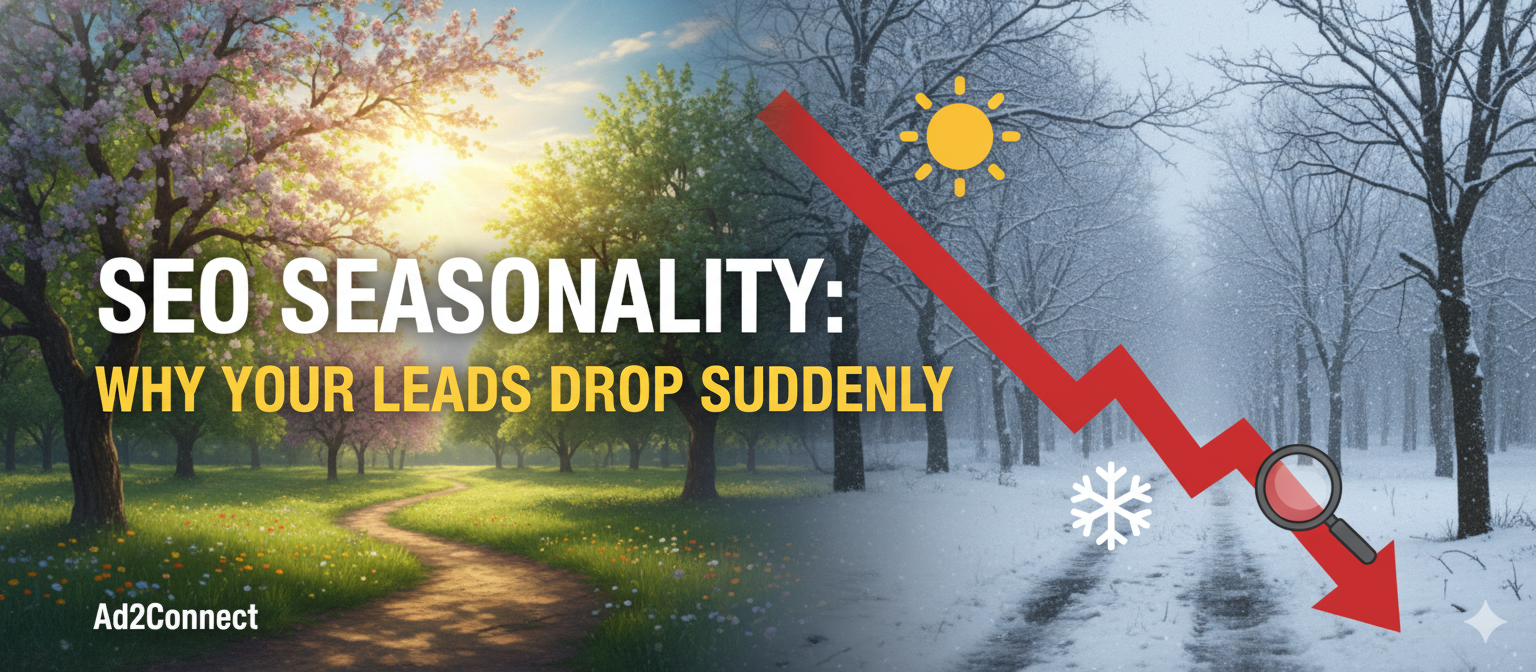
SEO Seasonality: Why Your Leads Drop Suddenly
Your leads didn’t drop because your marketing failed.
They dropped because your customers stopped searching.
This is where most businesses get it wrong. One month you’re getting steady inquiries, the next month everything slows down. You increase ad spend, tweak campaigns, or even switch agencies—yet nothing seems to work.
What you actually want is predictable growth. You want consistent leads, stable ROI, and a marketing strategy that doesn’t feel like guesswork.
This is exactly where understanding SEO seasonality changes everything.
What is SEO Seasonality?
SEO seasonality is the predictable fluctuation in search demand during specific times of the year due to user behavior, festivals, weather, or industry cycles.
- Analyze past traffic and search trends
- Plan content 60–90 days before peak demand
- Target seasonal and high-intent keywords
- Adjust budgets based on demand cycles
Summary
- Search demand rises and falls throughout the year
- Ignoring seasonality leads to inconsistent leads
- Planning ahead improves ROI
- Seasonal keywords convert faster
- Off-season SEO builds long-term advantage
Why SEO Seasonality Happens
Search behavior changes based on real-world patterns:
- Festivals like Diwali, Eid, Christmas
- Weather changes such as summer or monsoon
- Financial cycles like year-end spending
- Industry demand cycles like travel or real estate
Examples:
- AC services peak during summer
- Wedding services surge during wedding season
- Fitness searches increase in January
Common Mistakes Businesses Make
1. Treating SEO as Static
Publishing content without considering timing leads to missed opportunities.
2. Increasing Budget When Leads Drop
This reactive approach increases costs without solving the root problem.
3. Targeting Only Competitive Keywords
High-volume keywords are expensive during peak season. Long-tail keywords convert better.
4. Ignoring Off-Season Strategy
Off-season is the best time to build rankings with lower competition.
Step-by-Step SEO Seasonality Strategy
Step 1: Analyze Historical Data
- Google Search Console data
- Website traffic trends
- Monthly lead patterns
Step 2: Plan Content in Advance
Start content creation 2–3 months before peak demand.
Step 3: Target High-Intent Keywords
- “Best time to buy…”
- “Near me” searches
- Season-specific queries
Step 4: Align Budget with Demand
- Increase ads during peak periods
- Focus on SEO during low demand
Step 5: Build Early Visibility
Ranking early reduces cost per lead and improves conversions.
Case Study
Client: Local AC Service Business
Problem: High ad spend and inconsistent leads
Before Strategy
- Ad Spend: ?80,000/month
- Leads: 95/month
- Cost per Lead: ?842
After Strategy
- Created seasonal landing pages early
- Targeted long-tail keywords
- Published pre-season content
Results
- Leads: 310/month
- Cost per Lead: ?290
- Traffic Growth: 180%
- ROI Increase: 2.8X
Insight: Timing mattered more than budget.
Expert Insights
Peak Traffic Does Not Mean Peak Profit
Competition increases during peak demand, reducing efficiency.
Off-Season Is an Opportunity
Lower competition allows faster and cheaper growth.
Seasonal Content Needs Updates
Refreshing content yearly improves rankings.
Local Trends Matter More
In cities like Mumbai, demand changes quickly due to weather and festivals.
Actionable Checklist
- Analyze last 12 months of data
- Identify peak seasons
- Plan content 60–90 days ahead
- Target long-tail keywords
- Optimize existing pages
- Adjust budget based on demand
- Update seasonal content yearly
- Track ROI, not just traffic
Conclusion
SEO seasonality explains why your leads rise and fall throughout the year.
Businesses that ignore it struggle with inconsistent results and rising costs. Those who plan around it achieve better visibility, lower costs, and stronger ROI.
The difference is timing.