
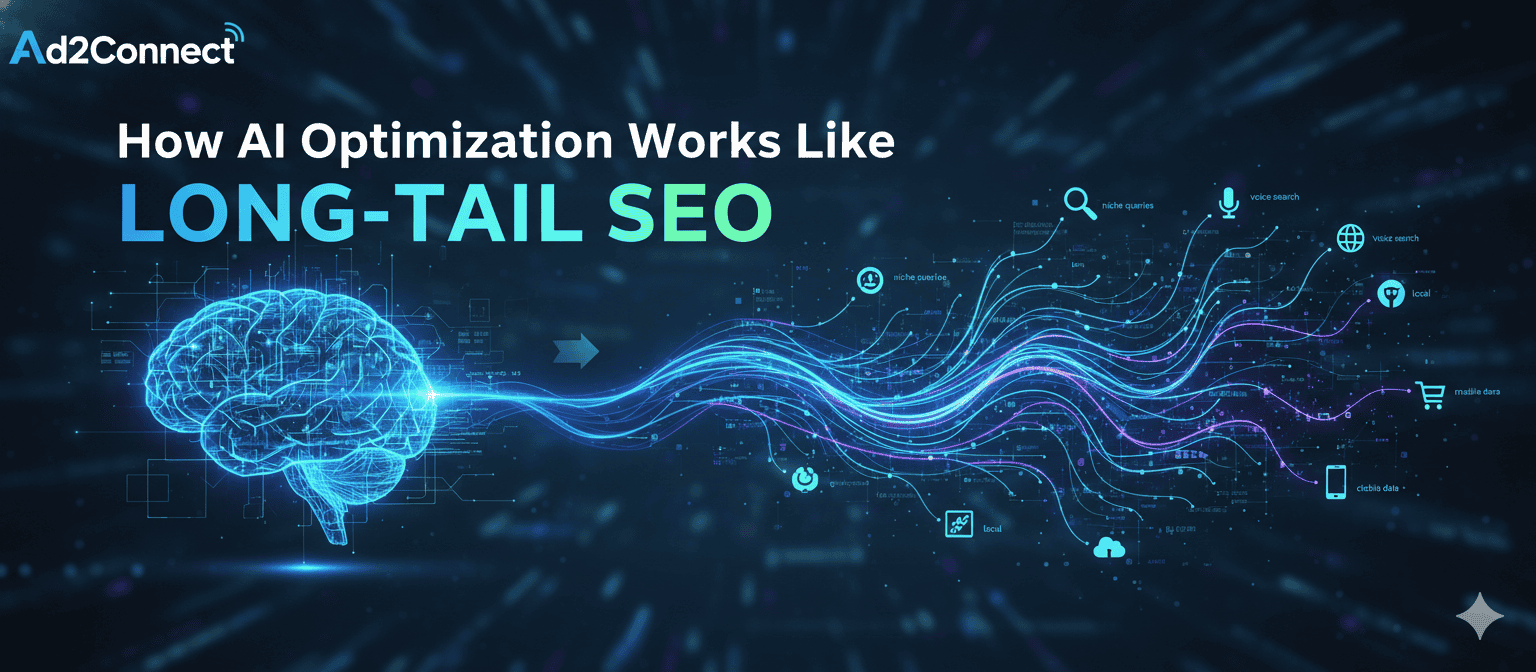
How AI Optimization Works Like Long-Tail SEO
Search engines no longer work by simply matching keywords. They now rely on artificial intelligence to understand meaning, context, and user intent. As a result, many marketers believe they need entirely new strategies for “AI optimization.”
In reality, AI optimization closely resembles something SEO professionals have practiced for years: long-tail SEO.
Long-tail SEO focuses on specific, intent-driven search queries such as “how to optimize content for voice search” instead of broad terms like “SEO tips.” AI-powered search systems reward this same approach because it helps them provide more accurate, helpful, and relevant answers.
This article explains how AI optimization works like long-tail SEO, why this connection matters, and how businesses—especially in competitive markets like Mumbai and India—can adapt their content strategies for modern search experiences.
What Is AI Optimization?
AI optimization refers to structuring and writing content in a way that allows artificial intelligence systems to easily understand, interpret, and present it in search results.
Modern search engines use AI models to analyze:
- Meaning behind words
- Relationships between concepts (entities)
- User intent
- Content quality and clarity
AI-optimized content is designed to be:
- Conversational and natural
- Contextually rich
- Clearly structured
- Helpful rather than promotional
This is especially important for features such as AI Overviews, voice search, and zero-click results where users expect direct, accurate answers.
What Is Long-Tail SEO?
Long-tail SEO targets longer, more specific search queries that represent clear intent. For example:
- Best AI SEO strategy for ecommerce websites
- How to optimize content for generative search
These phrases attract fewer searches individually but collectively account for the majority of search traffic. They are also more likely to convert because they reflect what users actually want to know.
Long-tail SEO emphasizes:
- Natural language
- Specific topics
- Problem-solving content
- Lower competition
- Higher relevance
Why AI Search Depends on Long-Tail Signals
Entity and Context Understanding
AI models identify relationships between topics, brands, industries, and locations. Long-tail content naturally introduces these elements in context. For example, “AI optimization for Mumbai-based digital agencies” helps AI connect location, industry, and service type in a meaningful way.
This strengthens semantic SEO, geographic relevance, and topical authority.
Intent Matching
AI search engines prefer content that directly answers questions. Long-tail queries usually take the form of how, why, what, and best way. This allows AI systems to confidently extract and summarize content for search results.
Answer-Friendly Structure
AI systems look for clear headings, short paragraphs, lists, and logical flow. Long-tail SEO already promotes these formatting practices, making content easier for both users and machines to process.
How AI Optimization Mirrors Long-Tail SEO Strategy
AI optimization and long-tail SEO share the same foundation: intent-based relevance.
Both approaches prioritize:
- Meaning over keywords
- Clarity over density
- Depth over thin content
- Structure over randomness
Instead of writing content around a single keyword, both strategies encourage covering a topic thoroughly using related phrases and subtopics.
This improves topic expertise optimization, content intent optimization, and AI interpretability.
Actionable Strategies to Optimize for AI Using Long-Tail SEO
Write for Real Questions
Start by researching what people actually ask using sources such as People Also Ask, customer queries, forums, and internal site search data.
Structure content around natural questions like:
- What is AI optimization?
- How does long-tail SEO support AI search?
- Why does intent matter for SEO today?
Build Semantic Keyword Clusters
Instead of focusing on one keyword, use related phrases such as AI-friendly content strategy, optimizing for generative search, semantic SEO techniques, and conversational search optimization.
This strengthens topical authority and helps AI systems recognize your content as comprehensive.
Format Content for Machine and Human Readability
Use clear headings, short paragraphs, bullet points, and simple language. This enhances readability, mobile usability, and accessibility while improving AI extraction accuracy.
Add Geographic and Industry Context
For local relevance, include city or regional mentions, industry-specific examples, and real-world use cases. For example, AI optimization strategies for Mumbai-based ecommerce brands or long-tail SEO for Indian digital service companies.
Strengthen Behavioral SEO Signals
Encourage engagement by including step-by-step explanations, visual elements, and checklists. The longer users stay and interact, the stronger the trust signals for both search engines and AI systems.
Conclusion
AI optimization is not a separate discipline from SEO. It is the natural evolution of long-tail SEO applied to intelligent search systems.
By focusing on user intent, semantic relevance, natural language, structured content, and geographic context, you create content that works for search engines, AI models, voice assistants, and human readers.
The brands that succeed in AI-powered search environments will build authority by answering real questions with real value.