
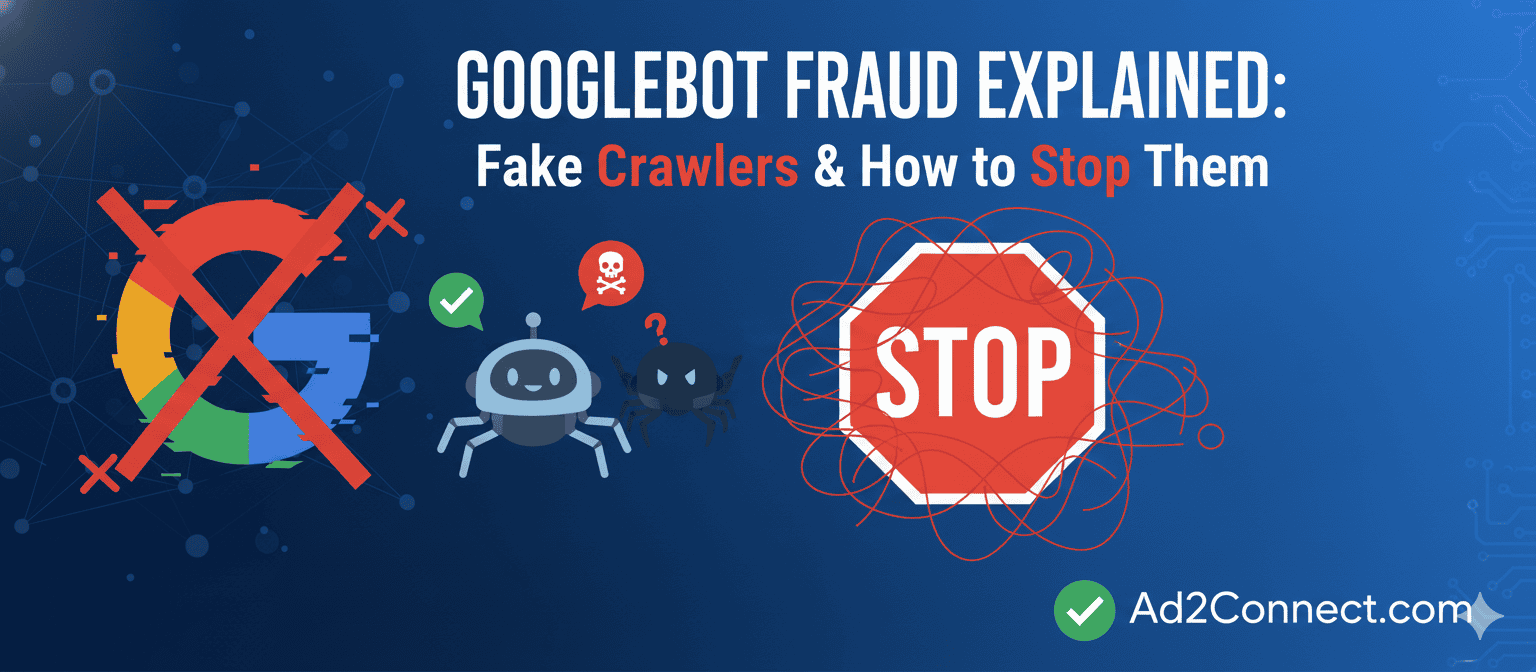
Googlebot Fraud Explained: Fake Crawlers & How to Stop Them
Not every bot claiming to be Googlebot is actually from Google. As websites grow and competition in search results intensifies,
malicious bots increasingly disguise themselves as Googlebot to bypass security filters. This practice—known as
Googlebot fraud—can silently damage SEO performance, overload servers, and corrupt analytics data.
For businesses, publishers, and agencies managing high-traffic websites—especially those hosted in India or Mumbai—understanding
and preventing Googlebot fraud is critical for crawl efficiency, site stability, and long-term search visibility.
What Is Googlebot Fraud?
Googlebot fraud occurs when fake or malicious bots impersonate Google’s official crawler by spoofing user-agent strings
or IP addresses. These bots are not used for indexing or ranking purposes. Instead, they exploit websites for malicious or
competitive gains.
Common Types of Fake Googlebot Activity
- Content scraping and duplication
- Server resource abuse
- Vulnerability and security scanning
- Competitive intelligence gathering
- Click fraud and ad abuse
- Crawl budget manipulation
From a Content Indexing Optimization (CIO) perspective, fake crawlers reduce Google’s ability to efficiently discover
and index important pages.
How Fake Googlebot Crawlers Operate
Fake crawlers rely on advanced evasion techniques to appear legitimate while causing harm.
Techniques Used by Fake Googlebots
- User-agent spoofing: Pretending to be “Googlebot” in request headers
- Rotating IP addresses: Using proxy networks to avoid detection
- High-frequency crawling: Flooding pages with excessive requests
- Targeted paths: Accessing admin panels, APIs, or form URLs
From a Technical SEO Optimization (TEO) standpoint, this behavior wastes crawl budget and delays legitimate indexing.
Signs Your Website Is Affected by Googlebot Fraud
Key Warning Signals
- Sudden crawl spikes without ranking improvement
- High server load with minimal real user traffic
- “Googlebot” visits from suspicious IP ranges
- Increased page load times and timeouts
- Crawl activity on blocked or irrelevant URLs
Behavioral SEO Insight: When fake bots slow your website, user experience suffers—leading to lower dwell time, reduced
scroll depth, and negative engagement signals that indirectly affect rankings.
SEO, UX, and Performance Impact
SEO Consequences
- Wasted crawl budget
- Slower indexing of new content
- Misleading Search Console crawl data
- Ranking volatility
UX & Mobile Impact (MEO & VEO)
- Slower mobile load times (hurting Mobile SEO Optimization – MEO)
- Poor Core Web Vitals performance
- Reduced visual engagement (VEO)
- Lower conversion rates (CRO)
How to Protect Your Website from Fake Googlebot Crawlers
1. Verify Real Googlebot Traffic
Google recommends validating crawlers using reverse DNS lookup and forward DNS verification.
Only IPs confirmed to belong to Google should be trusted as legitimate Googlebot traffic.
2. Use Server-Level Bot Controls
- Rate-limit aggressive crawl behavior
- Block suspicious IP ranges
- Restrict access to sensitive directories
This approach supports All-in-One Optimization (AIO) by combining SEO, performance, and security.
3. Deploy a Web Application Firewall (WAF)
A WAF helps detect bot behavior patterns, block fake crawlers automatically, and protect critical areas such as APIs, forms, and
checkout pages—directly supporting Conversion Rate Optimization (CRO).
4. Optimize Robots.txt Strategically
While fake bots may ignore robots.txt, a clean configuration guides legitimate Googlebot efficiently and reduces unnecessary crawl
requests.
5. Monitor Log Files Regularly
Log-file analysis helps identify fake Googlebot behavior, protect local SEO landing pages
(LEO), and detect early-stage bot abuse—especially important for India-based hosting environments.
Quick Anti-Googlebot Fraud Checklist
- ? Verify Googlebot IP authenticity
- ? Monitor crawl patterns weekly
- ? Strengthen internal linking
- ? Protect mobile performance and Core Web Vitals
- ? Use WAF and rate limiting
Accessibility & WCAG Considerations
Maintain accessibility compliance by using descriptive alt text, clear heading hierarchy, readable contrast ratios, and ensuring
content is accessible to assistive technologies. Accessible sites improve usability, engagement, and search trust.
Conclusion
Googlebot fraud is more than a security concern—it is a serious SEO and performance risk. Fake crawlers waste crawl budgets, distort
analytics, and degrade user experience if left unchecked.