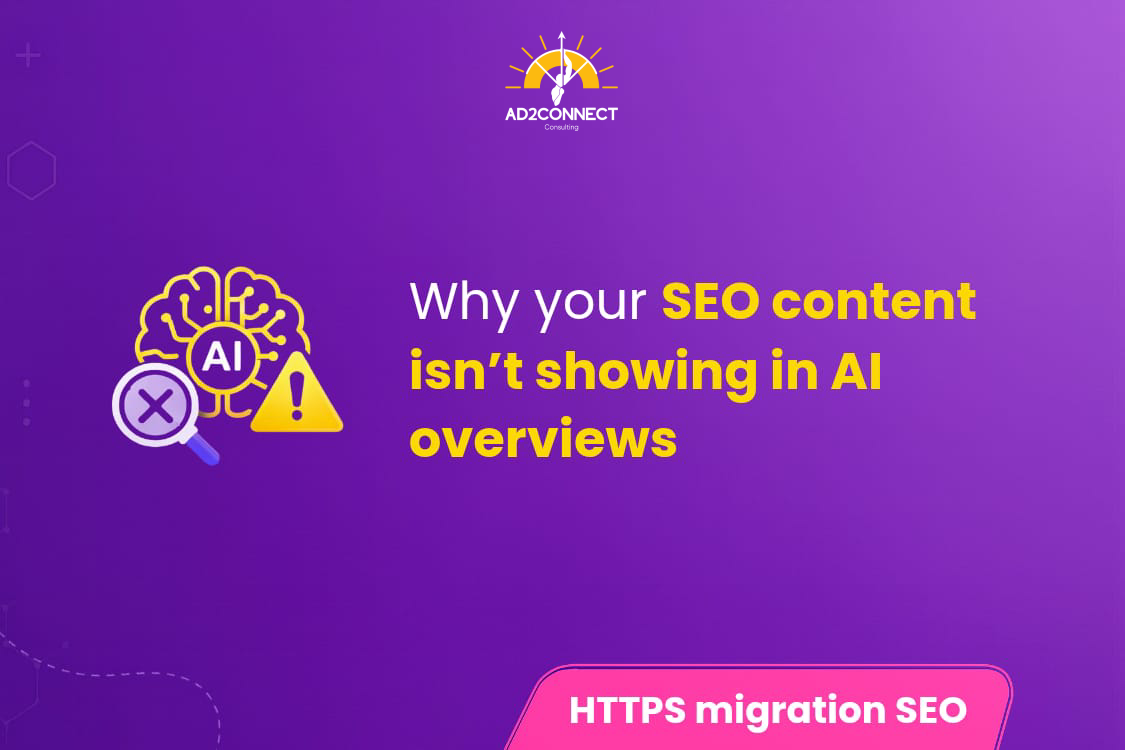
Why Your SEO Content Isn’t Showing in AI Overviews
Your SEO content isn’t showing in AI Overviews because it likely lacks structured answers, strong E-E-A-T signals, and precise alignment with search intent. While ranking in the top 10 is still important, Google’s AI systems now prioritize content that is easy to extract, trustworthy, and directly useful to users.
In recent updates, Google has shifted toward AI-generated summaries that combine information from multiple sources. This means your content must do more than rank—it must contribute clear, high-value insights that AI can confidently include.
In our experience optimizing content for AI-driven search, pages that use answer-first formatting, structured layouts, and unique insights are far more likely to appear in AI Overviews. This guide explains exactly why your content may be missing—and how to fix it.
Table of Contents
- What Are AI Overviews?
- Why Ranking in Top 10 Isn’t Enough
- Key Reasons Your SEO Content Isn’t Showing in AI Overviews
- How Google Selects Content for AI Overviews
- How to Optimize Content for AI Overviews
- Practical Tips & Best Practices
- Common Mistakes to Avoid
- FAQs
- Conclusion
What Are AI Overviews?
AI Overviews are AI-generated summaries that combine information from multiple web pages to provide quick, direct answers to user queries.
Unlike featured snippets, they don’t just extract—they interpret and synthesize content.
Key Characteristics
- Multi-source answers
- Intent-focused summaries
- Preference for clarity and structure
- Strong reliance on trust signals
Why Ranking in Top 10 Isn’t Enough
Ranking in the top 10 does not guarantee inclusion in AI Overviews because Google prioritizes clarity, relevance, and extractable value over position alone.
What We’ve Observed
- Pages ranking #5–#10 often appear in AI Overviews
- Some #1 pages are completely ignored
- AI favors useful sections, not entire pages
Why This Happens
- AI evaluates content at the section level
- It selects multiple sources
- It prioritizes direct answers
Key Reasons Your SEO Content Isn’t Showing in AI Overviews
Your SEO content isn’t showing in AI Overviews mainly due to weak structure, lack of direct answers, low information gain, and insufficient E-E-A-T signals.
1. Lack of Direct Answer Blocks
Content that provides immediate, clear answers is significantly more likely to be selected by AI Overviews.
- Long introductions reduce visibility
- Buried answers are harder for AI to extract
- Use answer-first summaries
2. Weak E-E-A-T Signals
AI Overviews prioritize content that demonstrates real experience, expertise, authority, and trust.
- Add experience-based insights
- Include real-world examples
- Write with authority
3. Poor Content Structure
Well-structured content increases AI extractability and improves your chances of being featured.
- Use H2 and H3 headings
- Break content into sections
- Use bullet points
4. Search Intent Mismatch
If your content doesn’t directly solve the query, it won’t be selected—regardless of ranking.
5. Low Information Gain
AI Overviews avoid repetitive content and favor pages that add new insights or perspectives.
6. Lack of Topical Depth
Comprehensive content that fully covers a topic is more likely to be included in AI summaries.
7. Weak Semantic SEO Signals
AI relies on context, not just keywords.
How Google Selects Content for AI Overviews
Google selects content based on relevance, clarity, authority, structure, and usefulness—not just rankings.
- Direct relevance to query
- Clear explanations
- Trustworthy content
- Structured formatting
- Updated information
AI Overviews pull from multiple sources, so your goal is to provide the most useful, extractable information.
How to Optimize Content for AI Overviews
To appear in AI Overviews, your content must be structured, answer-focused, and rich in unique value.
1. Use Answer-First Strategy
Start each section with a clear and direct answer.
2. Format for AI Extraction
- Use bullet points
- Keep paragraphs short
- Add summaries
3. Add Experience Signals
- Use phrases like “In our experience”
- Share observations
4. Increase Information Gain
- Add original insights
- Provide deeper explanations
5. Improve Readability
- Short paragraphs
- Simple language
6. Keep Content Updated
- Refresh outdated info
- Add new insights regularly
Practical Tips & Best Practices
The best-performing content for AI Overviews is clear, structured, and immediately useful.
- Start with direct answers
- Use clear headings
- Break down complex ideas
- Focus on solving user problems
Quick Checklist
- Answer-first content
- Strong structure
- Semantic keywords
- Unique insights
- Experience signals
Common Mistakes to Avoid
1. Keyword Stuffing
Overusing keywords reduces clarity and trust.
2. Ignoring Search Intent
Misaligned content won’t be selected.
3. Generic Content
Low-value content gets ignored by AI.
4. Poor Formatting
Unstructured content reduces extractability.
5. No Real Experience
Lack of expertise lowers trust signals.
Conclusion
Your SEO content isn’t showing in AI Overviews because modern search prioritizes value, clarity, and trust over rankings alone.
To improve visibility, focus on answer-first writing, strong structure, real experience, and unique insights. When your content becomes more useful—not just optimized—you increase your chances of being featured.
The future of SEO belongs to content that helps both users and AI systems. Adapt now to stay ahead.