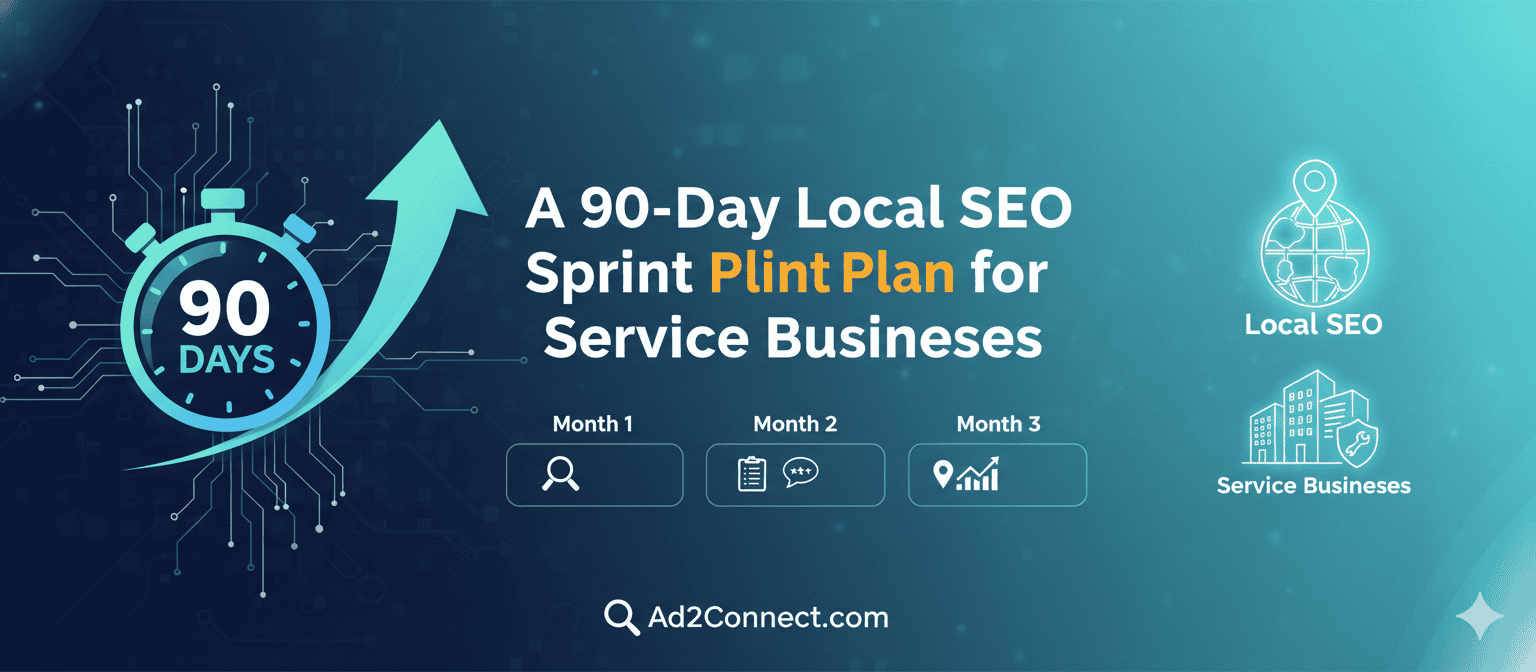
A 90-Day Local SEO Sprint Plan for Service Businesses
Local SEO no longer rewards slow, scattered optimization. In 2026, service businesses face AI-driven search experiences, zero-click results, and customers who expect immediate, hyper-local answers. Simply ranking for a keyword is no longer enough. You must show relevance, trust, and usability in the same moment.
That is why local SEO sprints matter. A sprint is a focused 90-day execution cycle designed to improve one or two high-impact outcomes, such as map pack visibility or call volume. Instead of vague six-month roadmaps, sprints provide structure, urgency, and measurable progress. This model aligns naturally with AI Optimization (AIO), Visibility Engine Optimization (VEO), and Conversion Rate Optimization (CRO), helping service businesses adapt to modern search behavior.
What Is a Local SEO Sprint?
A local SEO sprint is a time-bound strategy that concentrates resources on the most important ranking and conversion factors over a 90-day period. Rather than trying to fix everything at once, you prioritize actions that influence visibility and trust fastest.
- Clear objectives such as map pack visibility
- Weekly tasks and milestones
- Performance measurement through defined KPIs
- Continuous refinement based on results
This agile approach mirrors how AI-driven systems learn from user interaction and adjust rankings over time.
Why a Sprint Model Works in 2026
Search engines increasingly evaluate:
- Entity authority: who you are and where you operate
- Behavioral signals: time on site, engagement, and conversions
- Trust signals: reviews, credentials, and mentions across the web
AI-generated summaries reduce clicks, meaning fewer visitors reach your site. But those who do are more qualified. This makes CRO, Marketing Experience Optimization (MEO), and Lived Experience Optimization (LEO) essential.
Sprints support Topical Expertise Optimization (TEO) and Content Intelligence Optimization (CIO) by letting businesses build authority in layers rather than publishing disconnected pages.
Phase 1: Days 1–30 – Build the Local Foundation
Optimize Google Business Profile
- Verify name, address, and phone consistency
- Select correct business categories
- Add service areas
- Upload authentic photos of staff, vehicles, and job sites
- Write a clear business description with natural local phrasing
This strengthens Visibility Engine Optimization (VEO) by increasing inclusion in map results and AI summaries.
Audit Local Listings
Correct outdated or duplicate listings across directories. Data consistency improves machine trust and geographic relevance.
Create Core Local Service Pages
- City or region-specific language
- Clear service explanations
- Local testimonials
- Structured headings
Phase 2: Days 31–60 – Build Authority and Engagement
Publish Local Content Assets
- How to choose a plumber in Phoenix
- What HVAC repair costs in Dallas in 2026
- Emergency electrician checklist for Chicago winters
This aligns with AI Optimization (AIO) because it addresses real user questions instead of generic keywords.
Generate and Manage Reviews
- Request reviews via SMS or email
- Respond to all feedback professionally
- Use service and location terms naturally in replies
Earn Local Backlinks
- Chambers of commerce
- Trade associations
- Community blogs
- Local sponsorships
Phase 3: Days 61–90 – Optimize for Conversions and Visibility
Improve Conversion Paths
- Add click-to-call buttons
- Simplify contact forms
- Place testimonials near CTAs
- Include service guarantees
Enhance Page Experience
- Readable fonts
- High-contrast buttons
- Fast load times
- Mobile-first design
Conclusion
Local SEO in 2026 is about speed, structure, and strategic focus. A sprint-based approach transforms SEO from a long, uncertain project into a repeatable growth system. By building foundations first, authority second, and conversions last, service businesses can adapt to AI-driven search while increasing real-world leads.