
20 Practical Ways to Use AI in SEO to Boost Ranking & Traffic
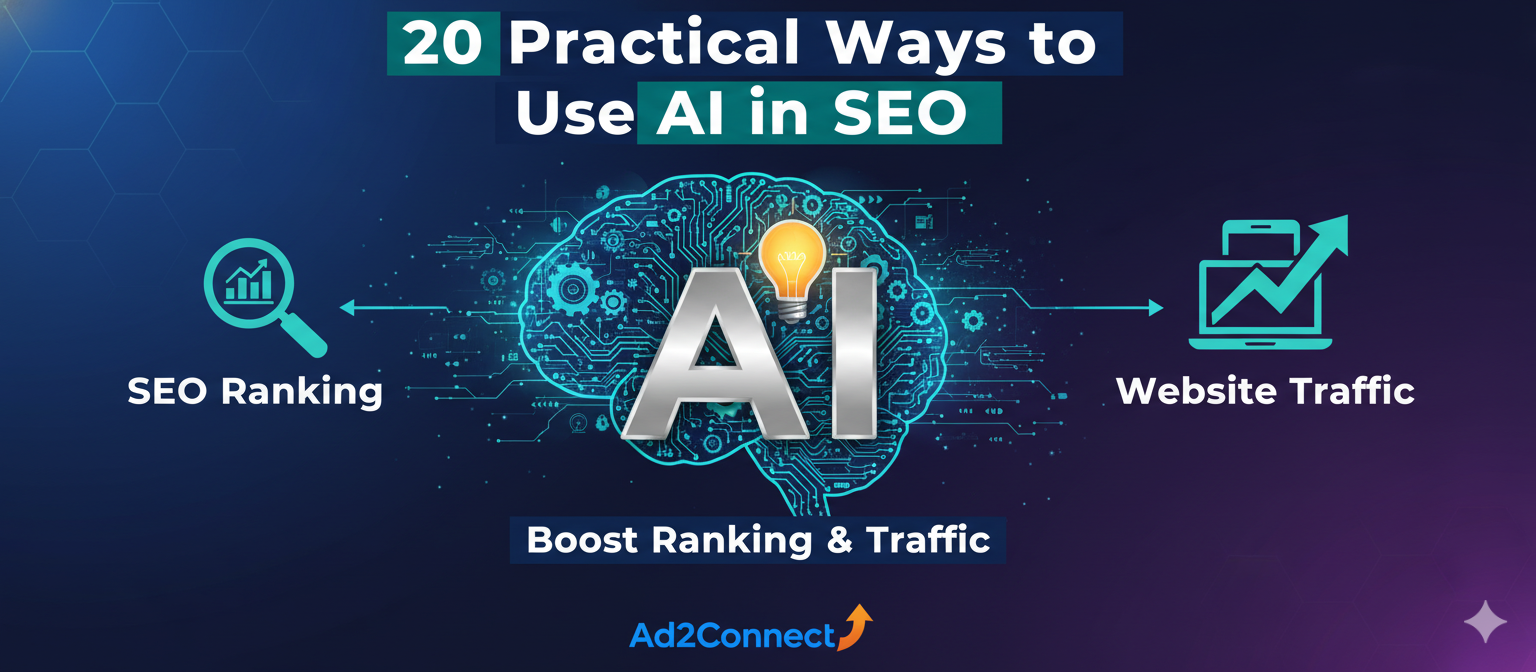
Artificial Intelligence is rapidly transforming how SEO works. From automating keyword research to improving content quality and predicting trends, AI enables marketers to make faster and smarter decisions. Today, using AI in SEO is essential for improving rankings and driving consistent organic traffic.
Search engines like Google rely heavily on AI systems to understand search intent and content relevance. This means your SEO strategy must evolve. In this guide, you’ll discover 20 practical ways to use AI in SEO to boost ranking and traffic, along with actionable insights and best practices.
What is AI in SEO?
AI in SEO is the use of machine learning and natural language processing tools to automate, analyze, and improve search engine optimization tasks such as keyword research, content creation, and technical audits.
- Identify high-value keywords
- Optimize content for search intent
- Analyze competitors
- Improve user experience
Table of Contents
- What is AI in SEO?
- 20 Practical Ways to Use AI in SEO
- Best Practices
- Common Mistakes
- FAQs
- Conclusion
20 Practical Ways to Use AI in SEO
1. AI-Powered Keyword Research
AI tools like SEMrush and Ahrefs analyze search patterns to find profitable keywords, including long-tail opportunities with lower competition.
2. Search Intent Analysis
AI categorizes keywords into informational, navigational, and transactional intent, helping you create relevant content.
3. Content Generation
AI helps create drafts and outlines quickly. Always refine AI content with human insights for better quality.
4. Content Optimization Using NLP
AI tools suggest semantic keywords and readability improvements to enhance ranking potential.
5. SERP Analysis
AI analyzes top-ranking pages to identify patterns like content structure and keyword usage.
6. Topic Clustering
AI groups related keywords to build topical authority and improve internal linking.
7. Competitor Analysis
AI tracks competitor keywords, backlinks, and strategies to find opportunities.
8. AI Content Brief Creation
Generate structured outlines with headings, keywords, and key points to cover.
9. Voice Search Optimization
AI helps optimize for conversational queries used in voice search.
10. Automated Meta Tags
AI generates optimized meta titles and descriptions to improve click-through rates.
11. Technical SEO Audits
AI tools detect issues like broken links, crawl errors, and slow-loading pages.
12. Predictive SEO
AI forecasts trends so you can create content before competitors.
13. Image SEO Optimization
AI automatically generates alt text and optimizes images for search engines.
14. NLP-Based Content Improvement
AI aligns your content with how search engines understand language.
15. Internal Linking Suggestions
AI recommends relevant internal links to improve site structure.
16. Backlink Analysis
AI evaluates backlink quality and identifies new link-building opportunities.
17. Content Refreshing
AI identifies outdated content and suggests updates to maintain rankings.
18. User Behavior Analysis
AI tracks metrics like bounce rate and time on page to improve engagement.
19. AI Chatbots for Engagement
Chatbots improve user interaction and reduce bounce rates.
20. Automated SEO Reporting
AI generates reports with insights on traffic, rankings, and performance.
Best Practices for Using AI in SEO
- Combine AI with human expertise
- Focus on search intent
- Update content regularly
- Use multiple AI tools
- Monitor performance consistently
Common Mistakes to Avoid
- Publishing unedited AI content
- Ignoring search intent
- Keyword stuffing
- Over-reliance on automation
- Not verifying AI-generated data
Conclusion
Using AI in SEO is essential for boosting rankings and driving traffic in today’s competitive digital landscape. From keyword research and content optimization to technical audits and predictive insights, AI simplifies complex SEO processes.
However, success depends on balancing AI capabilities with human expertise. Focus on delivering real value to users while leveraging AI for efficiency. By applying these strategies, you can build a strong and future-proof SEO strategy.