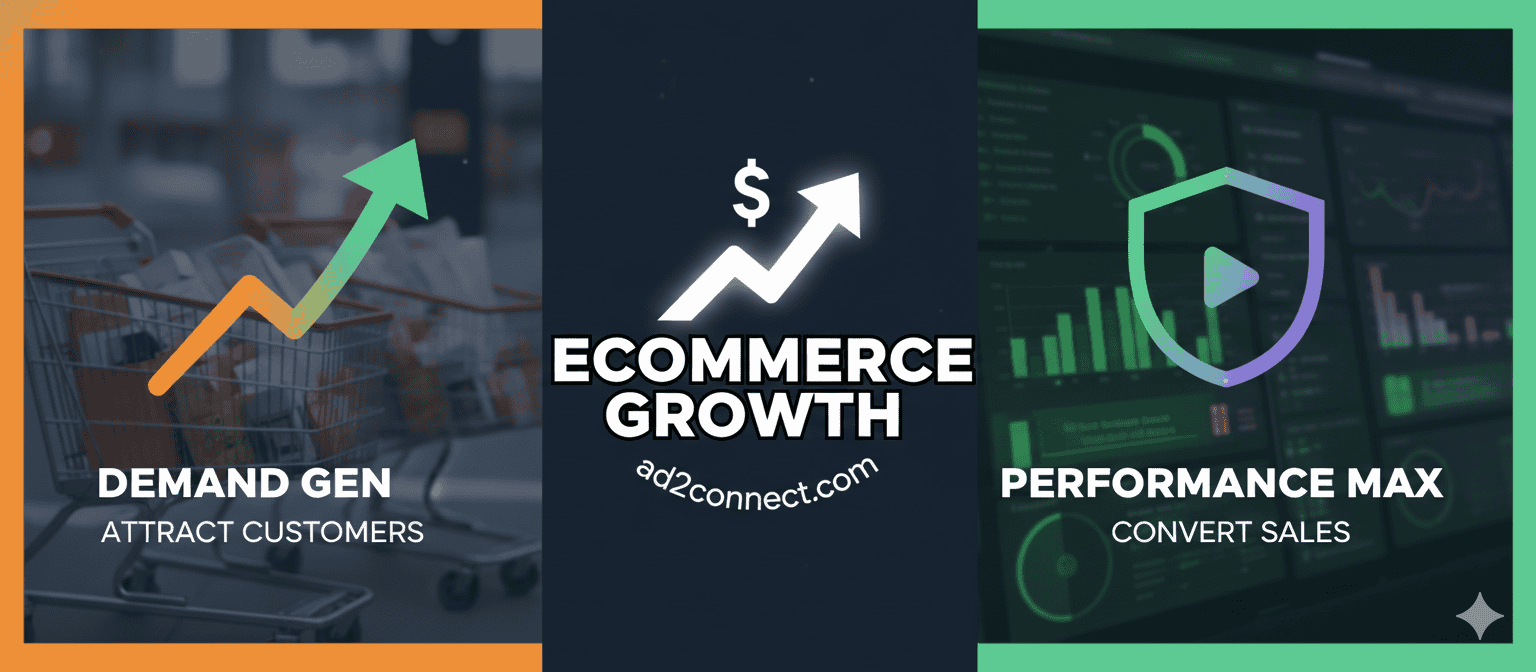
Why Demand Gen and Performance Max Together Drive Stronger Ecommerce Growth
Many e-commerce brands focus heavily on conversions but overlook how demand is created.
This approach often limits long-term growth.
That is why Demand Gen works best alongside Performance Max for e-commerce.
Demand Gen builds awareness and interest, while Performance Max captures users when they are ready to buy.
Together they support the full customer journey from discovery to purchase.
In this blog you will learn how Demand Gen and Performance Max complement each other.
why Google Ads performs better when both are active,
and how e-commerce brands, including those in Mumbai, can scale more sustainably.
The Role of Demand Gen and Performance Max in Ecommerce
They serve different stages of the funnel and are designed to work together.
What Performance Max Is Designed To Do
Performance Max focuses on driving conversions using Google’s AI across multiple channels, including:
- Search
- Shopping
- YouTube
- Display
- Discover
- Gmail
It performs best when users already show purchase intent and the goal is revenue or return on ad spend.
However, Performance Max depends on existing demand and does not actively introduce your brand to new audiences.
What Demand Gen Adds To The Funnel
Demand Gen focuses on awareness and consideration.
It reaches users earlier through visually rich placements such as:
- YouTube Shorts and in-stream ads
- Google Discover
- Gmail
For e-commerce brands this helps introduce products before users search.
improve brand recall,
and influence future buying decisions.
This is especially important for Mumbai-based e-commerce businesses competing in high-demand categories
like fashion, electronics and D2C brands.
Why Demand Gen Works Best Alongside Performance Max for Ecommerce
When both campaign types run together, they create a complete growth loop.
- Demand Gen introduces the brand to new audiences
- Users engage with visuals and messaging
- Brand awareness and consideration increase
- Performance Max converts intent into sales
Key Benefits Of Using Both Campaigns
- Stronger signals for Google’s AI optimization
- Higher conversion rates over time
- Reduced dependence on branded search traffic
- Improved efficiency in Performance Max campaigns
Brands that invest in upper-funnel video and discovery often see noticeable improvements
in lower funnel conversion performance within weeks.
Common Ecommerce Questions Answered
Will Demand Gen negatively affect ROAS
No, when measured correctly.
Demand Gen supports assisted conversions improved brand searches
and higher quality remarketing audiences.
Is Demand Gen suitable for small ecommerce brands
Yes, especially for brands launching new products or facing rising CPCs
in competitive markets like Mumbai.
How should budgets be allocated
- 75 percent Performance Max
- 25 percent Demand Gen
Budgets can be adjusted as brand demand grows.
Best Practices For Combining Demand Gen And Performance Max
- Use high-quality product visuals and short videos
- Focus on benefits and value, not just discounts
- Localize messaging for Indian and Mumbai audiences
- Exclude recent purchasers from Demand Gen when needed
- Track assisted conversions and view through performance
According to guidance from Google Ads and Search Engine Land
This full-funnel approach supports long-term e-commerce growth.
Conclusion: Encouraging Action
Performance Max converts demand.
Demand Gen creates it.
That is why Demand Gen works best alongside Performance Max for e-commerce.
Together they help brands build visibility increase trust
and drive scalable revenue.
Start combining Demand Gen with Performance Max to unlock full-funnel e-commerce growth today.