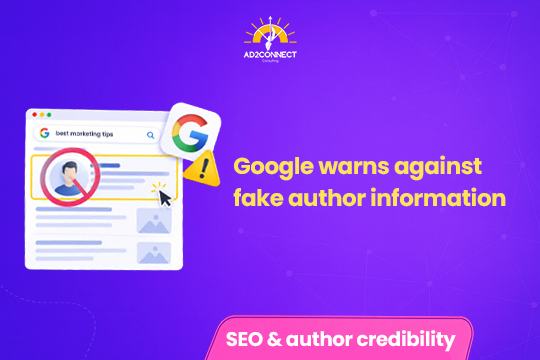
Google Warns Against Fake Author Information
Made-up names, AI-generated headshots, and invented credentials may look like a shortcut to trust. Google now says they do the opposite.
By Snehal Singh | Published: October 13, 2026
AI Overview Summary
Fake author information means giving content a made-up writer, such as an invented name, an AI-generated headshot, or false credentials. Google has updated its helpful content guidance to say that this kind of deception makes a page untrustworthy to both readers and its automated quality systems, and that it signals a low-quality page. The fix is simple: show real authors with honest details, explain how your content was made, and remove any profile that is not truthful.
Table of Contents
- What Did Google Actually Say?
- What Counts as Fake Author Information?
- Why Google Cares About Honest Authors
- Risky vs Safe Author Practices
- What Honest Author Information Looks Like
- What to Do If You Already Have Fake Profiles
- Mistakes That Look Like Strategy
- How Ad2Connect Approaches Author Trust
- Key Takeaways
- Frequently Asked Questions
What Did Google Actually Say?
Google recently updated its guide on creating helpful, reliable, people-first content. In the section that asks who made the content, how it was made, and why, it added a new warning.
The message is short and clear, because Google tells site owners not to use deceptive authorship information anywhere on their content.
Google also gave examples. Creating fake creator profiles, such as using AI-generated headshots, made-up names, or false credentials to make content look like it came from human experts, counts as deception.
The reason behind the warning is trust, since Google says that any form of deception makes a page untrustworthy to both people and its automated quality systems, and that it is a clear sign of a low-quality page.
What Counts as Fake Author Information?
Most site owners know that lying is wrong, but the line can feel blurry when a deadline is close. Here are the most common examples.
- Invented names. A byline such as “Dr. Priya Mehta, Senior Analyst” when no such person exists.
- AI-generated headshots. A realistic face that belongs to nobody, placed next to an author bio.
- False credentials. Claiming a degree, job title, or years of experience that the writer does not have.
- Borrowed identities. Using a real person’s name or photo without their knowledge.
- Fake expert reviewers. Adding “reviewed by a doctor” when no doctor reviewed anything.
A simple test can help you decide, which is to ask yourself whether a reader would feel tricked if they learned the truth about the author box, because if the answer is yes, the profile is probably deceptive.
Why Google Cares About Honest Authors
Search results exist to help people find answers they can trust. When a page pretends to be written by an expert, a reader may act on that advice, whether it is about health, money, or buying a product.
The bigger problem for a website owner is that a fake author is not a small cosmetic flaw sitting in one corner of a page, because it is a false statement about who is speaking, and every other claim on that page depends on that speaker being real, which means a reader who spots the deception starts doubting everything else you have written, an automated quality system that treats the page as untrustworthy may also view the rest of your site with more suspicion, and a shortcut that saved an hour of effort can quietly undo months of honest work, so the safest and cheapest long-term choice is always to show real people with real, checkable details.
Search Engine Land’s own coverage points out how common fake author profiles have become on news-style websites. In its view, Google may decide that a site’s overall quality is low when such profiles are found.
Risky vs Safe Author Practices
Use this table as a quick check for your own website.
| Author Practice | Safe or Risky? | Why |
|---|---|---|
| Real name, real photo, true bio | Safe | Readers can verify who wrote the content |
| Byline for the company team, clearly stated | Safe | It is honest about who is speaking |
| Made-up name with an invented job title | Risky | It creates an expert who does not exist |
| AI-generated headshot shown as a staff member | Risky | It makes readers believe a person is real |
| Exaggerated degrees or years of experience | Risky | False credentials are a form of deception |
| Expert review claim with no real reviewer | Risky | It borrows trust that was never earned |
| AI used for drafts, with a real person reviewing | Safe | A real person stands behind the content |
What Honest Author Information Looks Like
Honest author details do not have to be fancy. They only have to be true.
A good author box includes a real name, a real photo if the person is comfortable sharing one, and a short bio that describes what the writer actually does. Links to a professional profile make the details easy to check.
If a team wrote the content, simply say so, because a line such as “Written by the Ad2Connect team” is far better than a made-up person.
It also helps to have an About page that explains who runs the business, where it is based, and how readers can reach you.
What to Do If You Already Have Fake Profiles
Many sites inherited these profiles from older content or from a previous agency, and the good news is that the fix is quite straightforward.
Step 1: Audit Your Authors
List every author name that appears on your website. Next to each one, write down whether the person is real, whether the bio is true, and whether the photo shows that person.
Step 2: Replace or Remove
If a profile is fake, replace it with a real author who actually worked on the page. If nobody can honestly take the credit, switch the byline to your company name and remove invented credentials.
Do the same for any “expert reviewed” labels. Keep them only where a real expert truly did the review.
Step 3: Explain How Content Is Made
Google’s own guide asks who created the content, how it was created, and why. Answer those three questions openly.
If AI helped with a draft, you do not need to hide it, because what truly matters is that a real person checked the facts and stands behind the page.
Mistakes That Look Like Strategy
Some habits feel clever, but they quietly damage trust:
- Inventing an expert to look more credible. Credibility that is faked is not credibility.
- Using AI faces for team pages. Visitors who notice will question everything else.
- Padding a bio with extra titles. One false line can taint the true ones.
- Leaving old fake profiles in place. Old content still counts as part of your site.
- Hiding behind a vague “admin” byline. It gives readers nobody to trust.
- Treating author details as a technical checkbox. They are a signal of honesty, not a formality.
How Ad2Connect Approaches Author Trust
At Ad2Connect, we treat authorship as part of a brand’s reputation, because readers trust a business more when they can see who is speaking and what that person actually knows.
That thinking starts with brand identity. As a branding agency in Mumbai, we help businesses present real people, real stories, and real proof, instead of borrowed credibility that can disappear at the first question.
It continues in search. Our professional SEO services include reviewing author pages, bylines, and About pages so that the trust signals on your website match the truth and support long-term rankings.
If you would like an honest look at how your site presents its writers and experts, you can meet the team at our boutique digital marketing agency in Malad, and we will gladly run a quick review with you.
Key Takeaways
- Do not fake authors. Invented names, AI headshots, and false credentials count as deception.
- Deception hurts trust. Google says it makes a page untrustworthy and signals low quality.
- Show real, checkable details. A true bio and a real profile link go a long way.
- Be honest about teams and AI. A company byline is fine, and so is AI-assisted drafting with real review.
- Audit your old content. Fix or remove any profile that is not truthful.
Ad2Connect is a digital marketing agency in Malad, Mumbai, helping businesses grow through SEO, performance marketing, branding, and content. Not sure if your author pages build trust or hurt it? Talk to our team for a clear, honest content trust review.