
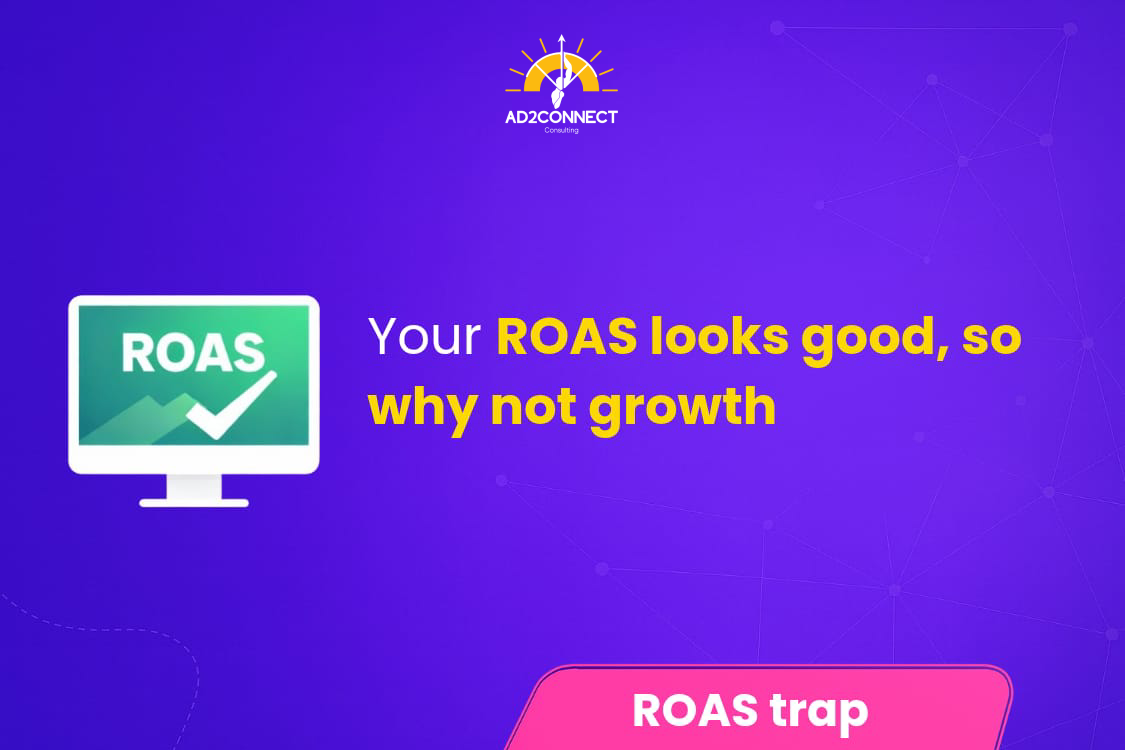
Your ROAS Looks Good..So Why No Growth?
Your ROAS looks strong on your dashboard.
But your business isn’t growing the way it should.
Many business owners in Mumbai face this exact situation:
“We’re getting a 4x or 5x ROAS… so why aren’t leads and revenue increasing?”
On paper, everything looks fine. Campaigns are generating conversions, reports look impressive, and ad platforms suggest you’re performing well. But in reality, growth feels stagnant. Profits are unclear. Scaling seems risky.
What you actually want is not just a high ROAS.
You want predictable leads, steady revenue, and real business growth.
This article explains why ROAS can be misleading—and what you should focus on instead.
What ROAS Really Means (And Why It Doesn’t Guarantee Growth)
ROAS (Return on Ad Spend) does not guarantee growth because it measures revenue efficiency, not profitability or new customer acquisition.
- Retargeting existing users
- Branded searches
- Limited-scale campaigns
To achieve real growth, businesses must focus on:
- New customer acquisition
- Profit margins
- Incremental revenue, not just returns
Summary
- High ROAS does not mean high profit
- Retargeting campaigns inflate ROAS but limit growth
- Scaling requires testing new audiences
- Profit and customer acquisition matter more than revenue
- Growth comes from expanding demand
Why This Problem Happens
ROAS Measures Efficiency, Not Impact
ROAS is calculated as:
Revenue ÷ Ad Spend
It tells you how efficiently your ad spend generates revenue. But it does not tell you:
- Whether that revenue is profitable
- Whether customers are new or returning
- Whether your business is actually growing
Common Mistakes That Limit Growth
1. Over-Reliance on Retargeting
Retargeting campaigns show high ROAS because users already know your brand.
- You are not reaching new audiences
- Growth eventually stops
2. Ignoring Customer Acquisition Cost (CAC)
ROAS does not show how much it costs to acquire a new customer.
3. Playing It Too Safe
Only scaling high-ROAS campaigns limits reach and experimentation.
What You Should Focus on Instead
1. Profit Over Revenue
Track:
- Product or service cost
- Ad spend
- Operational expenses
2. Incremental Growth
Ask: Are your ads creating new demand or just capturing existing demand?
3. Customer Lifetime Value (LTV)
Lower ROAS campaigns can still be profitable if customers return.
Real Case Study (Mumbai-Based Business)
Client: Home services company in Mumbai
Before (ROAS-Focused Strategy)
- Ad Spend: ?50,000
- Revenue: ?2,50,000
- ROAS: 5x
- Leads: 120
- Cost per Lead: ?416
Problem:
- Mostly repeat customers
- Limited new acquisition
- No growth
After (Growth-Focused Strategy)
Changes implemented:
- Reduced retargeting budget
- Increased cold audience targeting
- Improved landing pages
Results
- Ad Spend: ?80,000
- Revenue: ?3,20,000
- ROAS: 4x
- Leads: 260
- Cost per Lead: ?307
Outcome:
- 2x increase in leads
- More new customers
- Higher long-term growth
Expert Insights
High ROAS Often Means Limited Scale
High-performing campaigns usually target ready-to-buy users, which limits growth.
Growth Requires Lower ROAS Initially
Expanding to new audiences often reduces ROAS in the short term.
Smart Budget Allocation
- 70% on proven campaigns
- 20% on scaling
- 10% on testing
Market Reality
High competition means relying only on bottom-funnel ads is not enough.
Actionable Checklist
- Track profit, not just ROAS
- Separate new vs returning customers
- Reduce reliance on retargeting
- Invest in new audience targeting
- Monitor cost per lead and CAC
- Improve landing pages
- Test campaigns regularly
- Use LTV for scaling decisions
Need Help Fixing Your ROAS Strategy?
If your campaigns show strong ROAS but your business isn’t growing, the strategy needs adjustment.
Ad2Connect helps businesses build campaigns that generate real leads, real customers, and measurable growth. A structured audit can help identify what’s holding your performance back.
Conclusion
ROAS is a useful metric, but it is not a complete measure of success.
Relying only on ROAS can lead to:
- Misleading insights
- Missed growth opportunities
- Poor scaling decisions
Real growth comes from:
- Profitability
- Customer acquisition
- Sustainable expansion
A strong ROAS should support your strategy—not define it.