How SEO and PPC Can Share Insights to Drive Better Results
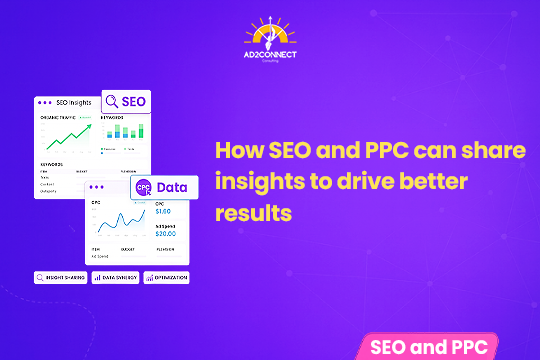
Your SEO team and your PPC team are both watching the same searchers, just from different seats. Here’s what each one already knows, and how sharing it can save budget and grow traffic at the same time.
By Snehal Singh | Published: September 8, 2026
AI Overview Summary
SEO and PPC are usually run as two separate efforts, each judged on its own numbers. SEO is measured on rankings and organic traffic. PPC is measured on cost per click and return on ad spend. Because the two teams rarely compare notes, businesses end up paying for ad clicks on keywords they already rank for organically, and missing the signal when rising ad costs point to a strong organic opportunity. The fix isn’t merging the teams into one. It’s building one shared view of keyword performance, so paid data guides organic priorities and organic data guides paid spend. Even a simple monthly review of this shared data can uncover savings and growth that neither channel would find alone.
Table of Contents
- Why SEO and PPC Rarely Talk to Each Other
- What It Costs the Business When They Don’t
- The Insights Each Channel Is Already Sitting On
- How to Actually Start Sharing This Data
- Reading the Signals: A Quick Reference
- Mistakes That Look Like Strategy
- How Ad2Connect Approaches SEO and PPC Integration for Clients
- Key Takeaways
- FAQ: SEO and PPC Insight Sharing
Why SEO and PPC Rarely Talk to Each Other
SEO and PPC are genuinely different jobs. One earns visibility for free, but slowly, over months. The other buys visibility instantly, for as long as the budget lasts. The skills don’t overlap much. The tools don’t overlap much. Even the timelines are on different clocks.
Because of this, many businesses keep the two apart. Sometimes they sit in different departments. Sometimes they’re even handled by two separate agencies. On its own, that split isn’t a problem.
The real problem starts when nobody ever looks at both channels together. An SEO team gets judged on rankings and organic clicks. A PPC team gets judged on cost per click, conversion rate, and return on ad spend. Neither one is rewarded for paying attention to the other channel’s numbers.
Sometimes the gap is just about knowledge. A PPC manager may not know enough about SEO to ask the right questions. An SEO specialist may not track paid campaigns closely enough to spot an overlap. Other times, it’s about territory. A team may hold its numbers close. They worry that sharing them means losing budget to the other side.
Both reasons make sense on a human level. But both come at a real cost. The business is paying for both channels at once.
What It Costs the Business When They Don’t
The most visible waste is easy to spot once you look for it. It’s paying for ad clicks on a keyword the website already ranks for organically. If a page holds position one in Google’s free results, there’s a fair case for not bidding on that same keyword at all. The searcher would likely have clicked the organic listing anyway. But if the PPC team can’t see where the site already ranks, that ad spend just keeps flowing. Month after month, on a keyword the business never needed to pay for.
There’s a second, quieter cost that’s easy to miss. It works the opposite way from the first one. Sometimes the cost per click on a search term keeps rising, while the return on that spend keeps falling. Most teams treat this as a simple bidding problem, adjust the budget, and move on. But it’s also a signal worth handing to the content team. A keyword getting more expensive to win through ads is often a keyword becoming more valuable to win for free, through organic search. That could mean writing a new page around the topic. It could mean strengthening a page that’s already close to ranking. It could even mean fixing a small technical issue holding a near-ranking page back. Left on two separate reports, this signal usually gets buried and forgotten. Shared as one view across both channels, it turns into one of the clearest, cheapest growth opportunities a business has. Rising ad prices are the market itself pointing at exactly which topics are worth the long-term investment.
The Insights Each Channel Is Already Sitting On
Once the data is shared, both sides get something they didn’t have before.
What PPC Data Can Tell SEO
- Which exact keyword phrasing actually converts, not just which one gets clicked.
- Which ad headlines and messages hold attention, useful for writing sharper page titles and meta descriptions.
- Which keywords are becoming more expensive to win, a signal that organic content on that topic could pay off.
What SEO Data Can Tell PPC
- Which keywords the site already ranks well for, so ad budget isn’t spent duplicating free traffic.
- Which pages sit close to ranking, so a short, targeted paid push can support them while they climb.
- Which topics already earn strong organic clicks, a hint at where ad spend might convert well too.
How to Actually Start Sharing This Data
This doesn’t need new software or a company reorganisation. It needs one shared habit, repeated regularly.
- Build one keyword list covering both channels, with organic ranking position and paid cost per click sitting side by side.
- Flag any keyword where the site already ranks in the top three, and question whether it still needs a paid bid.
- Flag any keyword where cost per click has risen sharply over the past quarter, and pass it to the content team as an organic opportunity.
- Set a short monthly meeting, even fifteen minutes, so both teams look at the same numbers at the same time.
Reading the Signals: A Quick Reference
| What You See | What It Means | Who Should Act |
|---|---|---|
| Ranking #1 organically, still bidding on the term | Likely wasted ad spend | PPC team, with SEO confirming the ranking is stable |
| Rising CPC, falling conversion rate | Term is getting expensive to win through ads | SEO team, as a content or optimisation priority |
| Ad copy converting well, organic titles ignoring that language | Missed messaging opportunity | SEO team, to rewrite titles and meta descriptions |
| Page ranking on page two, close to breaking through | Short-term paid support could help while it climbs | Both teams, coordinated for a limited period |
Mistakes That Look Like Strategy
- Letting SEO and PPC report separately, with no shared keyword view at all.
- Continuing to bid on a keyword the site already dominates organically, out of habit rather than data.
- Ignoring rising cost-per-click trends instead of treating them as organic opportunities.
- Assuming that merging both teams into one department automatically fixes the gap. It doesn’t, without a shared reporting habit.
- Reviewing this data once and never again. Search costs and rankings shift constantly, so the review has to repeat.
How Ad2Connect Approaches SEO and PPC Integration for Clients
At Ad2Connect, we don’t run organic and paid search as two separate accounts working in parallel. As a boutique digital marketing agency in Malad, Mumbai, our team reviews ranking data and paid performance together before recommending where budget should go next.
As one of the Best SEO Agency in Mumbai, we start by mapping which keywords a client already owns organically, so paid budget isn’t wasted duplicating traffic that’s already free. From there, our work as a Performance Marketing agency puts that saved budget toward keywords where paid search still delivers a stronger, faster return.
This shared view is part of the same thinking behind our approach to diagnosing why a page’s traffic is falling before recommending a fix, and it pairs naturally with the technical groundwork covered in our guide on avoiding technical SEO mistakes that cost rankings. The goal stays the same: make sure every rupee spent on search, paid or organic, works toward a client’s growth instead of competing with their own free traffic.
Key Takeaways
- The gap is about communication, not technology. Most businesses already have both data sets; they’re just never compared side by side.
- Check for overlap first. Bidding on a keyword you already rank #1 for organically is the most common, easiest waste to fix.
- Rising ad costs are a signal, not just a bill. A keyword getting expensive to win through ads is often worth pursuing organically.
- You don’t need to merge teams. A shared monthly keyword review does most of the work.
- Make it routine. Rankings and ad costs shift often enough that a one-time review won’t hold up for long.
Ad2Connect is a digital marketing agency in Malad, Mumbai, helping businesses grow through data-driven SEO, performance marketing, and integrated search strategy. If your SEO and PPC teams have never compared notes, talk to us about running a joint search audit.