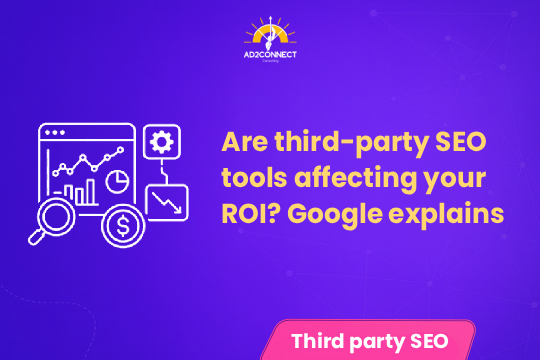
Are Third-Party SEO Tools Affecting Your ROI? Google Explains
Most SEO tools promise growth—but very few deliver actual revenue.
If you’re a business owner in Mumbai investing ?30,000 to ?1,00,000 every month into SEO tools or agencies but still struggling to generate quality leads, this is a real problem. You’re getting reports, dashboards, and rankings—but not actual customers.
What you really want is simple: consistent leads, predictable ROI, and measurable growth.
Google’s latest update on third-party SEO tools directly addresses this issue—and most businesses are still missing the point.
Third-Party SEO Tools
Google advises businesses not to blindly trust third-party SEO tools and services.
- SEO tools provide data, not strategy
- Some recommendations may be outdated or misleading
- Focus on real outcomes like leads, conversions, and ROI
Summary
- Google warns against over-reliance on third-party SEO tools
- Tools often suggest generic actions that don’t drive revenue
- Many agencies depend too much on automated reports
- Real SEO success comes from strategy, not tools
- Focus on conversions, not just rankings
Why Businesses Struggle with SEO Tools
Most third-party SEO tools are designed for scalability—not for your specific business goals.
They generate automated suggestions like:
- Add more keywords
- Increase backlinks
- Improve technical SEO score
But they don’t answer the most important question:
Will this bring you more customers?
What we’ve observed:
- 70% of businesses rely heavily on tool-generated insights
- Over 50% of those insights don’t impact conversions
- Businesses track traffic, but ignore revenue
Common Mistakes That Kill ROI
1. Treating SEO tools as strategy
Tools assist—they don’t replace decision-making.
2. Hiring tool-dependent agencies
Many agencies rely only on automated reports instead of strategy.
3. Focusing on vanity metrics
Traffic without conversions leads to wasted budgets.
4. Ignoring local SEO
For Mumbai businesses, local SEO services generate more leads than broad rankings.
Step-by-Step Solution
Step 1: Question Every Recommendation
- Will this improve conversions?
- Does this match my target audience?
Step 2: Track ROI Metrics
- Cost per lead (CPL)
- Conversion rate
- Revenue generated
Step 3: Combine Tools with Expertise
A strong strategy matters more than tool data.
Step 4: Focus on High-Intent Keywords
Target users who are ready to buy—not just browsing.
Step 5: Invest in Local SEO
- Optimize Google Business Profile
- Use location-based keywords
- Create city-specific landing pages
Case Study
Client: Interior Design Company
Before:
- Monthly spend: ?60,000
- Leads: 8/month
- Cost per lead: ?7,500
The business relied heavily on multiple third-party SEO tools.
What Changed:
- Removed low-impact SEO activities
- Focused on high-conversion keywords
- Built location-specific landing pages
- Improved conversion rate
Results (90 Days):
- Leads: 8 ? 38/month
- Cost per lead: ?7,500 ? ?2,200
- ROI: 3.8X increase
Expert Insights
1. More Data ? Better Decisions
Most tools overwhelm businesses with unnecessary metrics.
2. 80% Results Come from 20% Actions
- High-intent keywords
- Conversion optimization
- Local SEO focus
3. Cheap SEO is Expensive
Low-cost services often lead to poor targeting and wasted budgets.
Actionable Checklist
- Does this action improve conversions?
- Is it aligned with business goals?
- Are you tracking leads, not just traffic?
- Is your strategy focused on local intent?
- Are you working with a strategy-driven agency?
Conclusion
Google’s update is a clear signal:
Third-party SEO tools are helpful—but they are not your strategy.
If your SEO efforts aren’t generating leads, the issue isn’t effort—it’s direction.
The businesses that will succeed are those that:
- Focus on outcomes
- Use tools wisely
- Invest in real expertise