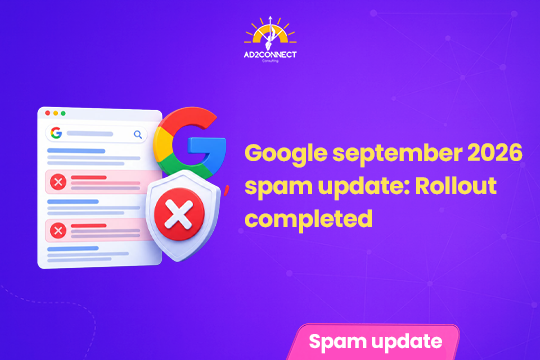
Google September 2026 Spam Update: Rollout Completed
The rollout took almost two weeks and shook up rankings in waves. Here is what happened, in plain words, and how to check if your site was touched.
By Snehal Singh | Published: October 14, 2026
AI Overview Summary
Google’s September 2026 spam update began on September 24 and finished on October 8, 2026, taking almost 14 days to complete. Google describes it as a “normal spam update” containing nothing new, yet search industry experts observed ranking fluctuations in three separate waves. If your website traffic declined after September 24, compare your performance against the dates below, and review your pages against Google’s spam policies before making any significant changes. Your Google Search Console data is the best place to start.
Table of Contents
- What Just Happened?
- What Is a Google Spam Update?
- The Rollout Timeline
- Why This Update Felt Different
- How to Check If Your Site Was Hit
- What to Do Next
- Mistakes That Look Like Strategy
- How Ad2Connect Approaches Spam Updates for Clients
- Key Takeaways
- FAQ: Google Spam Update
What Just Happened?
Google has confirmed that its September 2026 spam update is finished, after it went live on Thursday, September 24, at around 12:00 pm ET and wrapped up on October 8, 2026, at 4:37 am ET.
That is almost 14 days from start to finish.
Google announced the news on its search status dashboard, explaining that the update applies worldwide and to every language, and that the rollout could take up to two weeks. That is almost exactly how long it took.
This is the fourth spam update Google has announced in 2026. The two before it came in August and June.
What Is a Google Spam Update?
Think of Google as a huge library where millions of pages compete for a spot on the front shelf. Some pages earn that spot honestly, while others try to cheat their way up.
A spam update is Google’s cleaning day, when its automated systems become better at spotting pages that break the rules. Those pages can drop in search results or disappear from them entirely.
What Google’s Spam Rules Cover
Google’s spam rules cover tricks like these:
- Repeating the same keyword unnaturally throughout a page
- Showing one version of a page to Google and a different version to visitors
- Buying or selling links to manipulate search rankings
- Copying content from other websites without adding any value
- Mass-producing low-quality pages purely to capture search traffic
If you follow the rules, a spam update should not hurt you, although no automated system is perfect.
Spam Update vs Core Update
These two are often confused. A spam update focuses on pages that break Google’s spam rules, while a core update is a broader change to how Google judges overall quality. They can overlap in time, so always check which one Google announced before you diagnose a traffic drop.
The Rollout Timeline
Search industry experts tracked ranking changes day by day and noticed three clear waves of movement during the rollout.
| Date | What Happened |
|---|---|
| September 24 | Google starts the update at around 12:00 pm ET |
| September 25–27 | First wave of ranking swings, mostly over the weekend |
| Around September 30 | A second, smaller blip in volatility |
| October 4–7 | The final wave of ranking movement |
| October 8 | Google confirms the rollout is complete (4:37 am ET) |
The first big shake came just one day after launch, then things settled, moved again, and settled once more.
That stop-and-start pattern is typical of long rollouts, and it also means your own rankings may have changed more than once.
Why This Update Felt Different
Google described this as a “normal spam” update and said nothing new was added; it simply ran its existing spam systems again.
So why does it matter? Because of the speed. Google’s last few spam updates took only about two days to finish, while this one took two full weeks.
A slower rollout does not always mean a bigger punch, but it does change how you read your data. A two-day update gives you one clean before-and-after picture. A two-week update gives you a messy middle, where rankings go up and down for days. That makes it easy to blame the wrong thing. A traffic dip on October 2 might have nothing to do with a spam update. Or it might be part of it. Without dates, you cannot tell.
For that reason, write down your important dates before you take any action.
How to Check If Your Site Was Hit
You do not need expensive tools to investigate this, because a free Google Search Console account and a simple spreadsheet are enough.
Here is a practical way to check your website:
- Choose your comparison dates. Compare the two weeks before September 24 with the two weeks following October 8.
- Examine your clicks. Did your organic clicks decline sharply across the entire website?
- Identify the affected pages. Is the decline limited to a handful of pages, or is it widespread?
- Confirm the timing. Did the decline begin inside the rollout window?
Then use this guide to understand what your numbers are telling you.
| What You See | What It Might Mean | Your Next Step |
|---|---|---|
| Site-wide decline that began inside the rollout window | The update may have affected your website | Audit your pages against Google’s spam policies |
| A few individual pages declined while the rest remain stable | Probably a page-level problem rather than a spam penalty | Review each affected page individually |
| Decline started before September 24 | Probably unrelated to this update | Investigate other causes, such as outdated content or technical issues |
| No meaningful change in traffic | Your website is safe, for now | Maintain high content quality and review again next quarter |
What to Do Next
First, stay calm and avoid rewriting your whole website in a panic.
If your traffic did not change
That is good news, and it means you are in the clear for now.
Still, Google has announced four spam updates this year, so another one will likely arrive. Use this quiet period to clean up any weak or outdated pages.
If your traffic dropped
Take these steps in order:
- Confirm that the decline genuinely coincides with the rollout dates.
- Read Google’s spam policies carefully and compare them against your existing pages.
- Remove or correct anything that violates a guideline, such as thin pages, copied text or paid links.
- Keep detailed notes of every change you make, including the dates.
- Rule out basic problems too, because a crawling or indexing issue can look like a penalty. Our guide on how to prioritize technical SEO for real results explains where to look.
- Be patient, because rankings rarely recover overnight.
It is also worth remembering that websites which do not spam can occasionally get caught by these updates, so a drop does not always mean you did something wrong.
Mistakes That Look Like Strategy
When traffic falls, many website owners rush into quick decisions, and these common reflexes usually make the situation worse:
- Blaming the update without first verifying the dates.
- Deleting valuable pages together with the problematic ones.
- Making numerous changes simultaneously, which makes it impossible to identify what actually worked.
- Buying links or using risky shortcuts in an attempt to recover faster.
- Ignoring the problem and hoping it resolves itself.
- Checking rankings constantly during a rollout, when the numbers naturally fluctuate.
Slow and careful steps almost always beat fast and random ones.
How Ad2Connect Approaches Spam Updates for Clients
At Ad2Connect, we treat every Google update as a routine check-up rather than a crisis, and before we change a single page, we match the traffic dates to the rollout dates to identify the real cause.
As a boutique digital marketing agency in Malad, we work closely with each client. We look at what is actually on your pages and whether it follows Google’s rules. That clean-up often starts with a proper audit from the best SEO agency in Mumbai that you can trust to give honest answers.
Traffic loss also hits sales. So our team pairs the audit with a performance marketing agency in Mumbai plan. That way, your paid campaigns keep bringing in leads while your organic rankings recover.
The goal is straightforward: fix what is broken, protect what works, and avoid expensive guesswork.
Key Takeaways
- The update is complete. It ran from September 24 to October 8, 2026.
- The rollout lasted almost 14 days. That is considerably longer than Google’s last few spam updates.
- Google says nothing new was introduced. It was a “normal spam” update.
- Verify your dates first. Match any traffic decline to the three waves of ranking movement.
- Fix problems without panicking. Remove genuine spam signals and make changes one at a time.
- Expect further updates. This was the fourth spam update announced in 2026.
Ad2Connect is a digital marketing agency in Mumbai helping brands grow through data-driven SEO, performance marketing and branding. If your traffic changed after Google’s September 2026 spam update, talk to our SEO team about a clear, honest site audit.