
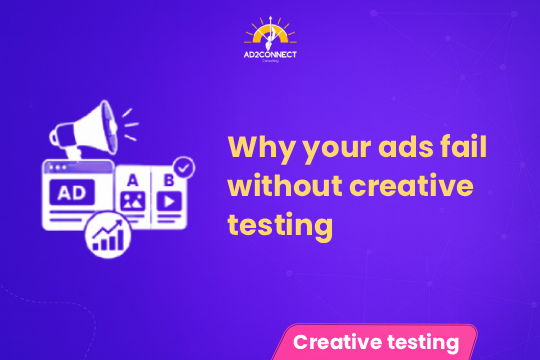
Why Your Ads Fail Without Creative Testing
Most ads don’t fail because of targeting—they fail because of bad creatives.
If you’re spending money on Facebook or Instagram ads but not getting leads, it’s frustrating. You try new audiences, increase budgets, or even switch platforms—but nothing seems to work consistently.
What you actually want is simple: predictable leads, lower cost per acquisition, and ads that scale profitably. And the truth is—without a proper paid social creative testing structure, that’s almost impossible.
What Is a Paid Social Creative Testing Structure?
A paid social creative testing structure is a systematic process used to test different ad creatives, including videos, images, hooks, messaging, and calls-to-action, to identify what generates the best results.
Instead of relying on assumptions, businesses use testing frameworks to determine:
- Which creative attracts attention
- Which message drives engagement
- Which format generates leads
- Which ad delivers the best ROI
This data-driven approach helps advertisers reduce wasted spend and scale campaigns more effectively.
Summary
- Most ads fail because creatives are never tested properly.
- Testing 3–5 creatives simultaneously provides meaningful insights.
- Change only one variable at a time.
- Pause underperforming ads quickly.
- Scale only proven winners.
- Refresh creatives every 2–3 weeks to avoid ad fatigue.
Why Most Businesses Struggle With Paid Social Advertising
One of the biggest misconceptions in digital advertising is that targeting is the primary driver of campaign performance.
While targeting matters, platforms like Facebook and Instagram increasingly prioritize creative quality. In many campaigns, the creative itself determines whether a user stops scrolling, engages, or converts.
Businesses often invest heavily in media buying while overlooking creative testing.
Common Creative Testing Mistakes
- Running only one ad creative
- Changing multiple variables simultaneously
- Copying competitor ads without understanding the strategy
- Scaling campaigns before validating performance
- Ignoring creative fatigue
These mistakes are common among brands handling campaigns internally and even among businesses working with a digital marketing agency in Mumbai that lacks a structured testing process.
The Paid Social Creative Testing Structure That Delivers Better Performance
Step 1: Identify What You Are Testing
Before launching any campaign, decide which creative variable you want to evaluate.
Common testing elements include:
- Hook (first three seconds)
- Video versus image format
- Headline variations
- Call-to-action
- Customer pain points
- Offer positioning
Important: Test only one variable at a time. Otherwise, you won’t know what caused the performance difference.
Step 2: Create Structured Testing Batches
Build batches containing 3–5 creatives while keeping all other factors constant.
Example:
- Same audience
- Same budget
- Same copy
- Different opening hooks
This allows you to isolate the winning creative concept.
Step 3: Set a Realistic Testing Budget
Many small businesses assume creative testing requires large budgets.
In reality, a structured testing process can begin with:
- ?500–?1,500 per day per ad set
- 3–5 day testing windows
- One testing campaign per week
This approach is frequently used by successful brands and leading performance marketing agencies in Mumbai.
Step 4: Eliminate Losing Creatives Quickly
Evaluate performance using metrics such as:
- Click-Through Rate (CTR)
- Cost Per Click (CPC)
- Cost Per Lead (CPL)
- Conversion Rate
Pause creatives that consistently underperform after collecting sufficient data.
Step 5: Scale Winning Creatives
Once a winning creative emerges:
- Increase budgets gradually by 20–30%
- Create variations of the winning concept
- Expand to additional audiences
- Test new messaging around the same angle
Real Campaign Example
Client: Mumbai-Based Interior Design Company
Challenge:
- Cost Per Lead: ?420
- Low lead quality
- Inconsistent campaign performance
Strategy Implemented:
- Created five creative variations
- Tested before-and-after project visuals
- Introduced customer testimonial videos
- Developed three different hooks
Results Within 14 Days:
- Cost Per Lead reduced from ?420 to ?150
- Lead volume increased by 300%
- Sales consultation bookings increased by 55%
- Campaign ROI improved significantly
The highest-performing creative was a simple smartphone-recorded customer walkthrough video.
Expert Insights From Real Campaign Management
1. Professional Design Does Not Guarantee Results
Some of the highest-performing ads are created using simple videos recorded on smartphones.
2. The First Three Seconds Matter Most
If users do not stop scrolling immediately, the rest of the ad becomes irrelevant.
3. Testing Speed Creates Competitive Advantage
Brands that launch and test faster often outperform competitors with larger budgets.
4. One Winning Creative Can Transform Performance
Many campaigns become profitable after identifying just one strong creative concept.
5. Creative Strategy Is More Important Than Targeting
Strong creatives can overcome audience limitations, while poor creatives rarely succeed regardless of targeting quality.
Creative Testing Checklist
- Define one variable to test
- Create 3–5 creative variations
- Keep audience and budget consistent
- Run tests for at least 3 days
- Monitor CTR, CPC, and CPL
- Pause weak performers
- Scale winning creatives
- Refresh creatives every 2–3 weeks
How Businesses Scale Paid Social Campaigns
At Ad2Connect, we believe that successful advertising is built on structured testing, not assumptions.
Our team combines creative strategy, performance marketing, and conversion optimization to help businesses generate predictable growth.
Whether you’re looking for a performance marketing agency in Mumbai, a best SEO agency in Mumbai, or a partner that understands full-funnel growth, our focus remains the same—delivering measurable business outcomes.
Conclusion
Your ads are not failing because Facebook or Instagram stopped working.
They are failing because your business lacks a structured approach to creative testing.
By implementing a proven paid social creative testing structure, you can reduce costs, improve lead quality, and scale campaigns with confidence.
The businesses that consistently win in paid advertising are not guessing—they are testing.