
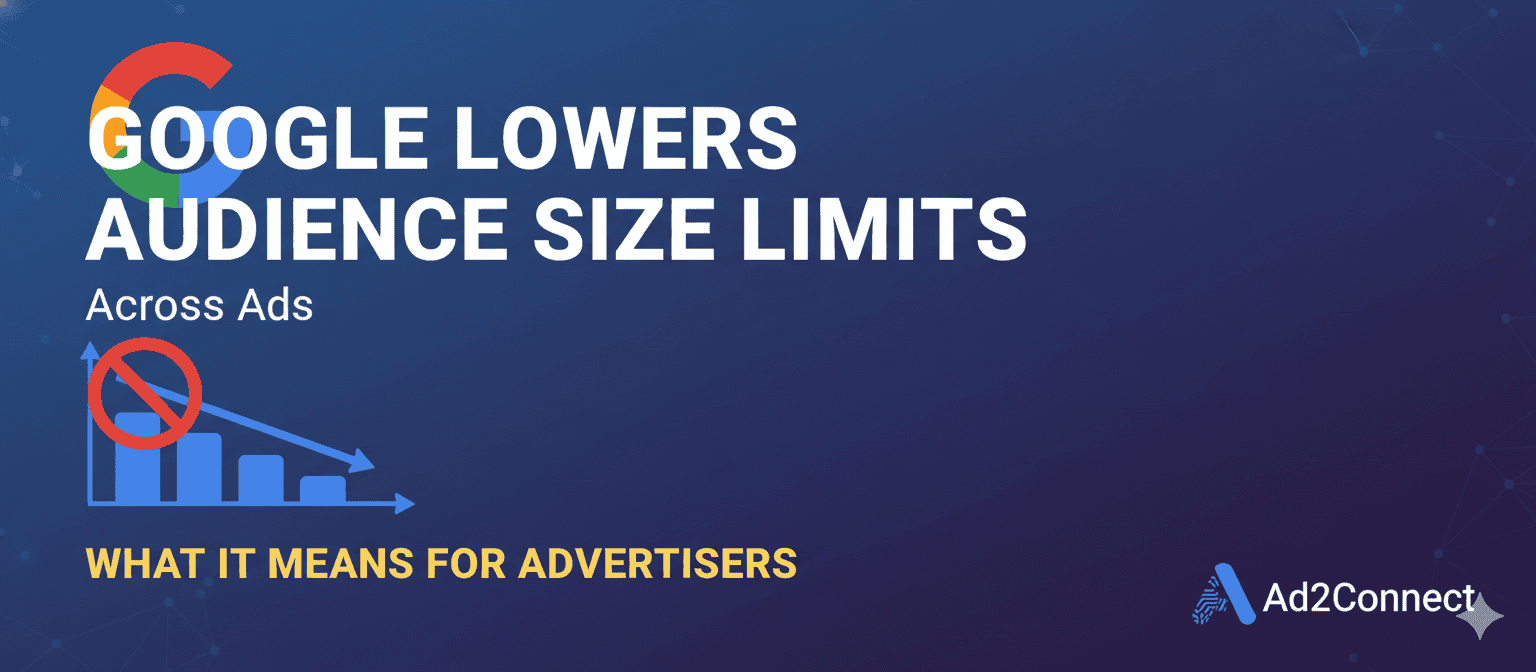
Google Lowers Audience Size Limits Across Ads: What It Means for Advertisers
Smaller Audiences, Bigger Opportunities
For years, Google Ads advertisers faced a common roadblock: audience size limits. Even with strong intent signals and valuable first-party data, many campaigns could not launch or scale because audiences were considered too small.
That barrier is now lower.
Google has officially reduced audience size limits across Google Ads, allowing advertisers to activate, analyze, and optimize smaller, more precise audiences. This change reflects Google’s broader shift toward privacy-first advertising, AI-driven optimization, and intent-based targeting.
If you rely on remarketing, Customer Match, Performance Max, or Demand Gen campaigns, this update directly impacts how efficiently you can drive results.
What Changed in Google Ads Audience Requirements
Google has lowered the minimum audience thresholds required to use and report on several audience-based features across its advertising ecosystem, including:
- Customer Match lists
- Remarketing audiences
- Combined audiences
- Audience insights and performance reporting
Previously, many advertisers—especially SMBs, B2B brands, and local businesses—struggled to meet these thresholds. With the update, smaller yet high-intent segments are now viable, usable, and measurable.
This update was first reported by Search Engine Land, highlighting Google’s ongoing push toward smarter, signal-based advertising rather than volume-driven targeting.
Why Google Lowered Audience Size Limits
Privacy-First Advertising and First-Party Data
As third-party cookies continue to phase out, Google Ads increasingly depends on first-party data, modeled conversions, and aggregated signals. Lower audience thresholds make it easier for advertisers to activate privacy-safe data sources without compromising user anonymity.
This aligns with Google’s broader Privacy Sandbox initiatives and long-term compliance-focused advertising strategy.
AI, Automation, and Better Learning Signals
Smaller audiences provide cleaner intent signals for Google’s AI systems, including Smart Bidding, Performance Max, and Demand Gen campaigns.
Instead of forcing advertisers to inflate lists, Google’s automation can now learn faster from high-quality micro-audiences, improving prediction accuracy and return on ad spend.
Improved Advertiser Experience and User Experience
From a usability and conversion optimization perspective, advertisers can now:
- Launch campaigns faster
- Test ideas without artificial constraints
- Personalize messaging more effectively
This reduces friction, increases experimentation velocity, and improves overall advertiser satisfaction.
What This Means for Advertisers
Lower audience size limits unlock several practical advantages:
- More precise targeting without scale penalties
- Better personalization for niche products or services
- Faster learning cycles for automated campaigns
- Stronger performance for low-volume or GEO-specific offers
This update is especially valuable for B2B and SaaS companies, local and regional businesses, eCommerce brands with focused catalogs, and advertisers relying heavily on CRM-based marketing.
Actionable Strategies You Can Implement Today
Rebuild High-Intent Remarketing Audiences
Advertisers can now confidently create behavior-based remarketing segments, such as:
- Users who viewed pricing or service pages
- Cart or form abandoners from the last 7 to 14 days
- Visitors who engaged with key content but did not convert
Conversion optimization tip: Align ad copy directly with the action the user took. Intent-matched messaging improves click-through rate and dwell time.
Use Customer Match More Aggressively
With lower thresholds, even smaller CRM lists can now be activated. Upload segments based on lifecycle stage, purchase frequency, or customer lifetime value.
Customer Match is particularly effective for retention, upselling, and cross-selling when combined with Search and YouTube campaigns.
Feed Micro-Audiences into Performance Max
Rather than relying on broad signals, feed smaller, high-quality audience segments into Performance Max as guidance signals.
This approach improves asset group learning, creative relevance, and conversion efficiency while preserving automation benefits.
Strengthen GEO-Based Targeting
Local and regional advertisers benefit significantly from this update. Combining smaller remarketing lists with location targeting and GEO-specific creative messaging increases relevance, Quality Score, and local intent matching.
Behavioral SEO and Engagement Optimization
To maximize performance and visibility:
- Use scannable headings and short paragraphs to improve scroll depth
- Align creatives tightly with audience intent to increase dwell time
- Avoid over-segmentation that limits learning signals
- Refresh creatives frequently to reduce ad fatigue
Common Mistakes to Avoid
- Over-segmenting audiences without enough conversion data
- Disabling automation instead of guiding it
- Using generic creatives for high-intent users
- Ignoring frequency and ad fatigue metric
Conclusion: Precision Is the New Scale
Google lowering audience size limits across Ads signals a clear shift: precision now matters more than volume.
Advertisers who embrace smaller, intent-driven audiences can unlock faster learning, higher relevance, and stronger long-term performance.
Audit your existing audiences today. Identify where smaller, high-intent segments can drive stronger results—and start building smarter campaigns, not bigger ones.