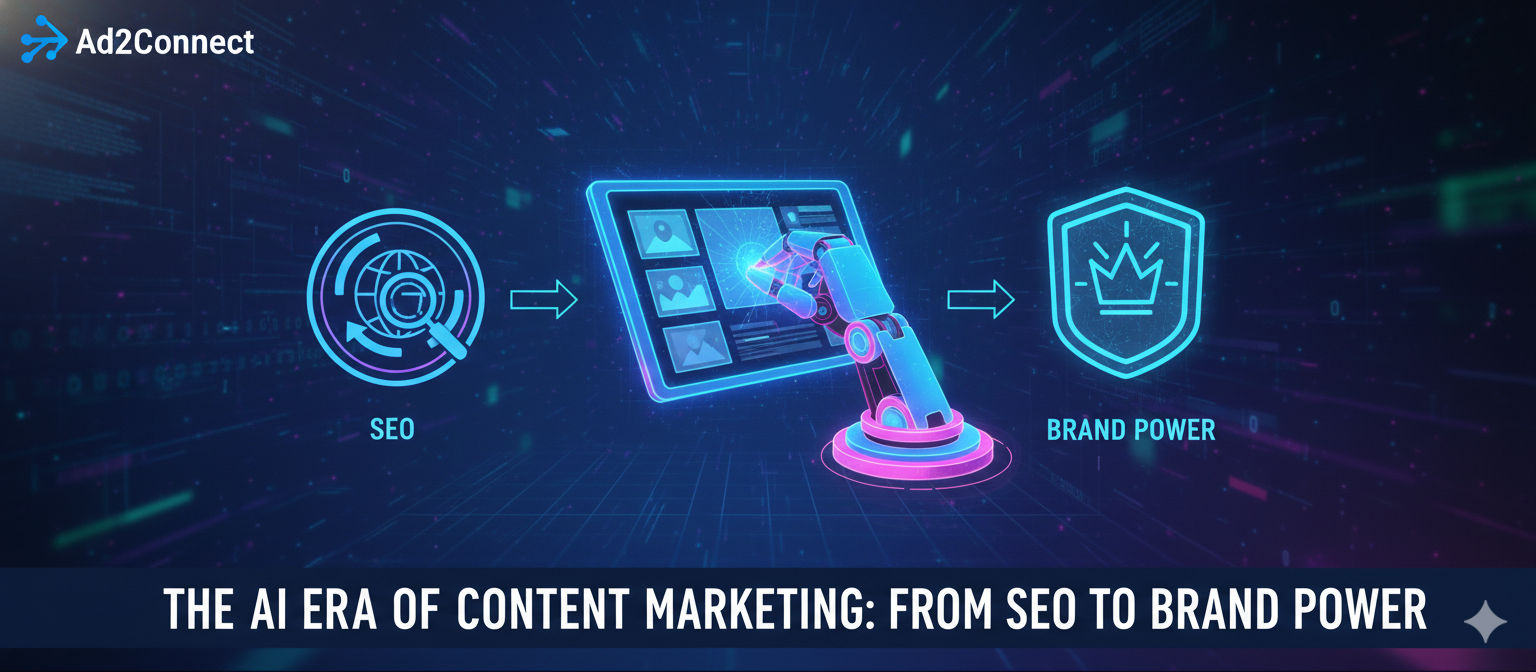
The AI Era of Content Marketing: From SEO to Brand Power
For more than a decade, content marketing rewarded volume: publish more pages, rank for more keywords, and win more traffic. In the AI era, that playbook is breaking down. Search engines and AI assistants increasingly surface trusted brands and authoritative sources, not just pages that match keywords.
This shift reframes the goal of content marketing. Instead of optimizing for raw SEO volume, modern strategies aim to build brand power—recognition, credibility, and consistent expertise across topics. This guide explains what content marketing in the AI era looks like, why brand authority matters more than ever, and how to adapt your approach for durable visibility.
Why SEO Volume Alone Is No Longer Enough
AI-powered discovery systems summarize information, compare sources, and prefer reliable entities. As a result, publishing dozens of similar articles no longer guarantees reach.
- AI Overviews synthesize answers instead of listing many links.
- Greater emphasis is placed on experience, expertise, and trust.
- Thin or repetitive content loses visibility.
Search engines like Google increasingly evaluate topical authority across a site, not isolated pages. One outstanding resource can now outperform many shallow ones.
Practical implication: fewer, higher-quality assets that demonstrate real-world knowledge outperform high-volume publishing schedules.
From Keywords to Entities and Topics
Semantic SEO replaces mechanical optimization
In the AI era, optimization focuses on meaning rather than matching strings of text. Effective content covers a topic end-to-end, anticipates related questions, and uses natural language that mirrors how people speak.
Instead of targeting only “content marketing tips,” strong brands build authority across connected ideas such as strategy and planning, brand voice and storytelling, distribution and amplification, and measurement and optimization.
This creates entity recognition. AI systems learn to associate your brand with a topic, making it more likely to appear in summaries and recommendations.
Brand Power as a Discovery Signal
What brand power means in AI-driven search
Brand power does not require mass fame. It means users search for your brand by name, other publishers cite your work, and your perspective is consistent and distinctive.
In an AI-mediated environment, recognizable sources are safer to surface than unknown ones. This aligns with recent core updates that favor content demonstrating sustained value over time.
Ways to build brand power through content include publishing original insights, taking a clear stance on industry issues, maintaining consistent tone and standards, and connecting every article to your brand narrative.
AIO, VEO, and TEO in Practice
AIO (AI Optimization): Structure pages so AI can summarize them accurately using clear headings and concise explanations.
VEO (Voice Engine Optimization): Frame headings as natural questions, such as “How does content marketing work in the AI era?”
TEO (Topic Experience Optimization): Design journeys from introductory concepts to advanced tactics within your site.
These approaches improve eligibility for AI Overviews, conversational search, and voice assistants.
CRO and Behavioral SEO Signals
Traffic alone does not create brand power. Engagement does. High-performing AI-era content holds attention longer, encourages exploration, and builds perceived authority.
Apply CRO principles by opening with a clear value promise, using scannable subheadings, including concrete examples, and ending with a focused next step.
Behavioral signals such as time on page, return visits, and branded searches indirectly reinforce search visibility because they indicate user satisfaction.
GEO and Market Relevance
Content marketing strategies must adapt by region. In highly competitive markets such as the US, UK, and EU, audiences encounter more AI-driven summaries and fewer organic links.
To remain relevant, use localized examples, reference regional regulations or trends, and adapt tone to market maturity. This is where Local Experience Optimization strengthens authority without fragmenting your message.
Measurement: From Pageviews to Brand Signals
To evaluate success in the AI era, look beyond rankings. Key indicators include growth in branded search queries, average engagement time, repeat visitor rate, assisted conversions influenced by content, and mentions or backlinks from credible sources.
Practical Strategies for the AI Era
Shift from volume to authority
- Audit existing content for depth and originality.
- Merge overlapping posts into stronger pillar resources.
- Prioritize insight over output frequency.
- Build internal links that guide readers through topics.
- Align content themes with brand positioning.
- Optimize structure for AI summaries and voice queries.
- Track engagement and brand signals, not just rankings.
MEO and SMO in Modern Content
MEO (Multimodal Experience Optimization): Support text with diagrams and visuals to improve understanding and retention.
SMO (Social Media Optimization): Repurpose insights into short-form posts and reinforce brand voice across platforms.
When search and social work together, brand power compounds faster.
Conclusion
Content marketing in the AI era is no longer about flooding search engines with pages. It is about building brand power through expertise, clarity, and trust.