
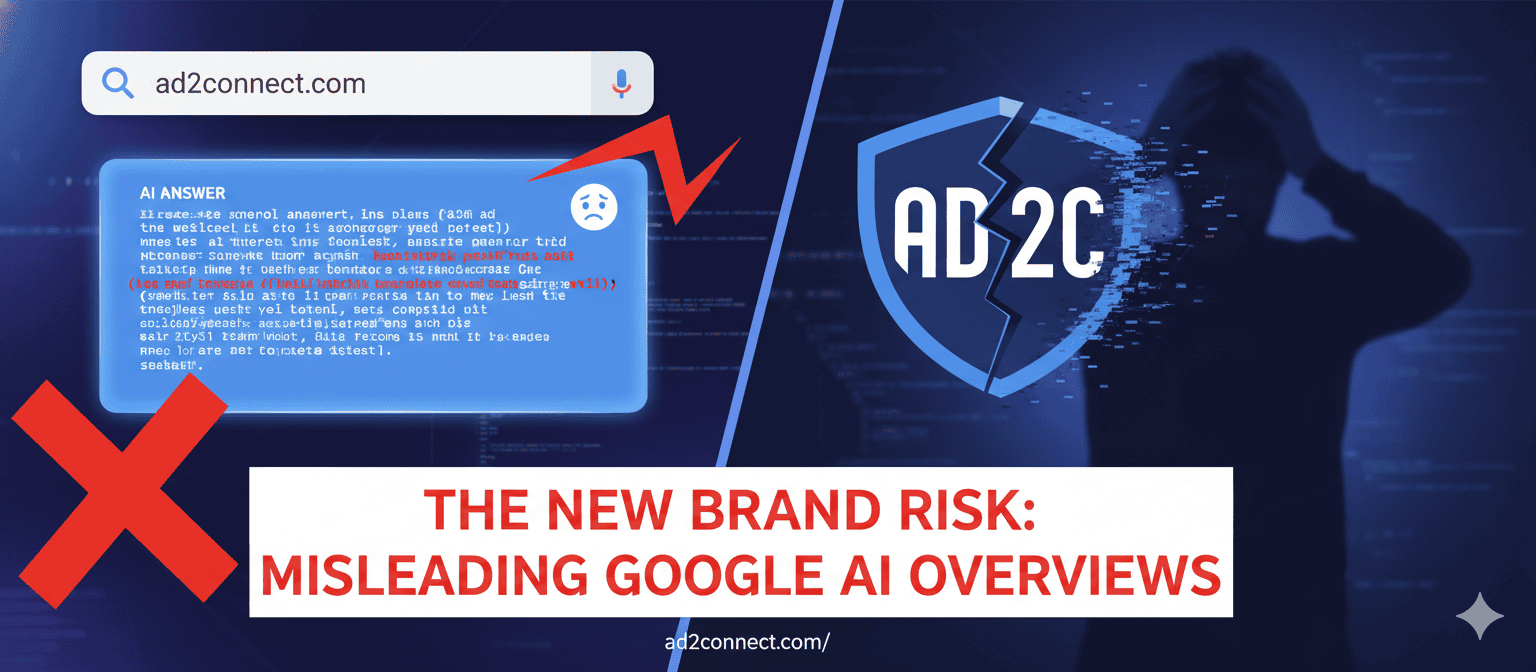
The New Brand Risk in Search: Responding to Misleading Google AI Overviews
Search has entered a new phase—and brands are no longer the only ones telling their story.
With Google AI Overviews appearing at the top of results, users often see an AI-generated summary
before visiting a website. When those summaries are inaccurate or misleading, brands face a serious
new risk: loss of control over messaging, trust, and conversions.
This guide explains how brands can respond to misleading Google AI Overviews, why the issue is growing
in 2025, and what businesses—especially in competitive markets like Mumbai—can do to protect visibility
and credibility.
Why Google AI Overviews Create a New Brand Risk
Answer-first: Google AI Overviews compile information from multiple sources. If those sources
lack clarity or authority, the AI summary can misrepresent a brand.
Unlike traditional featured snippets, AI Overviews may combine content from several websites, omit brand
attribution, and oversimplify complex offerings. This makes clear brand definition essential.
How Misleading AI Overviews Affect SEO, Trust, and User Behavior
Misleading summaries influence how users interact with search results and make decisions.
-
- Reduced organic traffic due to zero-click searches
- Lower trust when AI summaries don’t match reality
- Confusion around products or services
- Weakened E-E-A-T and topical authority
- Loss of local relevance in competitive markets like Mumbai
How Brands Can Respond to Misleading Google AI Overviews
1. Strengthen Brand Clarity and E-E-A-T Signals
AI systems rely on signals of experience, expertise, authority, and trust.
-
-
- Add expert author bios with real credentials
- Clarify positioning on About and brand pages
- Publish original insights instead of generic rewrites
- Update outdated facts and statistics
-
2. Optimize Content for Answer Engines (AEO & AIO)
AI Overviews extract direct answers. Brands should place clear, factual responses at the top of sections
and use natural, conversational language.
3. Use Structured Data to Reduce Ambiguity
Structured data helps AI understand relationships between content, entities, and locations.
-
-
- Organization schema
- Article schema
- FAQ schema
- LocalBusiness schema for Mumbai-based brands
-
4. Monitor AI Overviews as a Core SEO Metric
Brands should track which queries trigger AI Overviews, how their brand is described, and whether
competitors are referenced instead.
5. Reinforce Accuracy With Authoritative Sources
Supporting claims with trusted references improves AI confidence and accuracy.
Authoritative sources include Google Search Central, Search Engine Land, industry bodies, and
government publications.
Best Practices for Brands in AI-Driven Search (2025)
-
-
- Review high-impact pages every 3–6 months
- Avoid vague or overly promotional language
- Use consistent terminology across the site
- Add local context where relevant
- Prioritize clarity over keyword stuffing
-
Conclusion — Accuracy Is Now a Competitive Advantage
Misleading Google AI Overviews represent a new brand risk—but also an opportunity.
Brands that invest in authority, answer-focused content, and structured data are more likely to be
represented accurately in AI-powered search.
Audit your top informational pages today and optimize them for AI Overviews
before misinformation impacts trust or conversions.