
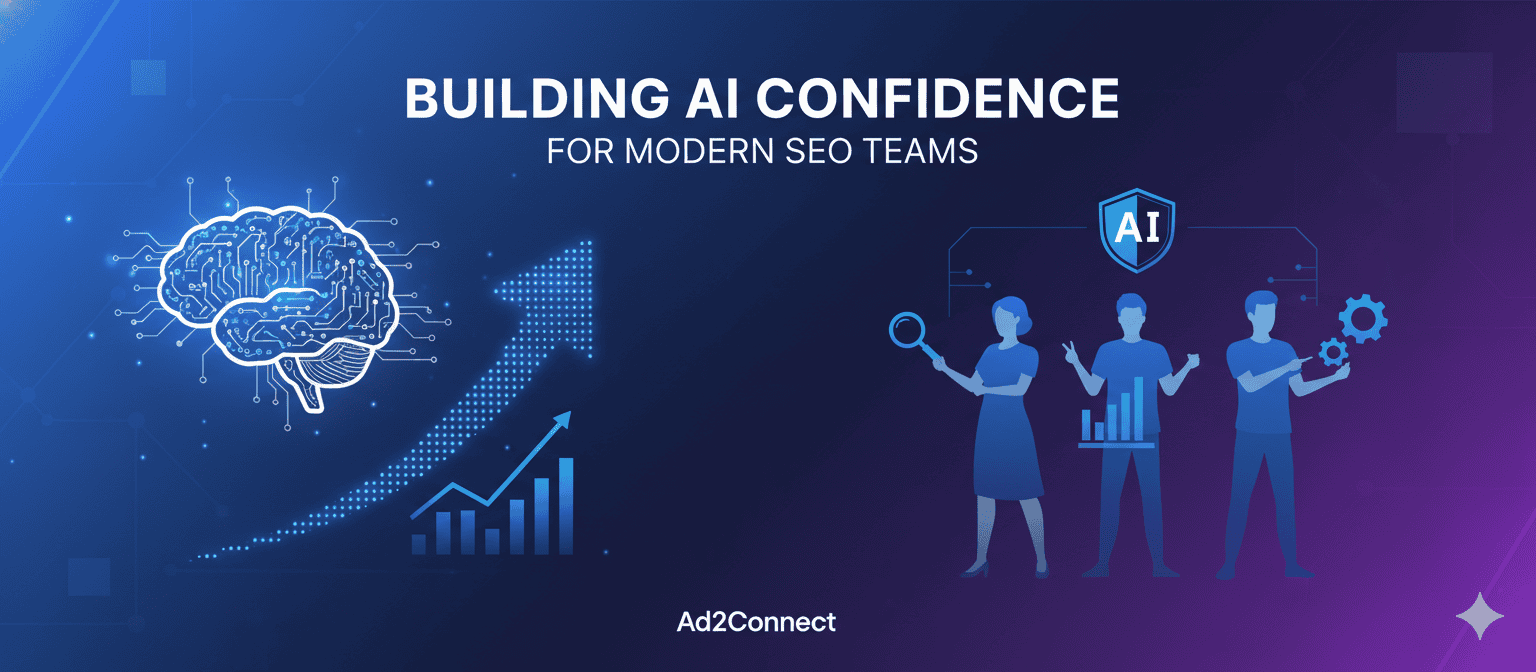
Building AI Confidence for Modern SEO Teams
Artificial intelligence is no longer experimental in SEO. It is already shaping how teams conduct keyword research, generate content ideas, optimize metadata, and analyze performance. Despite this, many SEO teams still hesitate to use AI at scale. The issue is rarely technical—it is psychological and operational. Teams struggle with trust, clarity, and consistency.
Building AI confidence for modern SEO teams means creating an environment where AI is understood, governed, and tested instead of feared or blindly followed. When confidence increases, teams work faster, make better decisions, and align more closely with quality and accessibility standards.
Why AI Confidence Matters in SEO
AI can significantly improve SEO efficiency, but only when used responsibly. Teams that trust and understand AI can apply it to repetitive or analytical tasks while preserving human judgment for strategy and creativity.
- Faster content production and research
- Improved consistency in optimization
- Better experimentation and testing
- Stronger alignment with user experience and conversion goals
Common Barriers to AI Adoption
Fear of Quality Loss
Many SEO professionals worry that AI-generated content will appear generic or unhelpful. This fear increases when teams lack review standards or editing workflows.
Low AI Literacy
When practitioners do not understand how AI models generate responses, they assume the output is either magical or dangerous. Both assumptions are incorrect. AI relies on patterns and probabilities and requires human oversight.
Lack of Governance
Without clear rules on how and when to use AI, teams become inconsistent. Some overuse it, others avoid it entirely. This creates confusion and resistance.
Step 1: Start With Low-Risk AI Use Cases
Confidence grows when teams see positive results without high risk. Begin with tasks that do not directly affect rankings or compliance.
- Meta description drafts
- Content outlines
- FAQ suggestions
- Heading rewrites
- Internal linking ideas
Avoid sensitive content areas such as medical, financial, or legal topics until review systems are fully established.
Step 2: Position AI as a Co-Pilot
AI should be framed as an assistant, not an author. Human expertise must remain responsible for accuracy, tone, and strategic direction.
A human-in-the-loop workflow ensures that SEO specialists define goals and intent, AI supports research and drafting, and editors validate facts and optimize for user experience.
Step 3: Train Teams Using Real SEO Scenarios
Training should be practical, not theoretical. Use real SEO tasks instead of abstract demonstrations.
- Rewrite thin content using AI and human editing
- Generate schema markup suggestions from page copy
- Create multiple title tag variations for testing
- Cluster keywords for topical authority
These exercises reveal both strengths and weaknesses of AI tools and build informed confidence.
Step 4: Build an AI Testing and Measurement Framework
Confidence is built on evidence. Measure AI performance using meaningful SEO and business metrics.
- Time saved per task
- Organic click-through rate changes
- User engagement such as scroll depth
- Conversion rate improvements
Sharing internal results helps build trust and encourages responsible adoption.
Step 5: Create an AI SEO Playbook
An AI playbook ensures consistency and compliance by documenting what AI can and cannot do.
- Approved prompt templates
- Brand voice guidelines
- Fact-checking requirements
- Accessibility standards
- Internal linking rules
- Data privacy restrictions
Conclusion
Building AI confidence for modern SEO teams is not about adopting tools blindly. It is about education, governance, and evidence-based workflows. When teams understand what AI can and cannot do, they stop fearing it and start using it to enhance research, content quality, and user experience.
AI becomes most powerful when paired with human insight. By starting with low-risk tasks, training through real scenarios, and measuring performance, SEO teams can turn uncertainty into strategic advantage.