
Google AI Briefs: Why Keywords No Longer Drive SEO
SEO isn’t failing—you’re just playing by outdated rules.
If you’re a business owner in Mumbai working with a digital marketing agency in Mumbai or investing in SEO, you’ve likely noticed something frustrating: your rankings may look fine, but leads aren’t increasing.
Traffic comes, but it doesn’t convert. Content gets published, but it doesn’t generate revenue.
What you actually want is:
- Consistent, high-quality leads
- Lower cost per acquisition
- Predictable ROI from digital marketing
This is where Google AI briefs are changing the game—and why your current SEO strategy might already be outdated.
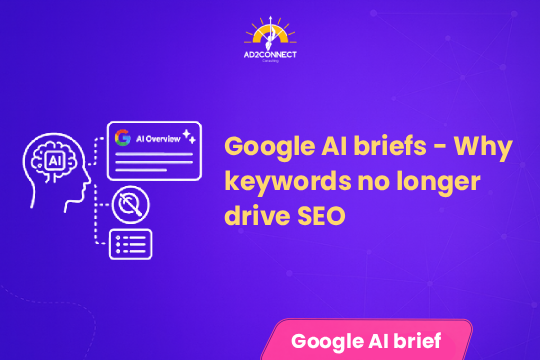
What Are Google AI Briefs?
Google AI briefs are AI-generated summaries that answer user queries directly, reducing reliance on traditional keyword-based SEO.
Instead of ranking pages purely based on keywords, Google now prioritizes:
- Intent and context
- Content clarity
- Real expertise and usefulness
This means businesses must optimize for answers and authority, not just keywords.
Summary
- Google AI briefs deliver direct answers in search results
- Keywords alone no longer guarantee rankings or clicks
- SEO is shifting toward intent-driven content
- Structured, experience-based content performs better
- Businesses must focus on leads, not just traffic
Why Keywords Are Losing Power
For years, SEO revolved around keyword research, density, and exact-match optimization. But Google has evolved.
Today, it understands:
- What users mean (intent)
- What they need next (context)
- Which content actually helps
This is why many businesses working with a traditional SEO company in Mumbai are seeing declining results.
What Google AI Briefs Actually Do
Think of Google AI briefs as a smart assistant that reads multiple websites and gives users the best answer instantly.
- Fewer clicks on websites
- Higher competition for visibility
- Greater importance on content quality
Common SEO Mistakes
1. Keyword-First Content Strategy
Writing for search engines instead of real people.
2. Ignoring Content Structure
AI prefers clear headings, bullet points, and direct answers.
3. No Differentiation
If your content sounds like everyone else, it won’t rank.
4. No Local Intent Optimization
For Mumbai businesses, local search matters more than ever.
Step-by-Step Strategy to Adapt
Step 1: Move from Keywords to Intent
Focus on solving problems instead of targeting exact phrases.
Step 2: Add Direct Answers
Every blog should clearly answer what, why, and how.
Step 3: Structure Content for AI
- Short paragraphs
- Bullet points
- Clear formatting
Step 4: Show Real Expertise
Use case studies, real data, and practical insights.
Step 5: Focus on Conversions
Content should educate, build trust, and drive action.
Case Study
A service-based business approached us after working with an SEO agency in Mumbai.
Before:
- Traffic: 10,000/month
- Leads: 60
- Cost per lead: ?1,050
After 5 Months:
- Traffic: 7,200/month
- Leads: 185
- Cost per lead: ?380
- ROI increased by 3.2X
Insight: Less traffic, more revenue.
Expert Insights
- Visibility matters more than rankings
- Content depth beats content volume
- Local SEO is a competitive advantage
- Branding impacts SEO performance
- Performance marketing + SEO drives better ROI
Actionable Checklist
- Stop focusing only on keywords
- Create problem-solving content
- Add direct answer sections
- Use structured formatting
- Include real examples
- Optimize for local searches
- Focus on conversions
- Build authority consistently
Conclusion
Google AI briefs are redefining SEO.
Keywords still matter—but they are no longer enough.
To succeed, businesses must focus on intent, value, and conversion-driven strategies.