
Negative Keyword Strategy That Improves ROI
Most Google Ads campaigns don’t fail because of poor ad copy.
They fail because businesses pay for clicks that were never going to convert.
A Mumbai-based legal consultancy recently spent nearly ?3 lakh on PPC campaigns with minimal return. The ads were getting clicks, but the leads were irrelevant — students, job seekers, and users looking for free advice.
This is the real issue in 2026: traffic looks good, but revenue stays flat.
What businesses actually want:
- Better quality leadsA negative keyword strategy prevents your ads from showing for irrelevant searches that are unlikely to generate leads or sales.
- Lower cost per acquisition
- Higher ROI
- More qualified inquiries without increasing budget
This is where a strong negative keyword strategy changes everything.
What Is a Negative Keyword Strategy?
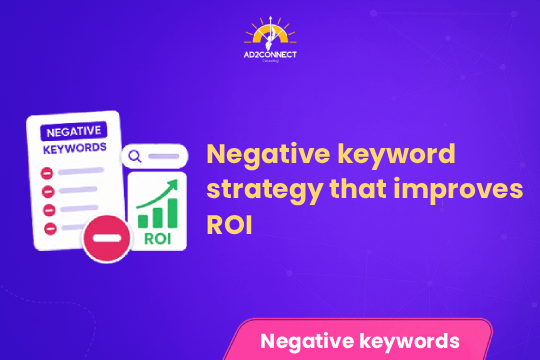
A negative keyword strategy is the process of preventing your ads from showing for irrelevant searches that do not convert.
In 2026, it helps you:
- Reduce wasted ad spend
- Improve lead quality
- Train Google’s AI with better data
- Increase conversion rates
Summary
- Negative keywords filter out irrelevant traffic
- They improve lead quality and ROI
- Automation still needs manual intent control
- Most businesses ignore deep intent filtering
- Weekly optimization is critical
Why Negative Keywords Matter More in 2026
Google Ads automation has expanded targeting significantly. Without proper control, your ads may show to:
- Students
- Job seekers
- DIY users
- Freebie hunters
- Research-based audiences
These clicks increase cost but do not generate revenue.
The Hidden Cost of Poor Traffic
Many businesses focus on:
- Clicks
- Impressions
- CTR
But what matters is conversion quality.
120 high-quality clicks will always outperform 500 low-quality clicks.
Common Negative Keyword Mistakes
1. Blocking Only Basic Words
Most advertisers only block:
- free
- jobs
- internship
But also consider:
- tutorial
- examples
- ideas
- course
- how to
2. Same List for All Campaigns
Each campaign needs different exclusions based on intent.
3. Ignoring Search Terms
Search term reports reveal where your budget is being wasted.
The Real Negative Keyword Strategy That Improves ROI
Step 1: Segment Intent
- Buying intent
- Research intent
- Educational intent
- Employment intent
Focus on buying intent keywords.
Step 2: Build Intent-Based Lists
- Students
- Job seekers
- DIY users
- Free users
Step 3: Sculpt Campaigns
- Brand vs non-brand separation
- High-ticket vs low-ticket filtering
- Avoid keyword overlap
Step 4: Optimize for Revenue
Track:
- Qualified leads
- Sales
- Revenue
Case Study:
Problem
- ?1.9 lakh monthly spend
- High traffic but low conversions
Issue Found
- free skincare tips
- dermatology courses
- home remedies
37% of spend was wasted.
Results After 75 Days
- Cost per lead reduced from ?2,850 to ?1,640
- Qualified leads increased from 18% to 46%
- Consultations increased from 31 to 74
Revenue nearly doubled without increasing budget.
Expert Insights
AI Needs Human Filtering
Automation cannot fully understand business intent.
More Traffic ? More Revenue
Quality always beats quantity.
Broad Match Requires Strong Negatives
Without filtering, it can quickly waste budget.
Actionable Checklist
- Review search terms weekly
- Identify irrelevant queries
- Block low-intent keywords
- Separate campaigns by intent
- Track lead quality, not just quantity
- Continuously refine negative lists
When You Need to Fix Your Strategy
- Lead quality is poor
- Cost per lead is increasing
- High traffic but low conversions
- Budget drains quickly
Conclusion
In 2026, success in Google Ads is not about more traffic.
It is about better targeting and intent control.
A strong negative keyword strategy helps you:
- Reduce wasted spend
- Improve conversions
- Increase ROI
The businesses winning today are not spending more — they are targeting smarter.